## Introduction
While hemp research is still evolving, emerging studies suggest potential benefits for various health conditions. This guide reviews current evidence, discusses realistic expectations, and emphasizes the importance of professional guidance.
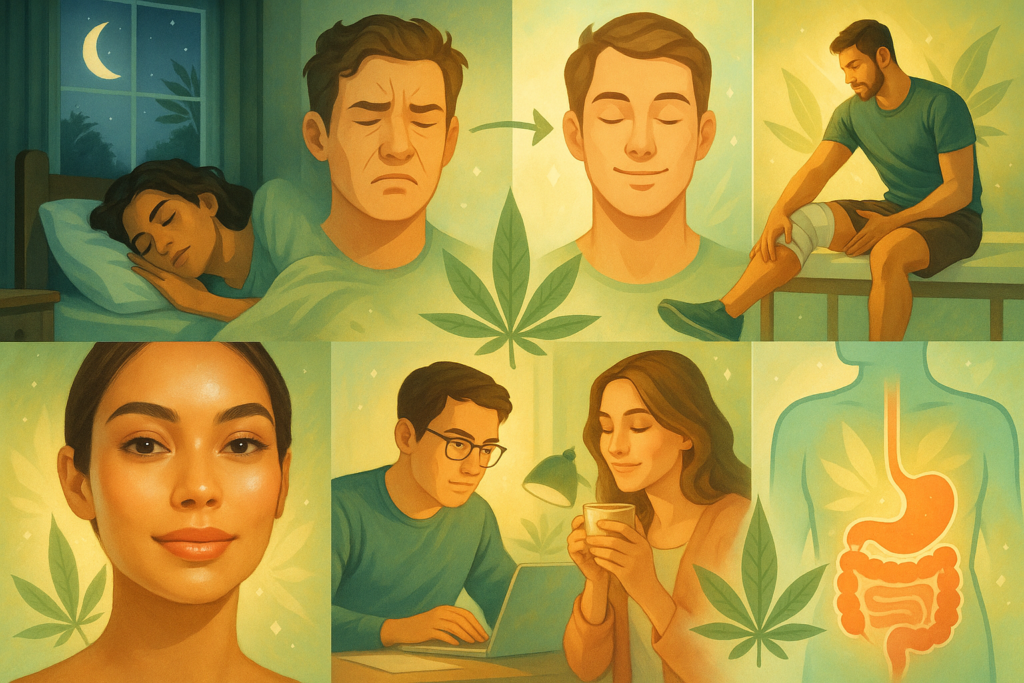
## Sleep Support and Sleep Quality
Sleep issues affect millions. Many people turn to hemp as a natural alternative to prescription sleep aids.
Current evidence: Multiple studies show hemp may help people fall asleep faster and experience deeper sleep. A 2019 study in Frontiers in Neurology found 66.7% of participants reported better sleep after hemp use.
How it works: Hemp compounds interact with receptors involved in sleep-wake cycles. They may reduce racing thoughts, ease physical tension, and promote relaxation.
Typical approach: Many people take 15-40mg one to two hours before bedtime. Consistent evening dosing works better than occasional use. Some people add other sleep-supporting habits: cool dark bedroom, avoiding screens, light stretching.
Realistic expectations: Hemp isn’t a knockout drug. You won’t suddenly lose consciousness. Instead, you’ll notice falling asleep feels easier. Your mind quiets. Your body relaxes. Sleep feels more natural.
Combinations that work: Hemp combined with magnesium or ashwagandha often works better than hemp alone. Discuss combinations with your healthcare provider.
## Occasional Anxiety and Stress
Stress and occasional anxiety are epidemic in modern life. Hemp’s potential to support calm is one of the most popular applications.
Current evidence: A 2020 study published in The Permanente Journal showed 79.2% of patients reported decreased anxiety within one month of hemp use. Effects were sustained over the study period.
How it works: Hemp compounds interact with serotonin and GABA receptors, the brain’s natural calming systems. This may ease the physical sensations of stress and racing thoughts.
Typical approach: Some people take a consistent daily dose (10-20mg) for baseline anxiety management. Others take doses as needed during stressful situations. Both approaches can work.
Realistic expectations: Hemp won’t make serious anxiety disappear. It’s not a replacement for therapy or prescribed anxiety treatment. But for occasional stress, many notice genuine relief. Racing thoughts slow. Tension eases.
Combining approaches: Hemp works best alongside other stress management: exercise, meditation, therapy, breathing techniques, social connection.
## Occasional Pain and Discomfort
Pain management is another major application area. Many people seek alternatives to opioids and NSAIDs.
Current evidence: Research in Therapeutics and Clinical Risk Management (2020) found hemp helpful for managing occasional pain and supporting exercise recovery. Topical hemp showed particularly strong results.
How it works: Hemp compounds interact with vanilloid receptors and other pain-signaling pathways. They may reduce inflammatory responses and calm pain signals.
Typical approach: For occasional pain, oral doses of 15-30mg work for many people. For localized pain, topical hemp creams applied directly to affected areas often provide targeted relief. Some people combine both oral and topical.
Realistic expectations: Hemp isn’t morphine. Severe pain requires medical attention. But for mild to moderate occasional pain—sore muscles, minor injuries, menstrual discomfort—many people report meaningful relief.
Evidence gap: Long-term pain management with hemp is less studied. What we know: some people use it regularly with consistent results; others find tolerance builds over months.
## Athletic Recovery and Performance
Athletes increasingly use hemp for recovery and performance support.
Current evidence: A 2020 study in Sports Medicine showed hemp may support muscle recovery, reduce inflammation, and help athletes manage exercise-induced discomfort.
How it works: Intense exercise creates inflammation and microtrauma. Hemp compounds may moderate inflammatory responses, supporting faster recovery. Less inflammation means less soreness.
Typical approach: Athletes often take hemp immediately after intense workouts (20-30mg) and before bed for recovery support. Some take consistent daily doses during training phases.
Realistic expectations: Hemp won’t make you run faster or lift heavier. But recovery may feel faster. Soreness may decrease. Sleep quality may improve, supporting adaptation.
Important note: Hemp is legal for athletic use, but check your sport’s specific rules. Some organizations have restrictions.
## Skin Health and Appearance
Hemp topicals are increasingly popular for skin care.
Current evidence: Research in the Journal of Dermatological Treatment (2020) found hemp compounds support skin hydration, reduce redness, and may help with various skin conditions.
How it works: Hemp compounds interact with skin cell receptors, supporting healthy inflammation responses and skin barrier function. Rich in omega fatty acids, hemp also nourishes skin.
Typical approach: Use hemp-infused skincare products daily. For face: serums or creams. For body: lotions or balms. Many people layer hemp products with other skincare.
Realistic expectations: Hemp won’t create dramatic skin transformations overnight. But with consistent use over weeks, many notice: smoother texture, reduced redness, more hydration, healthier appearance.
Best results: Combine hemp skincare with sun protection, hydration, and healthy lifestyle habits.
## Focus and Mental Clarity
Some people report improved focus and clarity with hemp, though evidence is less robust.
Current evidence: Anecdotal reports are strong, but clinical evidence is limited. Some researchers hypothesize hemp may support focus by reducing mental chatter and anxiety.
How it works: Proposed mechanism: by reducing background anxiety, hemp allows your mind to focus on the task at hand. It’s not a stimulant; it’s removing obstacles to focus.
Realistic expectations: This is individual. Some people notice sharp clarity; others don’t notice focus changes. If you work that requires intense concentration, test hemp on non-critical days first.
Optimal timing: Many people find morning doses support daytime focus, while evening doses might cause drowsiness.
## Menstrual Health and Comfort
Women increasingly use hemp to support menstrual health.
Current evidence: Limited clinical research, but many women report hemp helps with monthly discomfort. A 2020 survey by Women’s Health found 60% of women using hemp reported improved menstrual comfort.
How it works: Hemp may reduce inflammatory responses and ease uterine tension. The relaxing effects may reduce overall discomfort.
Typical approach: Women often start hemp 2-3 days before their cycle begins and continue through day 2-3 of their period. Some take 20-40mg daily during this window.
Realistic expectations: Hemp can meaningfully reduce monthly discomfort for many women. Combined with heat, exercise, and other support, effects are often significant.
## Nausea and Digestive Comfort
Hemp may help with occasional nausea and support healthy digestion.
Current evidence: Research in Cannabis and Cannabinoid Research (2021) found hemp helpful for nausea management. Traditional use supports digestive wellness.
How it works: Hemp interacts with gut receptors, potentially calming nausea signals and supporting healthy digestion. It may also improve appetite.
Typical approach: Small doses (5-15mg) often work best for nausea. Some people take hemp with ginger or peppermint for combined digestive support.
Realistic expectations: For mild nausea, hemp often helps. For serious nausea (food poisoning, chemotherapy), medical treatment is necessary.
## Important Considerations
Research is ongoing. We know more about hemp’s effects than we did five years ago, but much research remains. Be cautious of claims without evidence.
Individual variation is huge. What works powerfully for one person may have minimal effect for another. Genetics, metabolism, diet, stress levels, sleep, and other factors influence outcomes.
Professional guidance matters. If you have serious health conditions or take medications, discuss hemp use with your healthcare provider before starting.
Quality products matter. Lab-tested, properly dosed products are more likely to produce consistent results.
Realistic expectations prevent disappointment. Hemp is a supportive tool, not a cure. It works best alongside healthy lifestyle habits: good nutrition, exercise, stress management, sleep.
## Conclusion
Emerging research suggests hemp may support wellness across multiple conditions—sleep, stress, occasional pain, recovery, skin health, focus, menstrual wellness, and digestive comfort. While we need more research, current evidence is encouraging. If you’re considering hemp for a specific condition, start with research, consult professionals, choose quality products, and give consistent use adequate time before evaluating results. Hemp works best as part of a comprehensive health approach, not as a standalone solution.