Informational only, not medical advice.
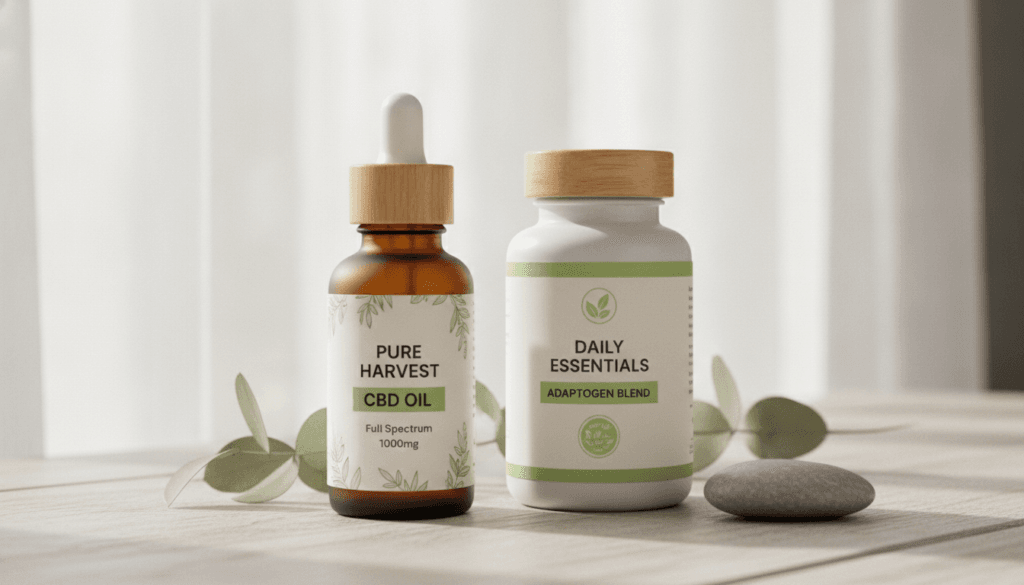
CBD and turkey tail or other medicinal mushroom extracts (reishi, lion’s mane) are increasingly combined in wellness products, but they work through entirely different mechanisms and evidence bases. Medicinal mushrooms have varied research depending on the specific species, immune modulation for turkey tail, cognitive support for lion’s mane, general adaptogenic claims for reishi, none of which overlap directly with CBD’s endocannabinoid mechanism.
CBD vs common medicinal mushrooms at a glance
| Turkey Tail | Lion’s Mane | Reishi | CBD | |
|---|---|---|---|---|
| Primary research focus | Immune modulation, some cancer-adjunct research | Cognitive function, nerve growth factor stimulation | General adaptogenic, sleep, immune claims | Anxiety, sleep-adjacent effects |
| Evidence maturity | Moderate, some clinical use in Japan as cancer adjunct | Preliminary to moderate, growing interest | Preliminary, mostly traditional use plus emerging research | Moderate for anxiety specifically |
Why these combinations are common in wellness marketing despite different mechanisms
CBD and medicinal mushroom combination products have become common, likely reflecting broader “functional wellness” positioning rather than confirmed synergistic mechanisms. This doesn’t mean combining them is unreasonable, no dangerous interactions are established, but it’s worth understanding that the combination’s popularity reflects market trends more than a specific body of research confirming these particular pairings work better together than separately.
What each is more specifically suited to
- Turkey tail. Most relevant if immune support is your primary interest, with the most clinical use history among these mushrooms, particularly in adjunct cancer care contexts in some countries
- Lion’s mane. Most relevant if cognitive function or focus is your primary interest, given its specific research on nerve growth factor
- Reishi. Often marketed broadly for stress and sleep, though evidence here is less specific than for the other two mushrooms mentioned
- CBD. Most relevant for anxiety and sleep-adjacent effects specifically
A note on turkey tail and cancer treatment specifically
Turkey tail has documented use as a complementary therapy alongside conventional cancer treatment in some contexts, but this should never be pursued without oncology guidance, similar to the caution discussed elsewhere on this site regarding CBD and cancer treatment medications. If you’re interested in either turkey tail or CBD during cancer treatment, this needs to be a conversation with your oncology team specifically.
Can you combine CBD with medicinal mushrooms?
No dangerous interactions are established between CBD and these common medicinal mushrooms. Given their different mechanisms, combining them is reasonable for someone interested in multiple wellness goals simultaneously, though this reflects combining separately-reasonable supplements rather than a specifically studied, confirmed synergistic combination.
Frequently asked questions
Do CBD and medicinal mushrooms work better together?
This isn’t specifically confirmed through research; the popularity of combination products reflects wellness market trends more than documented synergy.
Which mushroom is best for anxiety, similar to CBD?
Reishi is most commonly marketed for this, though its evidence is less specific than CBD’s anxiety research or the more targeted research behind turkey tail and lion’s mane for their respective primary uses.
Can I take CBD with medicinal mushrooms during cancer treatment?
Only with your oncology team’s direct guidance, given both the general caution around CBD and cancer treatment medications and turkey tail’s own documented complementary use context that still requires medical oversight.