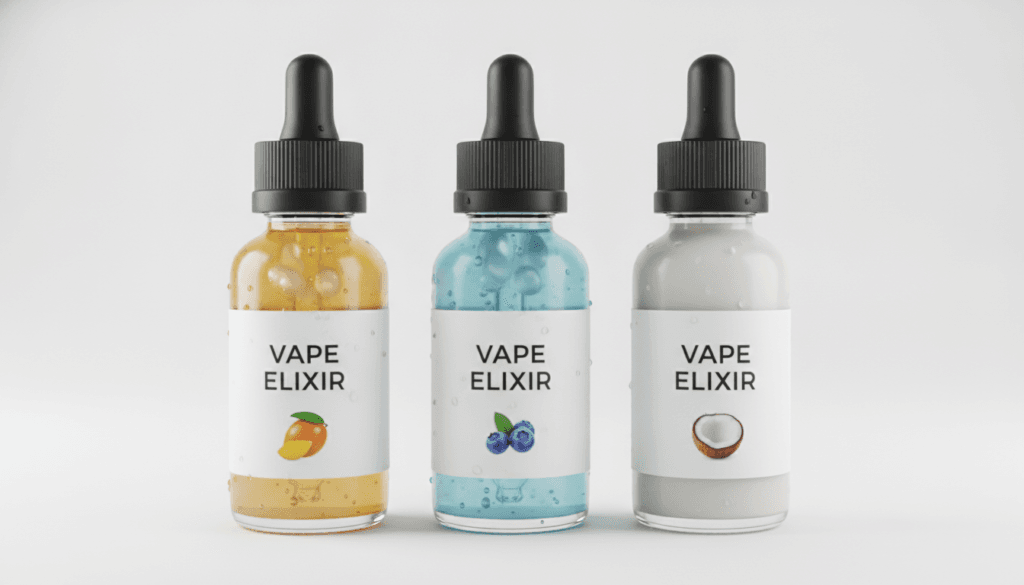
Pick up almost any bottle of vape e-liquid and you will find a ratio printed on the label, something like 70VG/30PG or 50/50. These two letters, PG and VG, represent the base ingredients that make up the vast majority of any vape liquid, and understanding what they are and how they behave changes both your vaping experience and your understanding of what you are actually inhaling.
What PG and VG Actually Are
Propylene glycol (PG) is a synthetic, slightly viscous, colourless, and nearly odourless and tasteless liquid. It is widely used across food, pharmaceutical, and cosmetic products as a solvent and carrier. Vegetable glycerin (VG) is a thicker, naturally sweet liquid derived from plant oils, also widely used in food and cosmetics as a thickener and humectant. In vape liquids, these two ingredients typically make up around 85 to 90% or more of the total volume, with the remaining small percentage consisting of nicotine (or cannabinoid extracts for CBD and THC products) and flavourings.
How PG and VG Affect Your Vaping Experience
The two ingredients produce noticeably different sensations and outputs when vaped. PG is thinner and produces what vapers commonly call a throat hit, a sensation similar to the feeling associated with smoking tobacco, and it carries flavour more effectively than VG, making flavours taste sharper and more pronounced. VG is thicker, produces visibly larger and denser vapour clouds, and delivers a smoother inhale with less throat hit, along with a naturally slightly sweet taste of its own. The PG/VG ratio printed on a bottle directly reflects this trade-off: a higher PG ratio (such as 50/50 or higher PG) prioritises flavour intensity and throat hit, while a higher VG ratio (such as 70/30 or 80/20 VG-dominant) prioritises cloud production and smoothness.
Choosing a Ratio: Practical Considerations
For CBD and THC cartridges specifically, the ratio is usually predetermined by the manufacturer and is less something the end user adjusts compared to the broader nicotine vaping market, where refillable tank systems allow users to mix their own e-liquids or choose bottles with their preferred ratio. Higher VG liquids require more power to vaporise effectively (since VG is thicker and needs more heat to atomise properly), which is part of why sub-ohm devices designed for high-VG liquids use more powerful batteries and produce larger clouds. Higher PG liquids work well with lower-power devices and are generally considered better suited to smaller, simpler devices like basic pod systems, which is one reason nicotine salt e-liquids (commonly used in pod systems) often use higher PG ratios.
What Does the Safety Research Say?
Both PG and VG are individually recognised as generally safe when used in food, cosmetics, and pharmaceutical products in their liquid form, which has sometimes led to an assumption that they are equally safe when vaporised and inhaled. Research has increasingly questioned this assumption. A study examining PG and PG/VG mixtures at ratios commonly used in vapes found that exposure reduced glucose uptake and metabolism in airway epithelial cells in laboratory models, suggesting potential effects on airway cell function that would not be predicted simply from PG and VG’s safety profile as ingested substances. More broadly, a 2025 review on the toxicity of PG and VG in electronic nicotine delivery systems noted that when PG/VG mixtures are aerosolised (heated and turned into the vapour that is inhaled), the heating process itself generates thermal degradation by-products, including various aldehydes, some of which are associated with airway inflammation and oxidative stress. The review specifically highlighted that the toxicity of PG/VG when inhaled appears to be a distinct issue from their safety profile as ingested substances, and called for regulations addressing PG/VG purity and ratios specifically in the context of inhalation.
Why Device Power Matters for These By-Products
The amount of thermal degradation by-products produced is influenced not just by the PG/VG ratio itself but by the power (wattage) and coil resistance of the device being used. Higher power settings and certain coil configurations can increase the temperature reached during vaporisation, which research suggests can increase the formation of these by-products. This is part of why device quality and appropriate power settings (matching the device to the liquid’s intended use) are not purely about flavour and vapour production but also have a bearing on what compounds are present in the resulting aerosol.
What This Means for CBD and THC Vape Users
Many CBD and THC vape cartridges use PG, VG, or a combination as a carrier or thinning agent for the cannabinoid extract, alongside or instead of other carriers like MCT oil or cannabis-derived terpenes. The PG/VG safety research discussed above applies to these products in the same way it applies to nicotine vape liquids, since the underlying compounds and the heating process are the same regardless of what active ingredient (nicotine versus cannabinoids) is present. If you are choosing between CBD or THC vape products, checking what carrier or thinning agent is used (PG, VG, MCT, terpenes, or a combination) and considering products that disclose this information are both reasonable steps, alongside the broader recommendation of choosing licensed, lab-tested products generally.
Are There Alternatives to PG and VG?
Some CBD and THC vape products use alternative carriers, most commonly MCT oil (medium-chain triglycerides, derived from coconut or palm oil) or natural cannabis-derived terpenes, instead of or alongside PG and VG. These alternatives have their own considerations and are not automatically safer simply by being different; for example, some research has raised questions about vaping MCT oil specifically. The broader point is that the carrier or base liquid in any vape product is not an inert, irrelevant component, regardless of which one is used, and is worth understanding as part of evaluating any vape product.
Frequently Asked Questions
What does the PG/VG ratio on a vape juice bottle mean?
The PG/VG ratio indicates the proportion of propylene glycol (PG) to vegetable glycerin (VG) in the liquid, which together make up roughly 85 to 90% or more of the total volume. A 50/50 ratio means equal parts of each. A 70VG/30PG ratio means 70% vegetable glycerin and 30% propylene glycol. Higher VG ratios produce thicker vapour and a smoother inhale; higher PG ratios produce a stronger throat hit and more pronounced flavour.
Is PG or VG safer to vape?
Neither PG nor VG has been established as clearly safer than the other when vaporised, and research increasingly suggests the relevant safety question is less about PG versus VG individually and more about the thermal degradation by-products produced when either or both are heated and inhaled, which depend on the ratio, device power, and coil configuration. A 2025 review specifically noted that both PG and VG aerosolisation generates toxic aldehydes as by-products, and called for ratio-specific and device-specific regulation rather than framing the question as one ingredient being categorically safer.
Why do some people get a sore throat from vaping?
A sore or irritated throat from vaping can result from several factors related to PG and VG. PG itself is associated with a throat hit sensation that some people find irritating, particularly at higher PG ratios or higher nicotine concentrations. Additionally, both PG and VG can have a dehydrating effect, and the aerosolisation process produces compounds that research has linked to airway irritation. If you experience persistent throat irritation, trying a lower PG ratio, staying well-hydrated, and ensuring your device is operating at an appropriate power setting for the liquid (avoiding excessive heat) are commonly suggested adjustments, though persistent symptoms warrant a broader reconsideration of vaping itself.
Does a higher VG ratio mean a safer vape?
Not necessarily. While VG-dominant liquids produce smoother inhales and are often perceived as gentler, the 2025 research on thermal degradation by-products applies to both PG and VG when heated, and higher VG liquids generally require more power to vaporise effectively, which can itself increase the temperature reached and potentially the by-products formed. A higher VG ratio changes the sensory experience and may reduce the throat hit some find irritating, but it does not eliminate the broader considerations around inhaling heated PG/VG aerosols.
What carrier do CBD and THC vape cartridges typically use?
This varies by product and brand. Some use PG, VG, or a PG/VG blend similar to nicotine e-liquids. Others use MCT oil (derived from coconut or palm oil) or natural cannabis-derived terpenes as the carrier or thinning agent for the cannabinoid extract. Checking the product’s ingredient disclosure or Certificate of Analysis is the most reliable way to determine what carrier a specific cartridge uses, as this information is not always prominently displayed on packaging.
Can I mix my own vape juice with PG and VG?
For nicotine e-liquids in refillable tank systems, DIY mixing with PG, VG, nicotine, and flavour concentrates is a common practice among experienced vapers, though it requires careful measurement and handling of concentrated nicotine, which is hazardous if mishandled. For CBD and THC products, DIY mixing is far less common and significantly more complicated, since it would require sourcing cannabinoid extracts and accurately determining dosing, alongside the same PG/VG handling considerations. For most CBD and THC users, pre-filled, lab-tested cartridges from licensed sources remain the more practical and safer approach compared to DIY mixing.