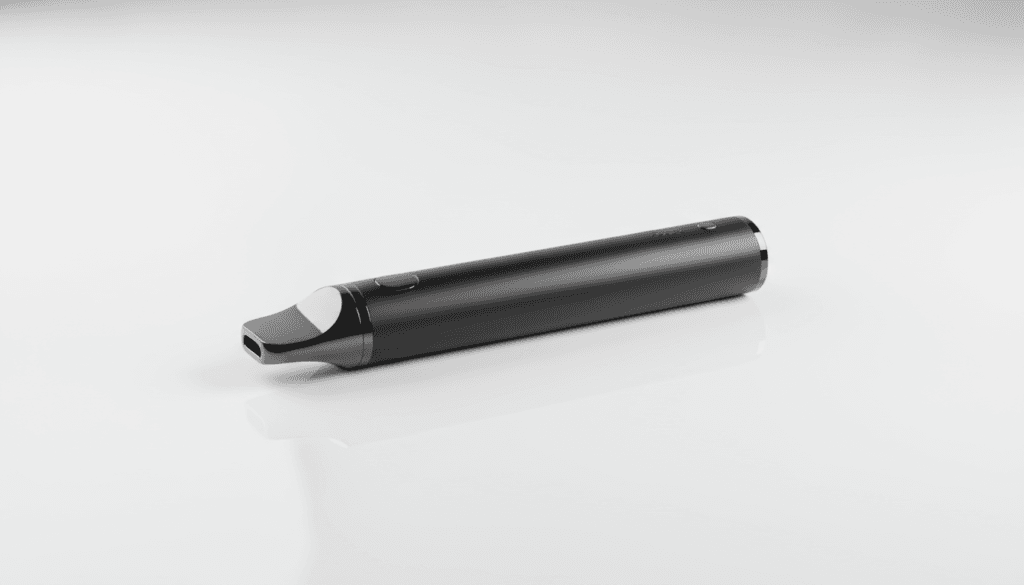
Nicotine-free vapes occupy an interesting middle ground in the vaping landscape: they replicate the act and sensation of vaping without the addictive substance most commonly associated with it, which leads some people to view them as a harm-reduction step and others to question what exactly is left to vape once nicotine is removed.
What’s Actually in a Nicotine-Free Vape
Removing nicotine from an e-liquid does not mean removing everything except flavour. As discussed in our piece on vape juice ingredients, the base of any e-liquid is typically a mixture of propylene glycol (PG) and vegetable glycerin (VG), which together make up the large majority of the liquid’s volume regardless of whether nicotine is present. Flavourings make up a small percentage of the total, contributing the taste and aroma. In a nicotine-free product, the nicotine component is simply absent or replaced with additional PG, VG, or flavouring to maintain the liquid’s intended consistency. This means the PG/VG safety considerations discussed in our vape ingredients piece, including the thermal degradation by-products produced when these compounds are heated and inhaled, apply just as much to nicotine-free vapes as to nicotine-containing ones; removing nicotine does not remove these considerations.
Why People Choose Nicotine-Free Vapes
Several distinct motivations drive people toward nicotine-free products. For people trying to quit nicotine entirely, nicotine-free vapes can serve as a step-down option, allowing someone to gradually reduce nicotine concentration over time (moving from a higher nicotine e-liquid to progressively lower concentrations, and eventually to zero) while maintaining the behavioural and sensory ritual of vaping, which for many people is intertwined with the addiction itself, not just the nicotine. For people who vape primarily for the sensory experience, flavour, vapour production, the social or habitual aspect, rather than for nicotine’s effects specifically, nicotine-free products allow continuation of this experience without nicotine’s pharmacological effects or addiction potential. Some people use nicotine-free vapes recreationally without ever having used nicotine-containing products, drawn to flavour variety and the sensory experience independent of any connection to smoking cessation.
CBD Vapes: A Specific Category of Nicotine-Free Product
CBD vape products, discussed in the context of vaping technology in our vaping 101 piece, are inherently nicotine-free unless specifically formulated otherwise (which would be unusual and should be clearly labelled if present). These products combine the vaping delivery method, offering the fastest onset of any CBD format due to direct absorption through the lungs, with CBD as the active ingredient instead of nicotine. The PG, VG, MCT oil, or terpene carriers discussed in our vape ingredients piece apply to CBD vapes as well, and the same considerations about carrier choice and thermal degradation by-products are relevant regardless of whether the active ingredient is nicotine or CBD.
Is Nicotine-Free Vaping Risk-Free?
No, and this is an important point that is sometimes lost in discussions that focus primarily on nicotine as the central health concern with vaping. As established in our piece on whether vaping is safer than smoking, the relative safety comparison between vaping and smoking is fundamentally about combustion versus vaporisation, not specifically about nicotine. The thermal degradation by-products from heating PG and VG, discussed in our vape ingredients piece, are produced regardless of nicotine content. This means nicotine-free vaping is not equivalent to inhaling nothing; it removes nicotine’s specific risks (addiction, cardiovascular effects associated with nicotine specifically) while retaining the broader considerations associated with inhaling heated PG/VG aerosol and flavouring compounds.
The Step-Down Approach: Does It Work?
For people using nicotine-free vapes as part of a quit-nicotine strategy, the approach generally involves gradually reducing nicotine concentration in e-liquids over time (for example, from 20mg/mL to 12mg/mL to 6mg/mL to 3mg/mL to 0mg/mL) while maintaining the same device and vaping behaviour, with the goal of eventually using nicotine-free liquid and, ideally, reducing the vaping behaviour itself over time as well. The 2025 Cochrane review discussed in our smoking versus vaping piece found vaping to be more effective than nicotine replacement therapy for smoking cessation generally, but that research primarily examined vaping (at various nicotine levels) versus other cessation methods, rather than specifically isolating the step-down-to-zero-nicotine approach as its own intervention. Whether reaching zero nicotine while continuing to vape represents a meaningful end-state, versus an intermediate step toward stopping vaping altogether, is a separate question from whether vaping (at any nicotine level) is more effective than nicotine replacement therapy for the initial smoking cessation step.
Flavour Considerations in Nicotine-Free Products
Flavourings are present in both nicotine-containing and nicotine-free e-liquids, and the safety research on inhaled flavouring compounds applies regardless of nicotine content. Some specific flavouring compounds used in e-liquids have been individually studied for inhalation safety with varying findings, and this remains an area of ongoing research, similar to the broader PG/VG research discussed in our vape ingredients piece. Nicotine-free does not mean flavouring-free, and for anyone using these products primarily for flavour variety, the flavouring compounds themselves, not just the PG/VG base, are part of what’s being inhaled.
Frequently Asked Questions
Are nicotine-free vapes completely harmless?
No. While removing nicotine eliminates nicotine’s specific risks (addiction potential and nicotine-related cardiovascular effects), the underlying PG and VG base liquids still produce thermal degradation by-products when heated and inhaled, as discussed in our vape ingredients piece, and these considerations apply regardless of nicotine content. Nicotine-free vaping removes one specific category of concern but does not eliminate all considerations associated with inhaling heated aerosol.
Can nicotine-free vapes help me quit vaping nicotine products?
They can serve as part of a step-down approach, where nicotine concentration is gradually reduced to zero while maintaining the vaping behaviour, with the longer-term goal often being to reduce the vaping behaviour itself as well. This approach addresses the behavioural and sensory aspects of vaping addiction somewhat separately from the nicotine addiction itself, though research specifically isolating this step-down-to-zero approach as a distinct intervention, separate from broader vaping-versus-NRT cessation research, is more limited.
Is CBD vaping the same as nicotine-free vaping?
CBD vaping is one specific type of nicotine-free vaping, where CBD is the active ingredient instead of nicotine. However, not all nicotine-free vapes contain CBD; many are simply flavoured e-liquids with no active ingredient beyond flavouring, used for the sensory experience alone. CBD vapes share the PG/VG/carrier considerations of other vape products but add the specific considerations relevant to CBD discussed throughout our CBD coverage, including the faster onset but typically shorter duration associated with inhaled CBD compared to oral formats.
Why do flavours matter if there’s no nicotine?
For people using nicotine-free vapes primarily for the sensory and behavioural experience rather than any active ingredient’s effects, flavour is often the primary driver of product choice and the main variable differentiating products. Flavouring compounds themselves are inhaled along with the PG/VG base and are part of the aerosol composition that research on vaping safety considers, independent of whether an active ingredient like nicotine or CBD is present.
Do nicotine-free vapes still produce vapour clouds?
Yes. Vapour production is primarily determined by the PG/VG ratio (with higher VG producing denser vapour, as discussed in our vape ingredients piece) and device power, not by the presence or absence of nicotine or other active ingredients. A nicotine-free, high-VG e-liquid can produce vapour clouds comparable to a nicotine-containing e-liquid with the same PG/VG ratio and device settings.
Can I make my own nicotine-free vape juice?
For the broader nicotine vaping market, DIY mixing of PG, VG, and flavour concentrates without nicotine is technically simpler than DIY mixing with nicotine, since it removes the hazardous handling considerations associated with concentrated nicotine. However, the same considerations about PG/VG quality, ratios, and the resulting inhaled aerosol composition discussed in our vape ingredients piece apply to homemade nicotine-free liquids just as they do to commercial products, and sourcing food-grade, appropriately tested PG and VG specifically intended for inhalation (rather than other uses) remains relevant for anyone considering this approach.