CBD has become one of the most talked-about ingredients in beauty and skincare, appearing in products ranging from luxury serums to mass-market moisturisers. The global CBD skincare market was valued at approximately $2.4 billion in 2025 and is projected to reach $14.8 billion by 2035, growing at roughly 20% annually. Behind the market numbers lies a genuinely interesting scientific case, though one that is more nuanced than most marketing copy suggests.
How CBD Interacts with Skin
Skin is not a passive barrier; it has its own endocannabinoid system. CB1 and CB2 receptors are present in skin cells including keratinocytes (the main cells of the outer skin), sebocytes (cells that produce sebum), hair follicle cells, and sensory nerve fibres in the skin. Anandamide and 2-AG, the body’s own endocannabinoids, are produced in skin tissue and regulate processes including cell differentiation, proliferation, and inflammation. When CBD is applied topically, it interacts with these receptors and related pathways directly at the site of application, which is mechanistically distinct from oral CBD’s systemic effects.
What the Research Supports
Acne is one of the best-studied skin applications. CBD has been shown to inhibit sebum production in human sebocytes through a non-classical cannabinoid signalling pathway, and to suppress pro-inflammatory cytokines in skin cells. Studies referenced by market researchers have reported topical CBD reducing acne lesions by approximately 30% over 12 weeks by controlling sebum production and inflammatory activity. A study published in MDPI Cosmetics recorded satisfaction rates of 75 to 86% across adults and children using CBD cream for soothing, hydration, itch relief, and skin repair outcomes after 56 days of use. For inflammatory skin conditions including eczema and psoriasis, CBD’s anti-inflammatory properties via the skin’s endocannabinoid receptors provide a plausible and studied mechanism, consistent with the broader topical CBD evidence discussed in our CBD topicals versus oral CBD piece.
The October 2025 EU Safety Opinion: A Significant Milestone
In October 2025, the European Union’s Scientific Committee on Consumer Safety (SCCS) issued a preliminary opinion deeming cannabidiol safe for use in cosmetic products up to specified concentration limits. This scientific validation is significant for several reasons. It provides a regulatory backing for CBD in cosmetics that had previously been missing in the EU, giving brands clearer compliance pathways and consumers a higher baseline confidence in EU-market CBD skincare products. The EU’s CosIng database had already listed plant-derived CBD as a permitted cosmetic ingredient, and the SCCS opinion substantiates that listing with a formal safety assessment. This positions the EU as having clearer regulatory infrastructure for CBD cosmetics than the US, where FDA guidance on CBD in cosmetics remains ambiguous despite the 2018 Farm Bill’s legalisation of hemp.
CBD Skincare Product Types and What Each Does
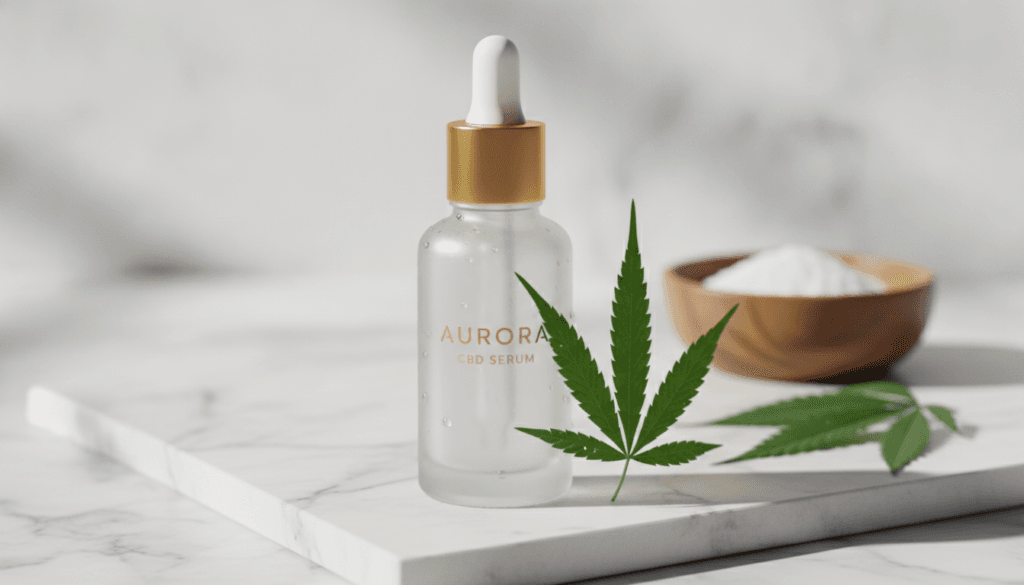
Creams and moisturisers represent the largest segment, accounting for approximately 36.8% of the market in 2025. These provide broad-area barrier support, hydration, and the localised anti-inflammatory effect relevant for general skin health and conditions like eczema. Serums and facial oils are the fastest-growing segment, with a projected CAGR of approximately 23% through 2035, driven by demand for intensive treatment products. Serums typically deliver higher concentrations of CBD in a smaller volume with lighter textures for faster absorption. Masks provide concentrated short-term treatments, often combined with complementary actives. The emerging trend as of 2025 and 2026 is hybrid formulations pairing CBD with clinically recognised actives such as retinol (for anti-ageing), hyaluronic acid (for hydration), niacinamide (for pore control and brightening), and vitamin C (for antioxidant protection), addressing the observation that these combinations can address complex skin concerns more effectively than single-ingredient alternatives.
Full Spectrum vs CBD Isolate in Skincare
A meaningful question for CBD skincare is whether full spectrum (containing trace THC alongside CBD and other cannabinoids and terpenes) or broad spectrum/isolate formulations provide better results. The entourage effect considerations discussed in our terpenes piece apply here too: full spectrum topicals retain a broader range of phytocannabinoids and terpenes that may work synergistically. However, from a regulatory standpoint, CBD isolate in cosmetics is simpler to formulate to a known, stable concentration and avoids any THC content concerns, which matters for brands navigating markets with strict THC limits. From a consumer perspective, CBD isolate in a well-formulated product at an appropriate concentration is more reliably characterised than a full spectrum product with undefined minor cannabinoid contributions.
What to Look for When Buying CBD Skincare
The same COA principle that applies to ingestible CBD products applies here: look for a product that states the CBD content in milligrams per container (not just hemp extract or hemp oil, which may contain little to no CBD), has a third-party Certificate of Analysis confirming cannabinoid content, and uses a clean carrier formula. Products listing Cannabis sativa seed oil as the primary ingredient are hemp seed oil products, not CBD products, as discussed in our label reading guides. For the skin conditions with the best evidence base (acne, eczema, inflammatory skin concerns), a concentration typically in the range of 250 to 1000 mg CBD per 50 ml container is commonly used in research-backed formulations, though standardisation is still limited.
Frequently Asked Questions
Does CBD in skincare actually absorb into the skin?
CBD is fat-soluble and can penetrate the lipid-rich outer skin layer (stratum corneum) to reach the cannabinoid receptors in deeper skin layers and underlying tissue. Penetration is generally limited compared to pharmaceutical topicals, which is why concentration matters and why some formulations use penetration-enhancing ingredients or delivery systems (like nano-emulsion) to improve CBD’s skin absorption. The key point is that topical CBD’s effects are localised to the application site and very little enters the bloodstream, which differentiates topical from systemic oral CBD use.
Can CBD skincare help with anti-ageing?
CBD has antioxidant properties that provide a plausible mechanism for protection against oxidative stress, one of the contributing factors in skin ageing. The anti-inflammatory properties may also help reduce chronic low-grade skin inflammation associated with accelerated ageing. Research specifically on CBD for anti-ageing outcomes in humans is limited, though the $2.4 billion CBD skincare market reflects consumer and brand confidence in these properties. CBD’s anti-ageing case is strengthened when paired with established anti-ageing actives like retinol or vitamin C in hybrid formulations, where CBD’s soothing and barrier-supporting properties may help buffer the irritation that more aggressive anti-ageing actives can cause.
Is CBD skincare regulated differently from regular skincare?
In the EU, the October 2025 SCCS safety opinion provides a regulatory framework for CBD in cosmetics up to specified concentrations, with the ingredient listed in CosIng. In the US, CBD in topical cosmetics does not currently have explicit FDA approval or guidance distinct from general cosmetic regulation, creating ambiguity that brands navigate by staying within general cosmetic compliance without making drug-like claims. In the UK, CBD cosmetics are generally treated under standard cosmetic regulations with the same considerations as other active botanical ingredients. The regulatory landscape continues to evolve, particularly in markets where CBD legal frameworks are still developing.
Does CBD skincare contain THC?
CBD isolate skincare products contain no THC. Broad spectrum products have THC removed during processing. Full spectrum products may contain trace THC within legal limits (0.2% in the EU and UK, 0.3% in the US). For topical use, even trace THC in a skincare product is extremely unlikely to enter the bloodstream in any meaningful amount, making drug test concerns essentially irrelevant for topical-only CBD skincare use, unlike oral full spectrum products.
What is the difference between hemp seed oil and CBD oil in skincare?
This is one of the most important distinctions in CBD skincare. Hemp seed oil is pressed from hemp seeds and contains no CBD or other cannabinoids, only fatty acids (Omega-3, Omega-6, GLA) and vitamins. Its benefits for skin are through fatty acid nourishment and barrier support, discussed in depth in our hemp seed oil skincare content. CBD oil in skincare contains cannabidiol, which interacts with the skin’s own cannabinoid receptors. Many products on the market use the hemp association in their branding while actually containing only hemp seed oil with no CBD, which is why checking the ingredient list for specific CBD milligram content and Cannabis sativa flower/leaf/stem extract (the INCI name for CBD-containing hemp extract) versus Cannabis sativa seed oil (hemp seed oil, no CBD) is essential.
Which CBD skincare products have the best evidence?
Acne and sebum control have some of the most specific mechanistic evidence, with studies showing CBD inhibits sebum production and reduces inflammatory markers in skin cells, and user studies reporting meaningful acne lesion reduction. Eczema and atopic dermatitis have supporting evidence through CBD’s anti-inflammatory and skin barrier effects. General soothing and skin comfort have high user satisfaction data (75 to 86% in a published 56-day study). Anti-ageing claims have the weakest specific clinical evidence, though the antioxidant and anti-inflammatory mechanisms provide plausible support for this use.