
How to Read Hemp Product Labels: Expert Decoding Guide
You pick up a hemp bottle and see “1000mg CBD” with “Full-Spectrum, Lab-Tested, Organic.” But what does that mean? How do you know if it’s accurate?
A product label tells you a lot if you know how to read it. Here’s your guide to understanding hemp product labels and verifying quality claims.
What You Should See on Quality Hemp Labels
1. Company Name & Contact
Reputable company name, website or phone number, address showing transparency.
2. Serving Information
Serving size, number of servings per container, critical for calculating dosage.
3. Cannabinoid Content
CBD amount per serving, total CBD per container, other cannabinoids listed, both mg and percentage.
4. Ingredients List
All ingredients clearly stated, hemp extract type, carrier oils, additives, no mystery ingredients.
5. Potency & Concentration
mg per mL for oils, mg per serving for gummies, easy comparison metric.
6. QR Code or Batch Number
Links to Certificate of Analysis, batch/lot number for traceability.
7. Third-Party Testing Certification
Lab name, testing date, accreditation status.
8. THC Content
Must state THC amount (legal hemp: <0.3%), critical for drug-test accuracy.
9. Suggested Use
Dosage recommendations, frequency, warnings.
10. Expiration Date
Manufacturing date, expiration date, storage instructions.
Red Flags to Avoid
Missing cannabinoid amounts. No QR code for COA verification. False FDA approval claims. Unverifiable third-party lab. Impossible potency claims. Medicinal claims without FDA disclaimer. Expired products. Extremely cheap prices with high potency. Missing ingredient lists.
Certificate of Analysis: Your Verification Tool
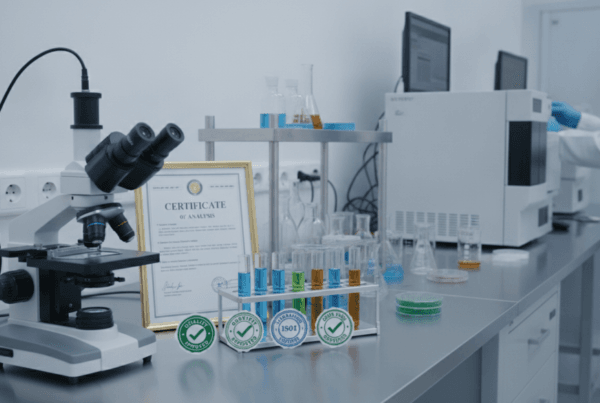
The COA is the most important document for verifying product quality. It shows exactly what’s in the product.
A Good COA Shows:
Cannabinoid Profile: CBD amount (matches label within 10%), THC amount (confirms <0.3%), other cannabinoids, terpene profile.
Contamination Testing: Heavy metals below thresholds, pesticides non-detect, microbial negative, mold/mycotoxins negative, residual solvents non-detect.
Potency Verification: Lab confirms amounts, should match label ±10%.
Lab Information: Name and accreditation, test date, batch number matching product, lab contact info.
Red Flag Example:
Label claims 1000mg CBD but COA shows 150mg. Major discrepancy. Avoid this brand.
How to Verify a COA
Step 1: Find and scan the QR code on label.
Step 2: Search lab name online, verify ISO 17025 accreditation, check reputation.
Step 3: Compare label CBD claim to COA amount (should be within 10%).
Step 4: Check test date (should be recent, within 6 months).
Step 5: Verify batch number on label matches COA batch number.
Understanding Product Types
Full-Spectrum: All cannabinoids, all terpenes, <0.3% THC in legal hemp.
Broad-Spectrum: Full-spectrum with THC removed, preserves cannabinoids and terpenes.
Isolate: Only CBD (99%+ pure), no terpenes, zero THC.
Third-Party Testing: What’s Legitimate
Legitimate Labs: ISO 17025 accreditation, independent ownership, published results, professional websites, comprehensive testing.
Red Flags: Company self-testing, no online presence, unpublished results, proprietary/anonymous labs.
Reputable Labs: ProVerde (Massachusetts), Ananda Lab (California), SC Labs (California), Confidence Analytics (Colorado).
Organic & Certifications
Organic Claims: Only USDA Organic certification counts. Look for seal on label.
Other Certifications: Non-GMO Verified, Vegan/Vegetarian, Kosher/Halal, GMP Certified.
Comparing Products
Normalize potency: Product A (1000mg for $80) = 12.5mg per dollar. Product B (500mg for $30) = 16.7mg per dollar. (B is better value)
Check COA quality: Third-party tested? Full contamination testing? Reputable lab?
Assess accuracy: Does label match COA within 10%?
Evaluate type: Full-spectrum vs isolate vs broad-spectrum for your needs?
Consider ingredients: MCT oil better than coconut oil for bioavailability.
Your Label Reading Checklist
✓ Clear cannabinoid amounts (mg per serving)
✓ QR code to COA
✓ Third-party tested (accredited lab)
✓ Batch number matching COA
✓ THC content (<0.3%)
✓ Full ingredient list
✓ Expiration date
✓ Company contact info
✓ No false medicinal claims
✓ Reasonable price for potency
Check all boxes = quality product
The Bottom Line
A product label is your first line of defense against low-quality or mislabeled hemp. Know what to look for, verify with the COA, and don’t skip brands that won’t provide transparent testing results. Quality products have nothing to hide.