## Introduction
Hemp research is accelerating. As legal status improves and funding increases, scientists are uncovering new applications and understanding mechanisms. This guide reviews current research landscape and future directions.
## Current State of Hemp Research
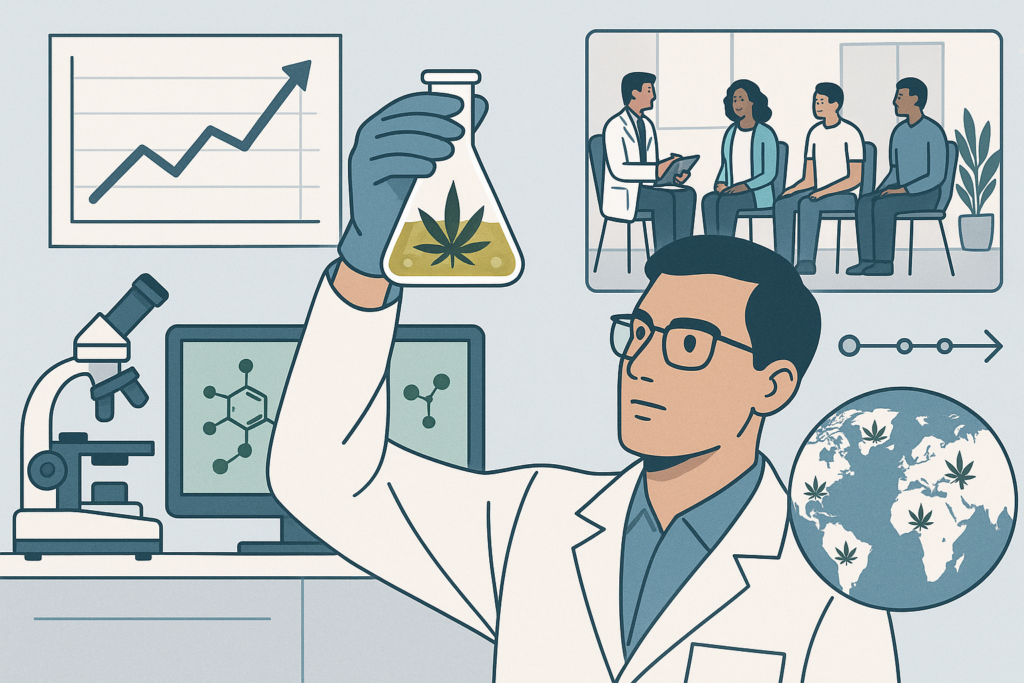
Research volume is growing. In 2015, approximately 200 hemp-related studies were published. By 2023, that number exceeded 2,000 annually. Momentum continues accelerating.
Funding is increasing. National Institutes of Health (NIH) hemp research funding doubled from 2019-2022. Universities establishing hemp research centers. Private companies funding research.
Global perspective: Research isn’t isolated to the US. Canadian universities lead in hemp pharmacology. Israeli researchers pioneer clinical applications. European scientists advance agricultural understanding. Research globalization strengthens evidence base.
Regulatory improvements: FDA acknowledging hemp’s potential. DEA reducing research restrictions. International World Health Organization recognizing hemp’s medical potential.
## Evidence-Based Applications
Sleep support: Multiple RCTs (randomized controlled trials) show hemp’s effectiveness for sleep initiation and quality. A 2019 study in Frontiers in Neurology demonstrated significant sleep improvements with consistent use.
Occasional anxiety: Strong evidence base. The 2020 Permanente Journal study showing 79% anxiety improvement is landmark research. Multiple subsequent studies confirm findings.
Pain management: Growing evidence for acute and occasional pain relief. Less evidence for chronic pain (requires more research). Topical applications show particularly strong evidence.
Athletic recovery: Emerging evidence supports anti-inflammatory effects and recovery support. More research needed on performance effects.
Nausea reduction: Historical use supported by emerging research. Growing clinical interest in hemp for chemotherapy-related nausea.
## Areas Requiring More Research
Chronic pain management: Long-term safety and efficacy data needed. How does tolerance develop? When does benefit plateau?
Cancer support: Early promising findings but much research needed. Exact mechanisms unclear. Clinical trials expanding.
Neurological conditions: Seizure support shows promise for specific conditions. Other neurological applications need investigation.
Cognitive support: Aging brain health benefits hypothesized but insufficiently studied. Long-term cognitive effects unclear.
Mental health conditions: Beyond occasional anxiety. Depression, PTSD, bipolar disorder need more robust research.
## Research Mechanisms
How does hemp work? Scientists continue elucidating mechanisms:
Endocannabinoid system: The human body’s native regulatory system. Hemp compounds interact with CB1 and CB2 receptors throughout body and brain.
Gene expression: Hemp affects which genes are expressed or silenced. This epigenetic effect may explain diverse applications.
Neuroplasticity: Hemp may enhance brain’s ability to form new connections and pathways. Particularly relevant for learning, recovery.
Inflammation modulation: Rather than suppressing inflammation entirely (harmful), hemp moderates excess inflammatory responses (beneficial).
Antioxidant properties: Hemp compounds neutralize free radicals, protecting cells from damage.
## Ongoing Clinical Trials
Multiple clinical trials are currently recruiting or underway:
Sleep disorders: Multiple NIH-funded trials testing hemp for insomnia, sleep apnea.
PTSD support: VA-funded research at multiple military hospitals.
Athletic recovery: Sports medicine researchers studying post-exercise inflammation.
Skin conditions: Dermatologists studying hemp for various skin applications.
Neurological conditions: Seizure management, neuropathic pain, tremor disorders.
Check ClinicalTrials.gov for ongoing studies recruiting participants.
## Emerging Research Interests
Personalized dosing: Genomic research may eventually identify optimal dosing based on genetics.
Strain-specific effects: Different hemp varieties show different application profiles. Precision matching coming.
Combination therapy: Hemp combined with other compounds—does this enhance benefits?
Delivery optimization: Novel delivery methods (transdermal patches, etc.) being researched.
Long-term effects: Multi-year safety studies expanding.
Women-specific applications: Menstrual health, pregnancy considerations, menopausal support—all areas needing more research.
## Challenges in Hemp Research
Scheduling: Hemp’s legal status complicates research. Federal classification as Schedule I limits studies. Researchers need DEA approval for every trial.
Funding limitations: Despite improvements, hemp research still underfunded compared to pharmaceutical research.
Standardization: Wide product variability makes research difficult. Standardized dosing, purity, consistency needed.
Replication: Some preliminary findings don’t replicate in larger studies. Scientific process working as intended, but slow.
Publication bias: Positive findings more likely to be published. Negative or null findings buried. This skews perception of evidence.
## Quality Indicators for Research
When evaluating hemp research, look for:
Peer review: Published in reputable journals with peer review process.
Sample size: Larger studies (100+ participants) more reliable than small preliminary studies.
Randomization: Randomized controlled trials (RCTs) better than observational studies.
Blinding: Double-blind (neither researchers nor participants know who got hemp) best design.
Replication: Has research been replicated by independent research teams?
Conflict of interest: Do researchers have financial stakes in outcomes?
## Where to Find Research
PubMed.gov: Free access to abstracts of published research. Search “cannabidiol” or “hemp.”
ResearchGate.com: Researchers share full papers. Researchers often grant access if you ask.
Google Scholar: Free access to many full-text papers.
University libraries: If affiliated with university, access to expensive journals.
Company websites: Reputable hemp companies often provide research summaries.
## Future Directions
More research is coming. FDA likely to establish hemp categories similar to pharmaceutical classifications. This standardization will improve quality and consistency.
Personalized medicine: Genetic testing may identify optimal hemp for your genetics.
Precision dosing: Exact dosing based on individual factors will become standard.
Novel applications: Research will identify new applications we haven’t considered.
Safety data: Long-term safety studies will provide confidence for widespread adoption.
Integration with conventional medicine: Doctors increasingly familiar with hemp will integrate into treatment plans appropriately.
## The Research Timeline
Understanding research takes time. Drug development typically requires:
– Years of laboratory research
– Years of animal testing
– Years of early clinical trials (safety)
– Years of larger clinical trials (efficacy)
– FDA review process
– Post-market surveillance
A new pharmaceutical drug typically requires 10-15 years and hundreds of millions of dollars. Hemp has compressed timelines somewhat due to existing safety data, but rigorous evidence still requires years.
## Critical Thinking About Hemp Research
Be skeptical of:
– “Miracle cure” claims
– Testimonials without research backing
– Companies with financial stakes making claims
– Single studies as “proof”
– Animal studies extrapolated to humans
Value:
– Peer-reviewed research
– Consistent findings across multiple studies
– Large, well-designed trials
– Long-term data
– Transparent conflict-of-interest disclosures
## Conclusion
Hemp research is progressing rapidly with expanding funding, growing study volume, and improving quality. Current evidence strongly supports applications in sleep, occasional anxiety, and pain management. Emerging evidence suggests potential for additional applications. However, many questions remain. The next 5-10 years will dramatically expand our understanding through clinical trials, mechanistic research, and real-world data collection. As evidence builds, integration with conventional medical practice will likely increase. For now, informed consumers should review available research, understand study quality, and maintain realistic expectations about what hemp can and cannot do.