Eczema, clinically known as atopic dermatitis, is a chronic inflammatory skin condition affecting an estimated 15 to 20% of children and 1 to 3% of adults globally. It is characterised by dry, itchy, and inflamed skin that can crack, weep, and become infected. Managing eczema requires both addressing the inflammation and repairing the skin barrier that allows moisture to escape and irritants to enter.
Hemp seed oil addresses both of these mechanisms.
The Clinical Evidence
The strongest evidence for hemp seed oil and eczema comes from a randomised, single-blind crossover study published in the Journal of Dermatological Treatment. Patients with atopic dermatitis consumed either hemp seed oil or olive oil (as the control) daily for 20 weeks, then switched oils for a further 20 weeks. The results showed that patients consuming hemp seed oil experienced significant reductions in skin dryness, itchiness, and transepidermal water loss (TEWL) compared to the olive oil period. Plasma fatty acid composition also improved, suggesting that the oil’s Omega-3 and GLA content was being incorporated into skin cell membranes and influencing inflammation pathways.
How Hemp Seed Oil Helps Eczema
Eczema skin has two key problems: a deficient skin barrier (caused by lower-than-normal levels of certain lipids and structural proteins, particularly filaggrin) and chronic inflammation. Hemp seed oil addresses both. Its linoleic acid and alpha-linolenic acid content replenish the fatty acids that form part of the skin’s lipid barrier, reducing TEWL and improving moisture retention. Its GLA content converts in the body to Prostaglandin E1, which has anti-inflammatory effects that may help moderate the inflammatory signalling driving the eczema response.
How to Use Hemp Seed Oil for Eczema
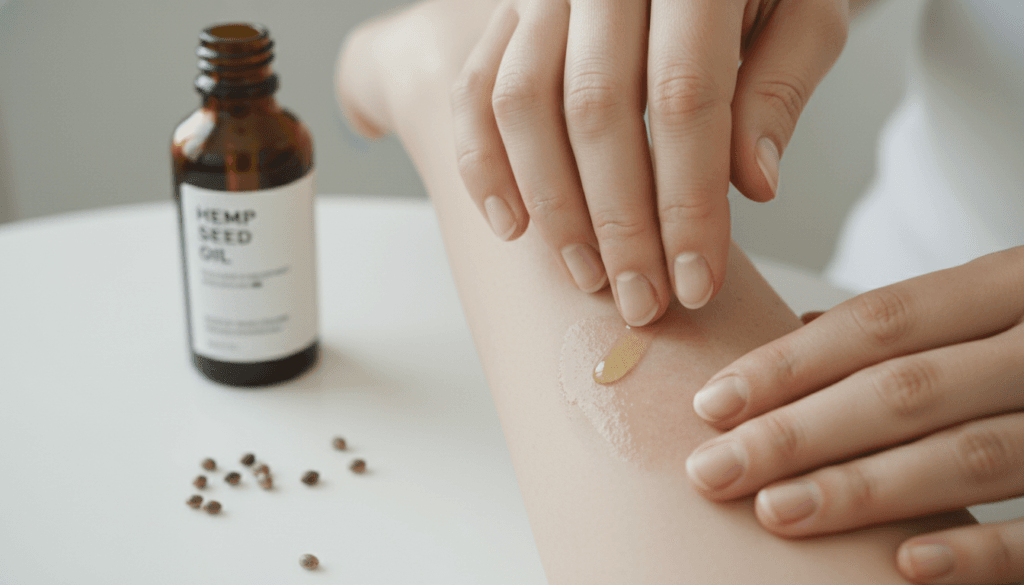
Both dietary and topical use are relevant for eczema management. For dietary use, consume 1 to 2 tablespoons of cold-pressed hemp seed oil daily, added to salads, smoothies, or food. This is the method used in the clinical study and provides systemic fatty acid rebalancing over weeks and months. For topical use, apply cold-pressed hemp seed oil directly to affected areas twice daily after gently cleansing. On the face, 2 to 4 drops applied to slightly damp skin. On the body, apply a generous amount and allow to absorb. Combining dietary and topical use provides the most comprehensive approach.
What Hemp Seed Oil Cannot Do for Eczema
Hemp seed oil is not a substitute for medical eczema treatment. Moderate to severe atopic dermatitis requires medical management, which may include prescription topical corticosteroids or calcineurin inhibitors, newer biologic treatments such as dupilumab for severe cases, antihistamines for itch management, and wet wrap therapy. Hemp seed oil is a valuable complementary measure that supports skin barrier function and provides anti-inflammatory fatty acid support, but it should be used alongside rather than instead of established medical treatments.
Frequently Asked Questions
Has hemp seed oil been clinically tested for eczema?
Yes. A 20-week randomised crossover study published in the Journal of Dermatological Treatment found that dietary hemp seed oil significantly improved skin dryness, itchiness, and transepidermal water loss in patients with atopic dermatitis compared to olive oil as a control. This is one of the more robust clinical studies on a natural oil for eczema, making hemp seed oil one of the better-evidenced natural options for this condition.
Should I apply hemp seed oil to eczema or take it orally?
The clinical evidence comes from dietary (oral) consumption. Topical application provides direct localised fatty acid support to the skin barrier. Both approaches are beneficial and they work through different but complementary mechanisms. For a comprehensive approach, using hemp seed oil both as a daily dietary supplement and as a topical application to affected areas is likely to provide the best outcome.
Can hemp seed oil be used on eczema-affected skin without irritation?
Pure, cold-pressed hemp seed oil is generally very well-tolerated by eczema-affected skin due to its non-comedogenic, fragrance-free, and anti-inflammatory properties. However, eczema skin is inherently reactive, and a patch test is always advisable before applying any new product to affected areas. Apply a small amount to unaffected skin first and observe for 24 to 48 hours.
Is hemp seed oil or CBD oil better for eczema?
Hemp seed oil has more direct clinical evidence for eczema specifically, from the 20-week dietary study. CBD oil may offer additional anti-inflammatory benefit through the endocannabinoid system, which plays a role in skin inflammation and itch signalling. Some CBD-containing topicals are being researched for eczema. Both have potential value, and products combining hemp seed oil as a carrier with CBD as an active ingredient represent a logical combination for eczema management.
How long does it take for hemp seed oil to improve eczema symptoms?
The clinical study used a 20-week period to assess outcomes, and meaningful improvements were observed within this timeframe. For topical use, some reduction in dryness and discomfort may be noticeable within 1 to 2 weeks. For dietary consumption, the systemic fatty acid rebalancing that produces the most significant clinical outcomes typically develops over 4 to 12 weeks of consistent daily use.