The idea of building a house out of the same plant used to make CBD oil and rope sounds, to many people, like a novelty rather than serious construction. Yet hempcrete buildings exist across Europe, some over two decades old, and the material’s properties have attracted renewed interest as the construction industry looks for lower-carbon alternatives. Here is an honest look at what hempcrete is, how it performs, and where it genuinely fits.
What Hempcrete Actually Is
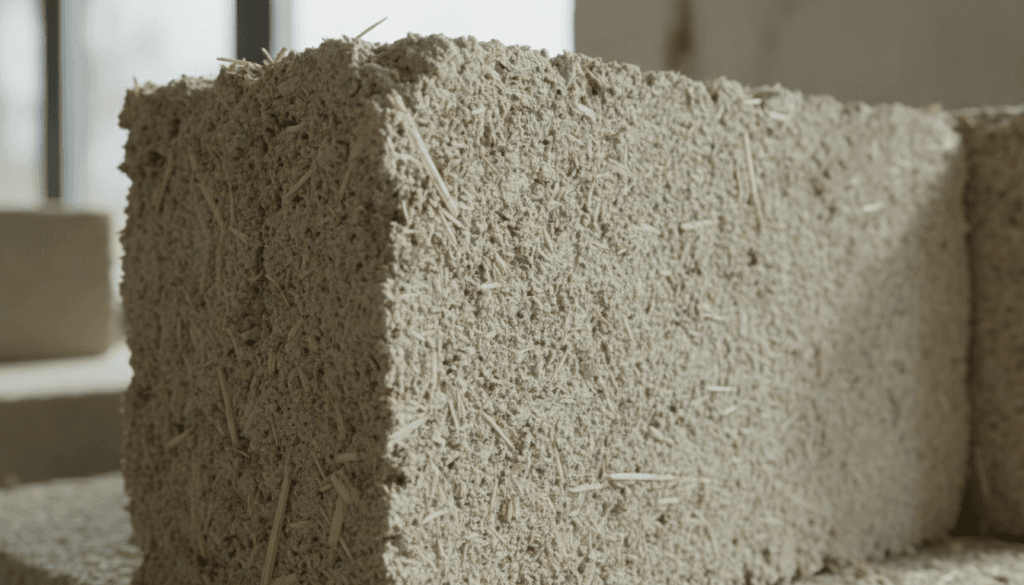
Hempcrete is a bio-composite material made by combining hemp hurd (also called shiv, the woody inner core of the hemp stalk left over after fibre extraction) with a lime-based binder and water. The mixture is cast or sprayed into formwork around a structural frame, typically timber, and cures over several weeks into a lightweight, insulating material. Despite the name, hempcrete is not concrete in the structural sense; it does not have anywhere near the compressive strength of conventional concrete and is not used as a load-bearing material in the way concrete is.
How Hempcrete Performs: The Honest Numbers
Hempcrete’s primary strengths are in insulation and moisture regulation rather than structural strength. It provides good thermal insulation, helping buildings maintain stable internal temperatures and reducing heating and cooling demands. It is highly breathable, meaning it allows moisture vapour to pass through the material rather than trapping it, which can help regulate indoor humidity and reduce the risk of damp-related issues common in some conventional construction. It also has good fire resistance properties, with the lime content contributing to this. Where hempcrete does not perform comparably to conventional materials is compressive strength; hempcrete walls require a structural frame (commonly timber) to bear the building’s load, with the hempcrete itself serving as infill, insulation, and a breathable enclosure rather than as the load-bearing element.
The Carbon Story: Why Hempcrete Gets Attention
Hempcrete’s environmental credentials rest on two separate carbon-related properties working together. First, the hemp plant itself absorbed CO2 from the atmosphere during its growth through photosynthesis, with research estimating hemp crops absorb between 8 and 15 tonnes of CO2 per hectare per growing cycle. This carbon becomes locked into the plant’s hurd, the component used in hempcrete. Second, the lime binder used in hempcrete continues to slowly absorb additional CO2 from the air over time through a natural process called carbonation, where the lime gradually reacts with atmospheric CO2 over years and decades. Together, these two processes mean a hempcrete wall can continue to sequester carbon for a long period after the building is constructed, in contrast to conventional concrete production, which is a significant net emitter of CO2 due to the cement manufacturing process.
Real Hempcrete Buildings: This Is Not Theoretical
Hempcrete construction has a track record, particularly in Europe, where it has been used in both new builds and the renovation of older buildings, including some historic structures where hempcrete’s breathability makes it compatible with older wall construction methods that can be damaged by non-breathable modern materials. France has been a notable centre for hempcrete construction and hemp processing infrastructure generally. The material has also been used in projects in the UK, and is gaining adoption, still on a relatively small scale, in North America and Australia, often in custom or eco-focused residential projects.
Why Hempcrete Isn’t Mainstream Yet
The barriers to wider hempcrete adoption are largely practical and infrastructural rather than questions about whether the material works. Processing infrastructure for hemp hurd at the scale needed for widespread construction use is far less developed than for conventional building materials; hemp grown specifically for fibre and hurd production (as opposed to seed or cannabinoid production) requires its own supply chain, and this remains a smaller industry than mainstream construction material supply chains. Builder familiarity is another significant factor; hempcrete construction techniques differ from standard timber-frame-and-drywall or masonry construction, and the pool of contractors experienced with hempcrete remains small in most regions, which can affect both availability and cost of skilled labour for a hempcrete project. Building codes and standardisation also vary; in regions where hempcrete construction methods are less established within building codes, navigating approvals can add time and complexity compared to using conventional, well-understood materials.
Cost: What to Realistically Expect
Hempcrete construction costs vary significantly by region, largely driven by the availability of hemp hurd and the local pool of experienced contractors rather than the inherent cost of the raw materials. In regions with established hempcrete supply chains and contractor experience (parts of Europe, for example), costs can be more competitive with conventional insulation and infill methods. In regions where hempcrete remains niche, costs are often higher due to material transport, lack of local supply, and the premium associated with specialist labour. This cost picture is similar to many emerging sustainable building materials: the material itself is not inherently expensive, but the surrounding infrastructure and expertise required to use it efficiently is still developing in most markets.
Who Should Consider Hempcrete?
Hempcrete is most relevant for self-builders and custom home projects where the additional planning and potentially specialist labour involved in working with a less mainstream material is acceptable as part of a broader sustainability-focused or breathable-building-focused design goal. It is also relevant for renovation of older, traditionally constructed buildings where breathable materials are specifically beneficial for compatibility with existing construction. It is less likely, at least currently, to be a practical choice for large-scale conventional housing developments where construction speed, established supply chains, and contractor availability for standard materials are primary drivers, though this could shift as hemp processing infrastructure develops further in more regions.
Frequently Asked Questions
Is hempcrete as strong as concrete?
No, and it is not intended to be. Hempcrete has significantly lower compressive strength than conventional concrete and is not used as a load-bearing structural material. It is used as insulating infill within a structural frame, typically timber, where its strengths (insulation, breathability, fire resistance) are relevant, rather than as a replacement for concrete’s structural role in foundations, floors, or load-bearing walls.
Can you build an entire house out of hempcrete?
A house can have its walls constructed using a timber frame with hempcrete infill, along with a hempcrete or other insulation in the roof, but the structural elements (foundation, frame, roof structure) are typically conventional materials (timber, sometimes concrete for foundations). In this sense, hempcrete forms a significant part of a building’s envelope and insulation system, working alongside conventional structural materials, rather than hempcrete alone constituting the entire structure including load-bearing elements.
How long does hempcrete last?
Hempcrete buildings constructed using established techniques, particularly in Europe, have been in use for multiple decades without reported structural issues related to the hempcrete itself, suggesting good longevity when properly constructed and maintained. As with any building material, proper construction detailing (particularly around moisture management, even though hempcrete is breathable) and maintenance affect long-term performance, but there is no inherent reason hempcrete would have a shorter lifespan than conventional materials when used appropriately within its intended role.
Is hempcrete fireproof?
Hempcrete has good fire resistance properties, with the lime binder contributing significantly to this characteristic, as lime is itself a non-combustible material. This does not mean a hempcrete building is entirely fireproof in an absolute sense (no building material claims this), but hempcrete’s fire performance is generally considered a strength compared to some conventional insulation materials, particularly some types of foam insulation which can be more flammable.
Why isn’t hempcrete used more if it’s carbon-negative?
The primary barriers are infrastructural rather than related to the material’s performance or environmental properties. Hemp hurd processing infrastructure (the supply chain for the specific component used in hempcrete) is less developed at scale compared to conventional building material supply chains. Builder familiarity and the availability of contractors experienced in hempcrete construction techniques remain limited in most regions. Building codes and standardised approval processes for hempcrete construction also vary by region, which can add complexity. These are the kinds of barriers that tend to reduce over time as a material’s supply chain and skilled labour pool develop, similar to the adoption pattern of other emerging sustainable building materials.
Where can I see examples of hempcrete buildings?
Hempcrete has the longest and most established track record in parts of Europe, particularly France, where it has been used in both new construction and renovation of older buildings for multiple decades. Examples also exist in the UK, and increasingly in custom and eco-focused residential projects in North America and Australia, though these remain less common and more often associated with self-build or architect-led custom projects rather than standard housing developments.