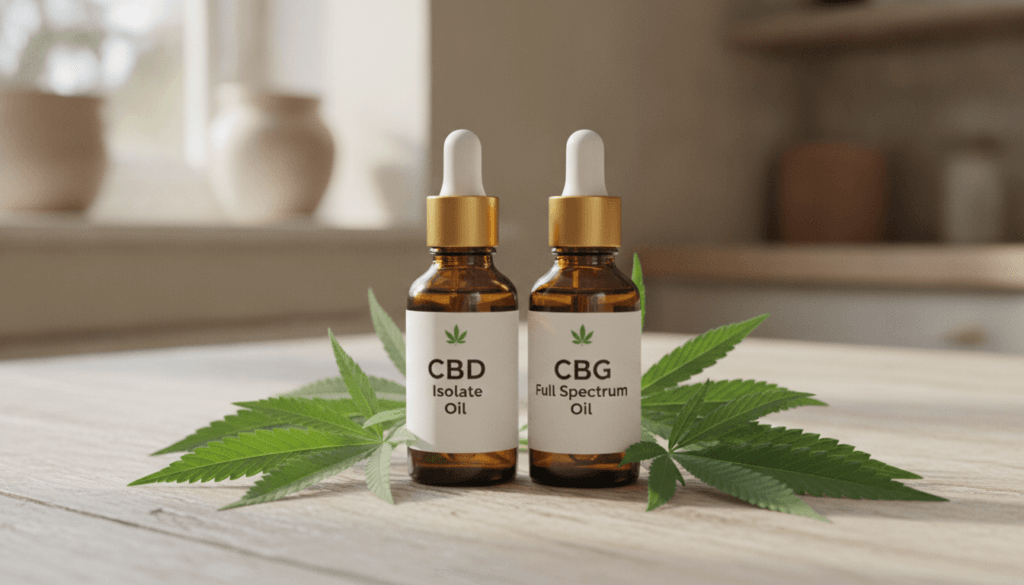
CBD and THC dominate cannabis conversation, but they are only two of more than 100 cannabinoids found in the Cannabis sativa plant. Two minor cannabinoids, CBG and CBN, have moved from obscurity into mainstream wellness products in recent years, each with a distinct profile and a growing, if still early-stage, body of research behind them.
CBG: The Mother of All Cannabinoids
Cannabigerol (CBG) earns its nickname because it is the precursor compound from which other major cannabinoids, including THC and CBD, are synthesised as the cannabis plant grows. Young cannabis plants contain higher proportions of CBG, which converts into other cannabinoids as the plant matures, meaning mature plants typically contain only small amounts of CBG, around 1% or less, which is part of why CBG products have historically been more expensive to produce than CBD products.
CBG is non-intoxicating, similar to CBD, and does not produce a high. Research interest in CBG has focused on several areas. A 2021 survey of 127 people using CBG-predominant cannabis preparations found that the majority reported CBG-predominant products were superior to conventional medicines for several conditions: 73.9% reported this for chronic pain, 80% for depression, 73% for insomnia, and 78.3% for anxiety. The same survey found that 44% reported no adverse effects at all, with the most common side effects among those who did experience them being dry mouth (16.5%), sleepiness (15%), increased appetite (11.8%), and dry eyes (8.7%).
An important practical point from the research: CBG has limited metabolism through the cytochrome P450 liver enzyme pathways, the same pathways CBD relies on heavily. This means CBG is associated with fewer predicted drug-drug interactions than CBD, which may be relevant for people taking other medications, though this should not be taken as a guarantee of no interactions, simply a lower predicted likelihood based on the metabolic pathways involved.
CBN: The Sleepy Cannabinoid
Cannabinol (CBN) has a very different origin story from CBG. Rather than being a precursor, CBN forms when THC degrades over time, through exposure to oxygen, light, and heat. This is why older, improperly stored cannabis tends to have higher CBN content, and it is part of the folk wisdom that aged cannabis produces a sleepier effect, an observation that recent research has begun to substantiate.
A 2025 study published in Neuropsychopharmacology used polysomnography (objective sleep monitoring) to examine CBN’s effects on sleep in rats, comparing it directly to zolpidem, a common pharmaceutical sleep medication. The study found that CBN increased total sleep time, with effects on non-REM sleep comparable in magnitude to zolpidem, though unlike zolpidem, CBN also increased REM sleep. The researchers also identified that CBN’s primary metabolite, 11-hydroxy-CBN, reached high brain concentrations and was active at CB1 receptors with potency comparable to THC, suggesting this metabolite may contribute significantly to CBN’s sleep effects. The study did note a biphasic pattern, with some initial sleep suppression before the larger increase in sleep, and flagged that early-stage REM suppression from CBN and its metabolite could have implications worth further study.
It is worth being precise about what this research does and does not show: this was an animal study, and while it provides a more rigorous mechanistic basis for CBN’s reputation as a sleep aid than existed before, it does not directly establish the same effects in humans at typical consumer doses. A separate 2025 meta-analysis of six randomised controlled trials in humans, covering 1,077 participants, found that cannabinoid formulations containing THC and CBN were associated with improved sleep quality, while CBD alone did not show a statistically significant effect, suggesting CBN’s contribution (often alongside THC) may be more relevant to sleep benefits than CBD’s.
CBG vs CBN: A Side-by-Side Comparison
| Factor | CBG | CBN |
|---|---|---|
| Origin | Precursor cannabinoid (present in young plants) | Degradation product of THC (forms as cannabis ages) |
| Psychoactive | No | Mildly, at higher doses, due to CB1 activity of its metabolite |
| Primary research interest | Pain, anxiety, depression, inflammation | Sleep, appetite, pain |
| Common side effects | Dry mouth, sleepiness, increased appetite, dry eyes | Sedation (intended effect for sleep use) |
| Drug interaction risk | Lower than CBD (limited CYP450 metabolism) | Less characterised |
| Typical product positioning | Daytime wellness, focus, anxiety | Nighttime, sleep-specific products |
How These Fit Alongside CBD and THC
CBG and CBN are most commonly found in full spectrum CBD products, where they occur naturally alongside CBD, THC, and other cannabinoids as part of the plant’s complete cannabinoid profile. Some products are also formulated to be CBG-dominant or CBN-dominant, isolating and concentrating these specific cannabinoids for targeted use, such as CBN-dominant products marketed specifically for sleep. The entourage effect, the theory that cannabinoids and terpenes work better together than in isolation, applies to these minor cannabinoids as well; the 2025 sleep meta-analysis specifically found that combinations including THC and CBN outperformed CBD alone, supporting a multi-cannabinoid approach for sleep-specific goals.
What to Look for When Trying CBG or CBN Products
For CBG, look for products that specify the CBG content in milligrams, similar to how CBD content is listed, and check the Certificate of Analysis to confirm the cannabinoid panel, since CBG is more expensive to produce and mislabelling concerns can apply here as they do with CBD. For CBN, similarly look for specified CBN content and a COA, and be aware that CBN-dominant products marketed for sleep may also contain trace THC (within legal hemp limits) given CBN’s relationship to THC degradation, which is relevant for anyone concerned about drug testing.
Frequently Asked Questions
Will CBG or CBN get me high?
CBG is non-intoxicating and does not produce a high, similar to CBD. CBN is described as mildly psychoactive at higher doses; research suggests its primary metabolite, 11-hydroxy-CBN, is active at CB1 receptors with potency comparable to THC, meaning CBN-dominant products, particularly at higher doses, may produce some mild psychoactive effect, though this is generally far less pronounced than THC itself and is part of why CBN is positioned as a sleep aid rather than a recreational product.
Is CBN good for sleep?
Early research is promising but still developing. A 2025 animal study using objective sleep monitoring found CBN increased total sleep time with effects on non-REM sleep comparable to a common pharmaceutical sleep aid. A separate 2025 human meta-analysis found that cannabinoid formulations containing THC and CBN (but not CBD alone) were associated with improved sleep quality. This suggests CBN, often in combination with THC, may have a more substantiated basis for sleep support than CBD alone, though human research at typical consumer CBN-only doses remains more limited than the animal data.
Does CBG help with anxiety?
A 2021 survey of CBG-predominant cannabis users found 78.3% reported CBG-predominant products were superior to conventional medicines for anxiety, and CBG is currently being studied in clinical trials specifically examining its effects on anxiety, stress, mood, and cognition. This represents promising preliminary and survey-based evidence, but more rigorous clinical trial data is still developing, similar to the broader pattern across minor cannabinoid research generally.
Why is CBG more expensive than CBD?
CBG is naturally present in mature cannabis plants only in small amounts, typically around 1% or less, because the plant converts CBG into other cannabinoids (including CBD and THC) as it matures. Extracting meaningful quantities of CBG therefore requires either harvesting plants earlier in their growth cycle (sacrificing yield of other cannabinoids) or using specially bred high-CBG cultivars, both of which increase production costs compared to CBD, which is abundant in many mature hemp varieties.
Can I take CBG and CBN together?
Yes, and full spectrum CBD products often naturally contain both alongside CBD and trace THC, reflecting the plant’s complete cannabinoid profile. Some people also specifically combine CBG products (often used during the day for its reported effects on mood and focus) with CBN products (often used at night for sleep), using each for its specific positioning. There is no known significant interaction concern between CBG and CBN themselves, though as with any cannabinoid combination, individual response varies.
Do CBG and CBN show up on drug tests?
CBG itself is not what standard drug tests screen for, similar to CBD. CBN’s relationship to THC is more direct, since CBN forms from THC degradation, and CBN-dominant products may contain trace THC. Standard drug tests screen for THC metabolites, not CBN directly, but if a CBN product contains any THC (even at legal hemp limits), the same considerations that apply to full spectrum CBD products and drug testing would apply. Checking the COA for THC content specifically remains the relevant step regardless of which minor cannabinoids are present.