Last updated: 28 August 2026. Informational only, not medical advice.
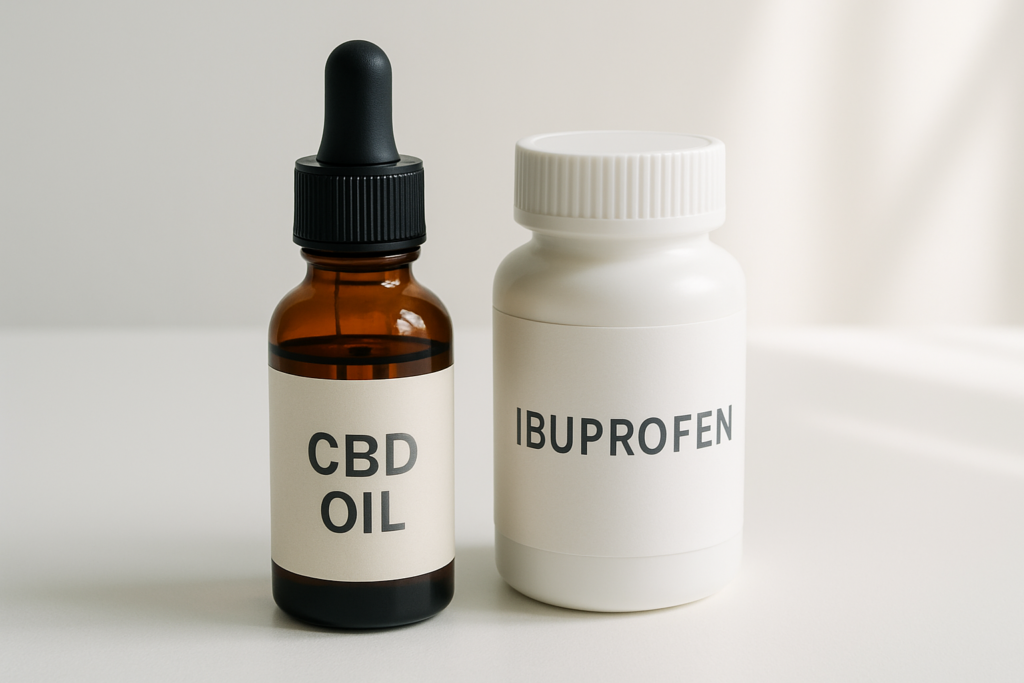
CBD and NSAIDs like ibuprofen or naproxen can generally be taken together, and no severe interaction is established. Both are processed partly through the same liver enzyme pathway, which means CBD could theoretically raise NSAID blood levels. Both also carry some bleeding-risk considerations independently. For occasional, short-term use this combination is low concern for most healthy adults; the calculus changes for regular NSAID users and anyone on blood thinners.
CBD and NSAIDs at a glance
| NSAIDs (ibuprofen, naproxen) | CBD | |
|---|---|---|
| Mechanism | Blocks COX-1/COX-2 enzymes, reduces prostaglandins | Endocannabinoid modulation, indirect anti-inflammatory signaling |
| Liver pathway | Mainly CYP2C9 | Mainly CYP3A4, but affects multiple enzymes broadly |
| Stomach risk | Established, can irritate lining with regular use | Not established as a stomach irritant |
| Bleeding risk | Established, especially with regular/high-dose use | Possible, less well-quantified in humans |
| Onset | 30 to 60 minutes | 30 to 90 minutes orally |
| Best for | Acute pain, inflammation, fever | General discomfort, sleep-linked pain, anxiety-linked pain |
The enzyme overlap that matters
CBD is metabolized primarily through CYP3A4 but also interacts with CYP2C9, one of the main pathways NSAIDs use. This creates a plausible mechanism for CBD slowing NSAID clearance, which in theory could raise NSAID blood levels and, with them, NSAID-related risks like stomach irritation or bleeding. This hasn’t been extensively studied in controlled human trials specifically for CBD and NSAIDs, so treat it as a reasonable caution rather than a settled finding.
What actually raises concern
Occasional NSAID use (an ibuprofen here and there for a headache) alongside occasional CBD use is unlikely to cause meaningful issues for most healthy adults. The picture changes with:
- Regular, daily NSAID use. Chronic NSAID use already carries stomach and kidney risks; adding a variable that may slow clearance deserves more caution.
- High-dose NSAID use. Higher doses already carry more bleeding and GI risk independently.
- Existing stomach or kidney issues. Both substances place some burden on these systems.
- Blood thinner use. Combining CBD, NSAIDs, and anticoagulants stacks bleeding-risk factors and needs medical supervision.
Practical guidance
- Occasional, short-term co-use (a few days) is low concern for most healthy adults without other risk factors
- For regular NSAID use (arthritis, chronic pain), discuss CBD use with your doctor or pharmacist first
- Take NSAIDs with food regardless of CBD use, this is standard advice that still applies
- Watch for unusual stomach discomfort, dark stools, or unusual bruising if combining regularly
- Don’t increase NSAID dose because CBD “isn’t working” for pain, that’s a signal to reassess with a doctor, not to stack more medication
Could CBD let you use less NSAID?
This is a commonly cited potential benefit, and it’s plausible in principle, if CBD helps manage some pain or inflammation independently, less NSAID might be needed for the same relief. This hasn’t been well-established in controlled human trials though. Anyone hoping to reduce NSAID use for chronic conditions should do so with medical guidance rather than self-directed tapering, since underlying inflammation still needs appropriate management.
Who should be cautious
- Anyone on blood thinners. Stacked bleeding-risk factors need medical supervision.
- Regular NSAID users. Daily or near-daily use with added CBD warrants a conversation with a pharmacist.
- Kidney or stomach conditions. Both substances place some load on these systems.
- Pre-surgery. Both are commonly paused before procedures; follow your surgical team’s guidance.
- Older adults. NSAID risks increase with age generally; adding variables warrants more caution.
Frequently asked questions
Can I take CBD and ibuprofen together?
Generally yes for occasional use in healthy adults. No severe interaction is established, though a plausible enzyme interaction exists.
Does CBD make ibuprofen stronger?
Possibly, through slowed clearance via a shared liver pathway. This means effects and side effects could both be somewhat amplified.
Is it safe to combine them daily?
For regular, ongoing use of either, check with a doctor or pharmacist rather than assuming it’s fine long-term without guidance.
Can CBD replace NSAIDs for pain?
Not reliably established. CBD may help some types of discomfort, but it isn’t a proven substitute for NSAIDs in inflammatory or acute pain.
Does this apply to aspirin too?
Aspirin has its own distinct bleeding-risk profile; treat the combination with at least the same caution, more if you’re on aspirin for cardiovascular reasons.
What symptoms mean I should stop and get checked?
Unusual bruising, dark or bloody stools, persistent stomach pain, or unusual fatigue warrant medical attention regardless of what’s causing them.