Last updated: 1 September 2026. Informational only, not medical advice.
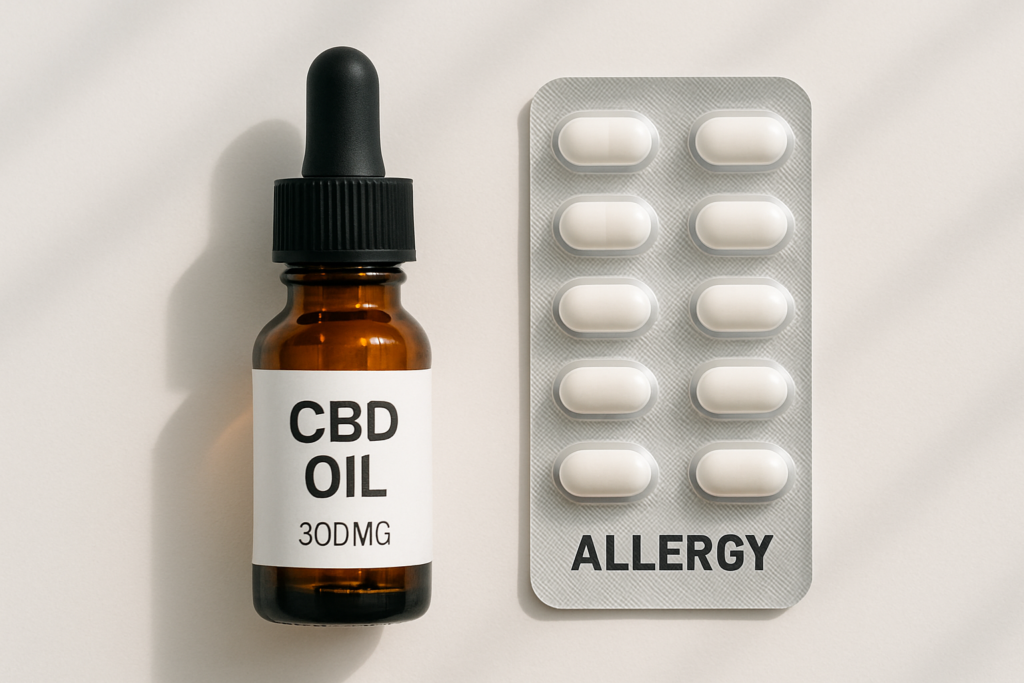
CBD and antihistamines like diphenhydramine (Benadryl) or cetirizine (Zyrtec) don’t have a well-documented dangerous interaction, but both can cause drowsiness, and combined sedation is the main practical concern. First-generation antihistamines like diphenhydramine cause more sedation than second-generation ones like cetirizine or loratadine, so the combined-drowsiness effect is more noticeable with the older class.
CBD and antihistamines at a glance
| First-gen (diphenhydramine) | Second-gen (cetirizine, loratadine) | CBD | |
|---|---|---|---|
| Sedation level | High | Low to moderate | Mild to moderate, dose-dependent |
| Mechanism | Crosses blood-brain barrier, blocks histamine broadly | Minimal brain penetration | Endocannabinoid modulation |
| Combined drowsiness risk | Higher | Lower | Contributes to whichever it’s paired with |
| Liver pathway | CYP2D6 primarily | Minimal CYP involvement | CYP3A4 primarily, broad enzyme effects |
Why the antihistamine generation matters
First-generation antihistamines like diphenhydramine cross the blood-brain barrier readily, which is why they cause noticeable drowsiness, this is actually why diphenhydramine is also sold as a sleep aid. Combining this with CBD, which can independently cause mild drowsiness in some people, means additive sedation is a real practical consideration, particularly for driving or operating machinery.
Second-generation antihistamines like cetirizine and loratadine were specifically developed to minimize brain penetration and reduce drowsiness. The combined sedation risk with CBD is correspondingly lower, though not zero, cetirizine in particular still causes some drowsiness in a subset of users.
What to actually watch for
- Excessive drowsiness, beyond what either substance causes alone
- Impaired coordination or reaction time, relevant for driving
- Difficulty waking if taken before sleep
- Dry mouth, a side effect both can cause independently, which may be more noticeable combined
Practical guidance
- If using diphenhydramine (or any first-generation antihistamine) with CBD, avoid driving or operating machinery until you know how the combination affects you
- Second-generation antihistamines (cetirizine, loratadine, fexofenadine) carry lower combined sedation risk
- Taking both in the evening is more practical than combining during the day, given the drowsiness overlap
- Start with lower doses of both if trying the combination for the first time
- Seasonal allergy sufferers using daily antihistamines alongside daily CBD should watch for cumulative fatigue over time, not just single-dose effects
Does CBD affect antihistamine effectiveness?
There’s no established evidence that CBD reduces or blocks antihistamine effectiveness for allergy symptoms. The liver enzyme overlap (particularly with diphenhydramine’s CYP2D6 pathway) could theoretically affect clearance rates, but this hasn’t been well studied specifically for this combination, and isn’t considered a major practical concern for occasional use.
Who should be more cautious
- Anyone driving or operating machinery. Don’t combine first-generation antihistamines with CBD before activities requiring alertness.
- Older adults. Both antihistamines (especially first-generation) and CBD-related drowsiness carry higher fall risk in older adults.
- On other sedating medications. Sleep aids, benzodiazepines, or opioids combined with both antihistamines and CBD compounds sedation risk significantly.
- New to either substance. Establish how each affects you individually before combining.
Frequently asked questions
Can I take CBD with Benadryl?
There’s no established dangerous interaction, but both cause drowsiness, and combined sedation can be significant. Avoid driving after combining them until you know your response.
Is CBD safe with Zyrtec or Claritin?
Generally considered lower risk than with diphenhydramine, since second-generation antihistamines cause less sedation on their own.
Will CBD make my allergy medication less effective?
No established evidence supports this. The combination is more of a sedation concern than an effectiveness concern.
Can I take both for sleep and allergies at the same time?
Many people do, particularly in the evening, but should be aware of cumulative drowsiness, especially the next morning.
What’s the safest antihistamine to combine with CBD?
Second-generation options like loratadine or fexofenadine carry lower combined sedation risk than diphenhydramine, though individual response still varies.