Last updated: 11 September 2026. Informational only, not medical advice.
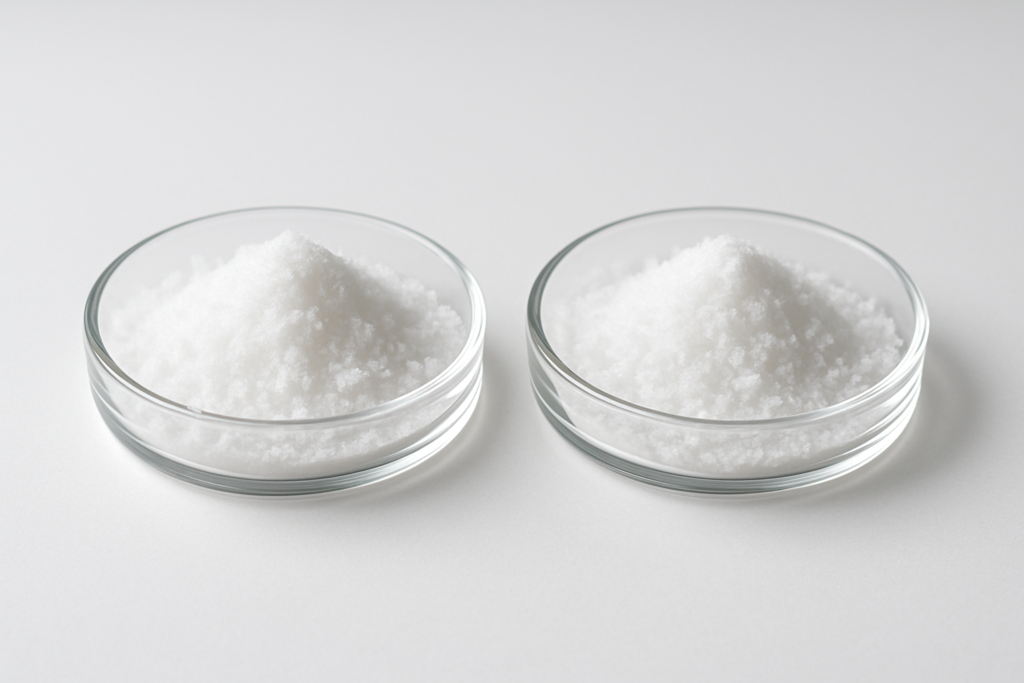
CBD isolate and CBG isolate are both single-compound, THC-free cannabinoid products, but they’re used for different goals and have very different evidence bases behind them. CBD isolate benefits from CBD’s broader human trial record. CBG isolate is newer to the consumer market, and pure single-compound CBG research in humans is even thinner than CBD isolate’s already-mixed-relative-to-full-spectrum evidence picture.
CBD isolate vs CBG isolate at a glance
| CBD Isolate | CBG Isolate | |
|---|---|---|
| Purity | 99%+ CBD, no THC, no other cannabinoids | 99%+ CBG, no THC, no other cannabinoids |
| Evidence base | Larger, more human trials | Smaller, mostly preclinical |
| Typical use case | Anxiety, sleep-adjacent effects, general calm | Focus, energy, experimental use |
| Cost | Generally lower | Generally higher, less efficient extraction |
| Drug test risk | Minimal to none | Minimal to none |
Why isolating a single cannabinoid removes the entourage question entirely
Both CBD isolate and CBG isolate sidestep the entourage effect debate, since there’s only one active compound present. This makes them useful for anyone wanting to test a specific cannabinoid’s effect without the variables that come with full or broad-spectrum products. The trade-off is the same for both: you lose any potential synergistic benefit from other cannabinoids and terpenes.
What the evidence gap actually looks like
CBD isolate benefits from CBD’s substantial human trial base, even though most of that research used CBD in various forms rather than isolate specifically, it’s reasonable to expect isolate to share the core compound’s established effects, just without any full-spectrum entourage contribution. CBG isolate doesn’t have this same evidence foundation to lean on, CBG overall has far fewer human trials, so isolating it doesn’t inherit a large body of supporting research the way CBD isolate does.
Which fits which situation
| Situation | Better starting point |
|---|---|
| Want the most evidence-backed single-compound option | CBD isolate |
| Drug testing is a strict concern | Either, both are THC-free by definition |
| Curious about CBG specifically, willing to experiment | CBG isolate, with tempered expectations |
| Budget-conscious | CBD isolate, generally cheaper |
| Want to isolate and test one compound’s individual effect | Either, that’s the specific advantage of isolates |
Can you combine them?
Yes, CBD isolate and CBG isolate combination products exist, and no dangerous interaction between the two is established. Combining them does reintroduce a small version of the entourage question, though with only two compounds rather than the full range in full-spectrum products.
Who should be cautious
- On medications with known CBD interactions. CBD isolate still carries CBD’s standard interaction profile.
- On medications generally, considering CBG. CBG’s interaction profile is less studied than CBD’s; don’t assume it’s automatically lower-risk just because it’s newer.
- Wanting strong evidence to guide the decision. CBD isolate has more to point to; CBG isolate is more of an experimental choice currently.
Frequently asked questions
Is CBG isolate as well-studied as CBD isolate?
No, CBG overall has substantially less human research than CBD, and this gap carries over to isolate forms of each.
Will either show up on a drug test?
Both are THC-free by definition as isolates, making drug test risk minimal to none for either.
Can I take CBD isolate and CBG isolate together?
Yes, combination products exist and no dangerous interaction is established between them.
Which is more affordable?
CBD isolate, generally, due to more efficient extraction and larger production scale.
Should I try CBG isolate if CBD isolate hasn’t worked for me?
It’s a reasonable experiment, but go in with tempered expectations given the thinner evidence base behind CBG specifically.