Last updated: 7 September 2026. Informational only, not medical advice.
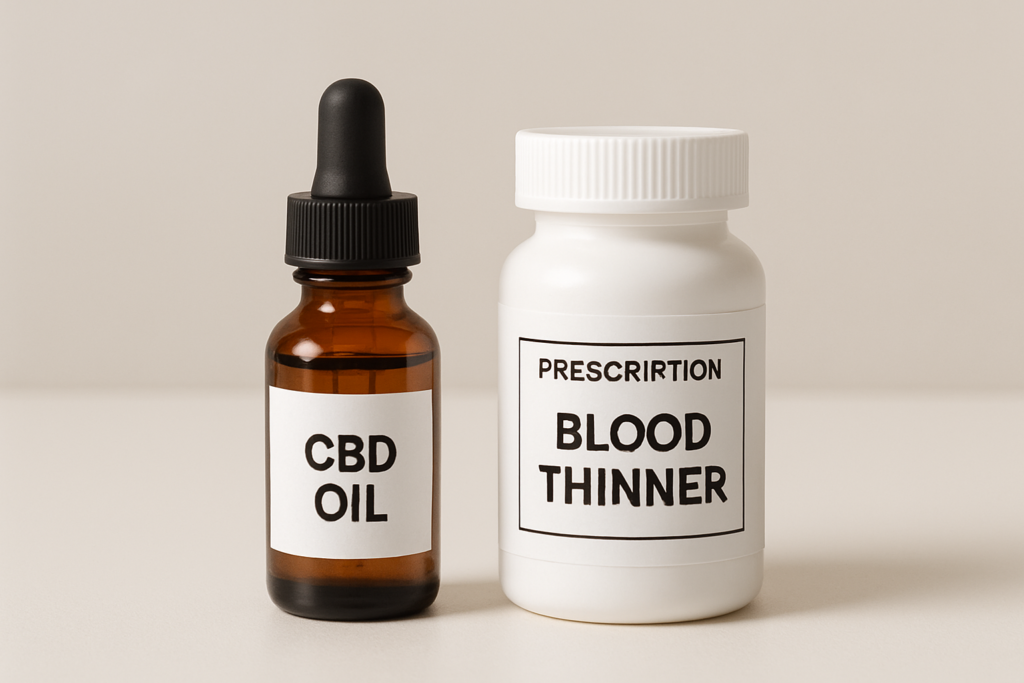
CBD and warfarin have one of the best-documented cannabinoid drug interactions available, because warfarin’s narrow therapeutic window and existing monitoring protocol (INR testing) make interactions easier to detect and study than with most other medications. CBD can raise warfarin blood levels significantly, increasing bleeding risk, and case reports specific to this combination exist in medical literature. This combination requires direct physician involvement, not general caution alone.
Why warfarin specifically stands out
| Factor | Why it matters for this combination |
|---|---|
| Narrow therapeutic window | Effective warfarin dose sits close to the bleeding-risk dose, small changes matter |
| CYP2C9 and CYP3A4 metabolism | Both pathways CBD is known to inhibit |
| Existing monitoring infrastructure | INR blood testing already standard, making interaction detection more reliable than with unmonitored drugs |
| Published case reports | Documented instances of elevated INR after starting CBD exist in medical literature, unlike many other CBD interactions that remain purely mechanism-based |
What actually happens
Warfarin’s effect is measured through INR, a blood test reflecting how long it takes blood to clot. Normal therapeutic range is typically 2 to 3 for most indications. When CBD inhibits the enzymes that clear warfarin, warfarin levels rise, and INR climbs above the target range, meaning blood takes longer to clot than intended. This raises bleeding risk, including serious internal bleeding in more extreme cases.
What this means practically
- Never start CBD while on warfarin without informing the prescriber managing your anticoagulation
- Expect more frequent INR monitoring in the weeks after starting CBD, this is the standard, appropriate response, not an overreaction
- Your warfarin dose may need adjustment once your doctor sees how your INR responds
- Watch for unusual bruising, bleeding gums, blood in urine or stool, or prolonged bleeding from minor cuts
- Don’t stop CBD abruptly without telling your doctor either, since INR may shift again in the other direction
Does this apply to newer blood thinners too?
Direct oral anticoagulants like apixaban and rivaroxaban also use CYP3A4, so a similar concern applies, though they lack warfarin’s routine blood monitoring, which makes catching an interaction less straightforward. This is actually a reason for more caution with newer anticoagulants, not less, since the feedback signal (a rising INR) that makes warfarin interactions detectable doesn’t exist for these medications in the same way.
Who should treat this as a hard stop, not just a caution
- Anyone recently started on warfarin. Baseline dose isn’t stable yet, adding CBD complicates finding it.
- History of bleeding events. Any additional bleeding risk factor deserves serious caution.
- Elderly patients. Both higher bleeding risk and higher fall risk compound the concern.
- Anyone with upcoming surgery or dental work. Bleeding risk timing matters around procedures specifically.
Frequently asked questions
Can I take CBD if I’m on warfarin?
Only with your prescribing doctor’s direct knowledge and increased INR monitoring. This is not a combination to manage without medical involvement.
How much does CBD raise INR?
This varies by individual, dose, and product, published case reports show clinically significant increases in some patients, which is why monitoring rather than guessing is the appropriate response.
Is this interaction more serious than CBD’s other interactions?
The consequence of getting it wrong, bleeding risk, is serious, and the interaction is unusually well documented compared to many other CBD-medication pairings, which makes it one of the clearer, better-evidenced concerns on this topic.
What symptoms mean I should seek emergency care?
Uncontrolled bleeding, blood in vomit or stool, sudden severe headache, or significant unexplained bruising warrant immediate medical attention.
Can my doctor manage this combination safely?
Often yes, with appropriate monitoring and dose adjustment. The key is disclosure and monitoring, not automatic avoidance.