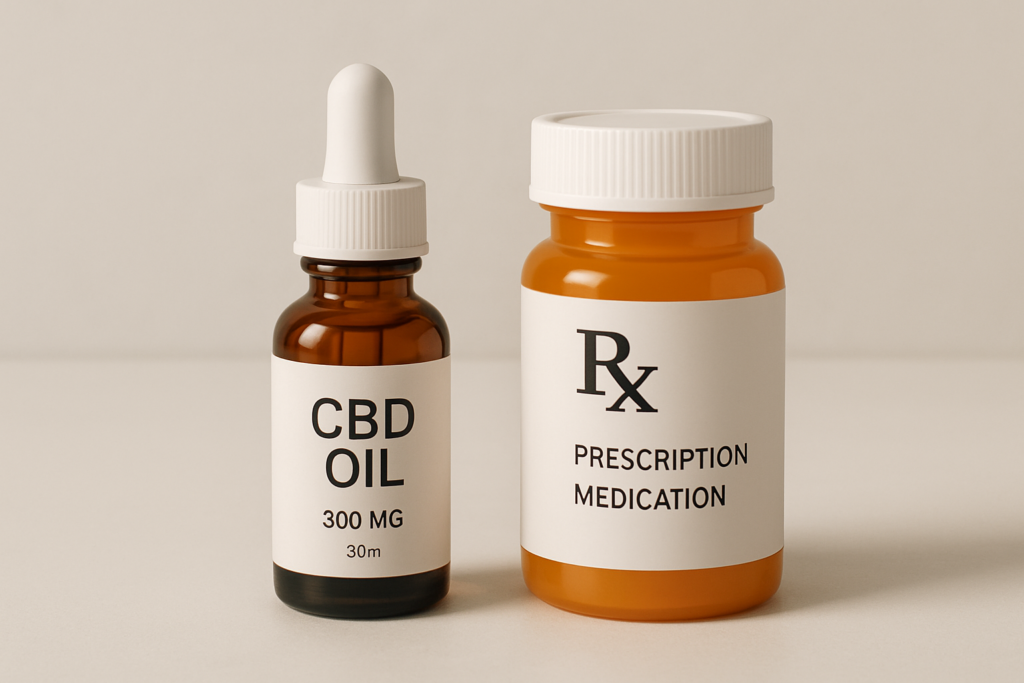
Last updated: 25 September 2026. Informational only, not medical advice.
CBD and PPIs (proton pump inhibitors) like omeprazole or esomeprazole share the CYP3A4 and CYP2C19 liver enzyme pathways, creating a plausible, though not extensively documented, interaction. PPIs are also unusual in this context because they themselves affect the acidity needed to absorb certain other medications, adding a layer of complexity if you’re managing multiple prescriptions alongside CBD.
CBD and PPIs at a glance
| PPI | Primary pathway | Interaction relevance |
|---|---|---|
| Omeprazole | CYP2C19, CYP3A4 | Moderate |
| Esomeprazole | CYP2C19, CYP3A4 | Moderate |
| Pantoprazole | CYP2C19, less CYP3A4-dependent | Lower to moderate |
| Lansoprazole | CYP2C19, CYP3A4 | Moderate |
What the shared pathway could mean
CBD inhibits CYP3A4 and has some effect on CYP2C19, both pathways PPIs rely on for clearance. In theory, this could raise PPI blood levels somewhat. PPIs generally have a fairly wide safety margin at standard doses, so this is considered a lower-concern interaction compared to medications like warfarin or lithium, but it’s still worth being aware of, particularly with long-term PPI use, which itself carries independent considerations around nutrient absorption and bone health that are worth discussing with a doctor regardless of CBD use.
Why long-term PPI use adds context here
PPIs are often used for extended periods for conditions like GERD, and long-term use is independently associated with considerations like reduced absorption of certain nutrients (vitamin B12, magnesium) and, in some studies, bone density concerns. This isn’t a CBD-specific issue, but it’s relevant context: anyone on long-term PPI therapy already has reason for periodic medical check-ins, and mentioning CBD use during those visits is a reasonable, low-effort way to keep your full picture current.
Practical guidance
- Mention CBD use to whoever manages your PPI prescription, particularly for long-term use
- This interaction is generally lower concern than several others discussed on this site, but isn’t zero, especially if you’re on other CYP3A4-relevant medications simultaneously
- Don’t adjust PPI timing or dose based on CBD use without medical guidance
- If you notice new digestive symptoms after starting CBD, mention this alongside your PPI use when discussing with a doctor
Who should be more attentive
- Long-term PPI users. Already warrants periodic medical review; add CBD to that conversation.
- On multiple CYP3A4-relevant medications. Combined enzyme competition from several sources increases complexity.
- Managing GERD alongside other chronic conditions. More medications generally means more value in a full pharmacist review.
Frequently asked questions
Can I take CBD with omeprazole or other PPIs?
Generally considered lower-risk than several other interactions discussed on this site, but mentioning it to your doctor or pharmacist, especially with long-term use, is still worthwhile.
Does CBD affect stomach acid the way PPIs do?
Not established. CBD’s relevant mechanism here is the shared liver enzyme pathway, not a direct effect on stomach acid production.
Is this interaction well studied?
No, dedicated research specifically on CBD and PPIs is limited; this guidance is based on the shared enzyme pathway rather than confirmed clinical data.
Should I worry about this more than other CBD interactions?
Generally less than higher-concern interactions like warfarin or lithium, but any interaction is worth mentioning to your healthcare provider rather than assuming it’s irrelevant.