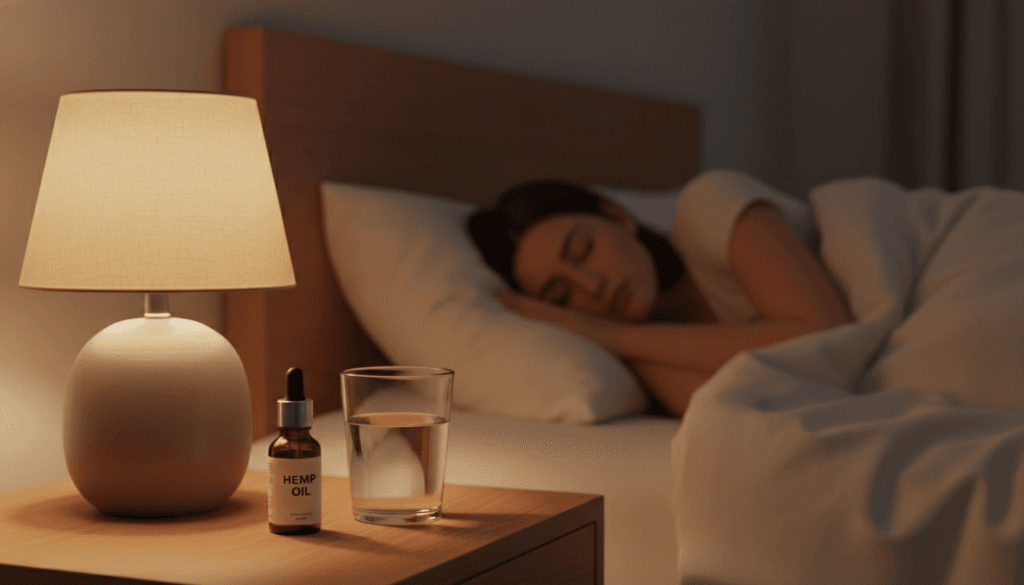
Sleep issues are one of the most common health complaints globally. An estimated one in three adults reports regular sleep disturbances, and the market for sleep supplements has grown dramatically as a result. Hemp oil appears frequently in discussions about natural sleep support, but the picture is more nuanced than many product claims suggest. Here is what the science actually shows.
First: Which Type of Hemp Oil Are We Talking About?
This distinction matters enormously for the sleep question. Hemp seed oil is pressed from hemp seeds and contains no cannabinoids. CBD oil is extracted from the hemp plant’s flowers and leaves and contains cannabidiol, which interacts with the endocannabinoid system. These two products have completely different mechanisms relevant to sleep. When people ask whether hemp oil helps with sleep, they are usually referring to CBD oil. The answer for hemp seed oil alone is very different from the answer for CBD oil.
CBD Oil and Sleep: What the Research Shows
CBD interacts with the endocannabinoid system (ECS), which plays a direct role in regulating the sleep-wake cycle. Research into CBD for sleep is still developing but several key findings are worth understanding. A large case series published in The Permanente Journal in 2019 examined CBD use in 72 adults with anxiety and poor sleep. In the first month, 79.2% reported reduced anxiety and 66.7% reported improved sleep scores. A 2021 review in Nature and Science of Sleep found that CBD at lower doses tends to promote wakefulness and reduce REM sleep, while higher doses appear to have sedative effects. CBD may address sleep disruption caused by anxiety more effectively than it treats primary insomnia. Many of the sleep benefits attributed to CBD in studies appear to be secondary effects of anxiety reduction rather than direct sedation.
Hemp Seed Oil and Sleep
Hemp seed oil does not interact with the endocannabinoid system and has no direct pharmacological effect on the sleep-wake cycle. However, it may provide indirect support through its magnesium content (hemp seeds are a good source of magnesium, which is involved in GABA regulation and sleep quality) and its Omega-3 fatty acid content (ALA), which some research links to improved sleep quality through serotonin pathway support. These are nutritional rather than clinical effects and modest in comparison to CBD’s direct ECS interaction.
How to Use Hemp Oil for Sleep Support
For CBD oil, research suggests doses of 25 to 150 mg depending on body weight and the specific sleep issue. Taking CBD oil sublingually 30 to 60 minutes before bed is the most common approach. Full-spectrum CBD may have enhanced effects due to the entourage effect with other cannabinoids and terpenes, particularly myrcene which has calming properties. For hemp seed oil as a dietary supplement, incorporating 1 to 2 tablespoons daily into your food routine provides nutritional fatty acid support but should not be expected to have a direct sleep effect.
What to Realistically Expect
If your sleep issues are primarily driven by anxiety or stress, CBD oil has the most relevant evidence and may provide meaningful benefit. If your sleep issues involve chronic insomnia, sleep apnoea, or other clinical sleep disorders, hemp oil in any form is not an adequate substitute for medical evaluation and treatment. Hemp oil is a complement to good sleep hygiene, not a replacement for it.
Frequently Asked Questions
Does hemp seed oil help you sleep?
Hemp seed oil does not have a direct pharmacological effect on sleep. It contains no cannabinoids that interact with the endocannabinoid system’s sleep regulation. It may provide modest indirect support through its magnesium and Omega-3 fatty acid content, which have some association with sleep quality in nutritional research. If sleep support is your primary goal, CBD oil has far more relevant evidence than hemp seed oil.
What is the best form of hemp oil for sleep?
For sleep specifically, full-spectrum CBD oil is the most researched form. The combination of CBD with other cannabinoids and calming terpenes like myrcene may provide a stronger sleep-promoting effect than CBD isolate alone. Sublingual tinctures are preferred for sleep use due to faster absorption compared to capsules or edibles. Always start with a low dose and increase gradually.
How much CBD oil should I take for sleep?
Research studies have used a wide range of doses, typically 25 mg to 150 mg. Most practitioners suggest starting at 25 mg taken 30 to 60 minutes before bed and adjusting upward over 1 to 2 weeks if needed. CBD affects people differently, and the optimal dose varies significantly between individuals. There is no universal recommended dose for sleep.
Is it safe to take hemp oil every night?
Hemp seed oil is a food-grade product safe for daily consumption. CBD oil also has a good safety profile for regular use at typical supplement doses. The main consideration with CBD is that long-term daily use may lead to tolerance changes over time. Most research suggests that taking periodic breaks (for example, one week off every two months) can help maintain effectiveness. Always choose third-party tested products with a Certificate of Analysis.
Can hemp oil help with sleep anxiety?
CBD oil has more relevant evidence for anxiety-driven sleep disruption than for primary insomnia. The 2019 Permanente Journal study showed that 79.2% of anxiety patients reported reduced anxiety scores after one month of CBD use, and 66.7% reported improved sleep. If anxiety is the driver of your sleep difficulties, CBD oil is worth exploring. Discuss it with a healthcare provider if you are taking any medications, as CBD can interact with certain drugs metabolised by the liver.