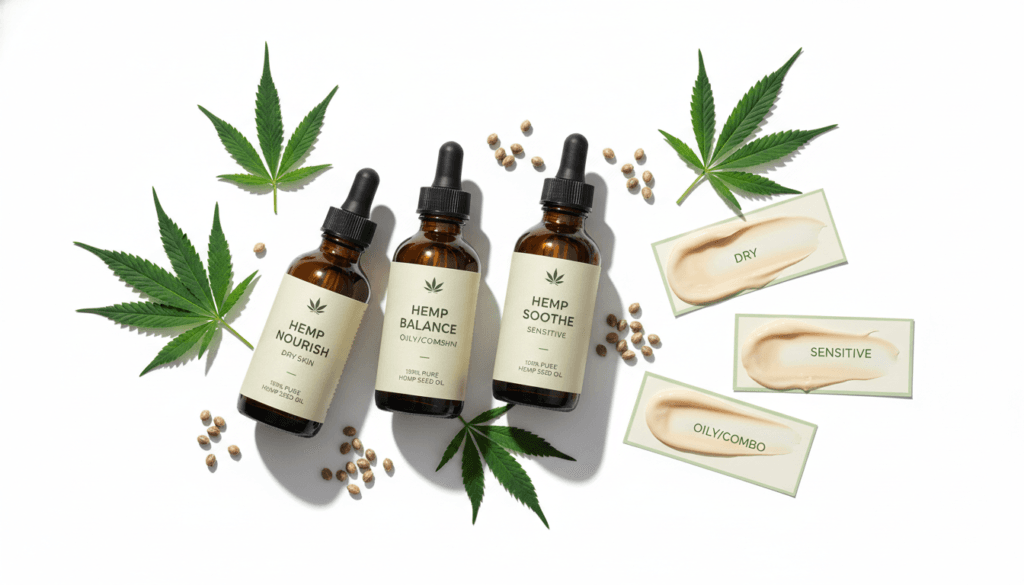
Hemp seed oil is not a single standardised product. The quality, composition, and suitability of hemp seed oil for your skin type varies significantly depending on how it was produced, where the hemp was grown, and what has been done to the oil since pressing. Choosing the wrong product can mean paying for something that delivers none of the benefits you are looking for.
This guide breaks down exactly what to look for based on your skin type and what the label should tell you.
Understand Your Skin Type First
Before selecting a hemp seed oil, it helps to know how your skin behaves. Oily and acne-prone skin produces excess sebum and is prone to congestion and breakouts. The priority for this type is a non-comedogenic, lightweight oil that does not add to surface oiliness. Hemp seed oil’s zero comedogenic rating makes it an excellent choice, but you want an oil with a high linoleic acid content (above 55%) and fast absorption. Dry and dehydrated skin lacks sufficient lipid content in the skin barrier and loses moisture easily. The priority here is an oil that is rich in essential fatty acids and ideally contains GLA. A cold-pressed, unrefined oil preserves more of these active fatty acids. Combination skin is oily in the T-zone and dry on the cheeks. Hemp seed oil’s balanced profile suits combination skin well, but you may want to apply it more generously to dry areas and more sparingly to oily ones. Sensitive and reactive skin needs an oil that is pure, fragrance-free, and free of additives. Look for 100% cold-pressed hemp seed oil with no added ingredients.
Key Quality Markers to Look For
The label and product information tell you most of what you need to know. Look for cold-pressed or expeller-pressed on the label. This indicates the oil was extracted without heat or solvents, preserving its full fatty acid profile. Look for unrefined. Refined hemp seed oil has been bleached and deodorised, removing many of the active compounds that make it useful for skin. The color should be dark green to amber for unrefined oil. A pale yellow or colorless oil has likely been refined. Packaging should be dark glass, not clear plastic. Hemp seed oil is sensitive to light and heat, and UV-opaque glass protects its fatty acid integrity. A Certificate of Analysis (COA) from a third-party laboratory should be available. This confirms the fatty acid content and screens for pesticides and heavy metals.
Organic vs Non-Organic Hemp Seed Oil
Hemp is a bioaccumulator, meaning the plant absorbs substances from the soil, including heavy metals and pesticide residues. For a product you are applying to your face daily, organic certification provides meaningful assurance that the hemp was grown without synthetic pesticides or chemical fertilisers. It also means the soil was not contaminated during the growing period. Organic hemp seed oil typically costs more, but for facial use the additional quality assurance is worth the premium.
Recommended Features by Skin Type
For oily and acne-prone skin, prioritise certified cold-pressed, unrefined, high linoleic acid content (above 55%), lightweight texture, and organic certification. For dry skin, prioritise cold-pressed and unrefined, GLA content listed or mentioned, dark glass packaging, and organic where possible. For sensitive skin, prioritise 100% hemp seed oil with no added ingredients whatsoever, no fragrance or essential oils, third-party tested COA available, and cold-pressed and unrefined.
Frequently Asked Questions
What should I look for on a hemp seed oil label for skincare?
The most important indicators of a high-quality hemp seed oil for skincare are: cold-pressed or expeller-pressed (extraction method), unrefined (no processing that removes active compounds), dark glass packaging (protects against light degradation), and a third-party Certificate of Analysis confirming fatty acid profile and absence of contaminants. For facial use, organic certification is an additional quality marker worth looking for.
Is more expensive hemp seed oil always better for skin?
Not necessarily. Price correlates with quality up to a point, but beyond that point you are often paying for branding. The key quality indicators are the extraction method (cold-pressed), refinement level (unrefined), and certification (organic, third-party tested). A mid-range product that meets all three of these criteria is a better choice than an expensive product that is refined or lacks a COA.
Can I use food-grade hemp seed oil on my skin?
Yes. Many food-grade cold-pressed hemp seed oils are identical to cosmetic-grade versions and are entirely suitable for skin use. The important factor is that it is cold-pressed and unrefined. If a food-grade hemp seed oil meets that criteria and comes in appropriate packaging, it will perform comparably to a product marketed specifically for skincare at typically a lower price per milliliter.
How do I do a patch test for hemp seed oil?
Apply a small amount of hemp seed oil to the inside of your wrist or behind your ear. Leave it for 24 hours without washing the area. If no redness, itching, or reaction develops, it is safe to use on your face. Pure cold-pressed hemp seed oil is rarely the cause of contact reactions, but patch testing is good practice whenever introducing any new topical product.
How long will a bottle of hemp seed oil last for skincare use?
A 50 ml bottle used at 3 to 4 drops per day for facial use will last approximately 4 to 6 months. Larger bottles are more economical but carry a risk of the oil going rancid before you finish them. Cold-pressed hemp seed oil has a shelf life of approximately 12 to 14 months unopened and 1 to 3 months once opened when refrigerated. Buy a size you will use within that window for freshness.