Hemp is described in sustainability conversations as one of the most environmentally positive crops available, a reputation built on several genuine advantages that deserve honest examination. Not all environmental claims about hemp are equally supported, and understanding which are well-evidenced and which are overstated is useful for anyone trying to evaluate hemp’s role in a more sustainable materials economy.
Carbon Sequestration: The Most Significant Credential
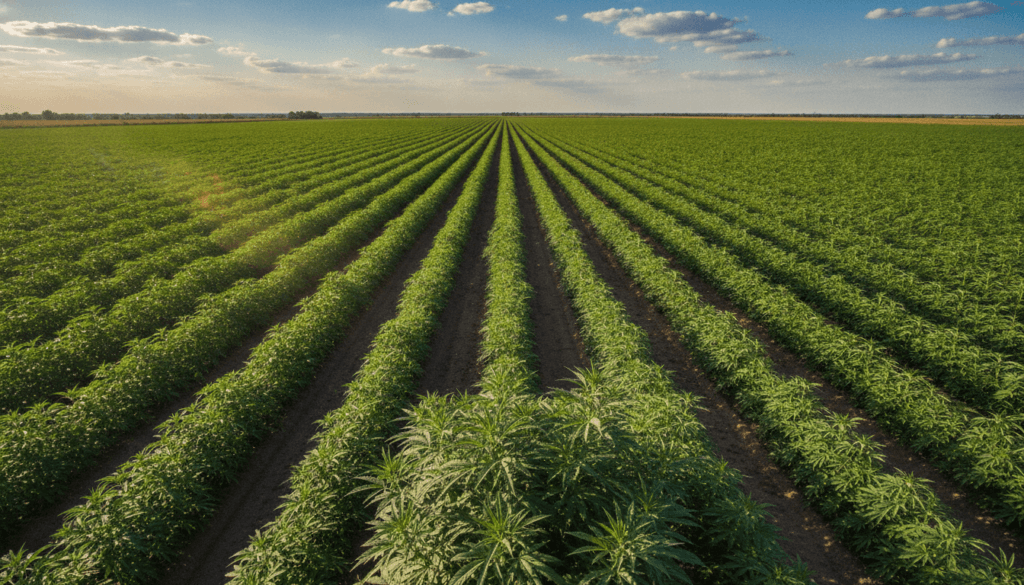
Hemp’s carbon sequestration capacity is its most compelling and best-evidenced environmental claim. Research including a study from the University of Bath estimated that hemp crops absorb between 8 and 15 tonnes of CO2 per hectare per growing cycle, a rate higher than virtually any forest ecosystem, which typically sequesters 2 to 6 tonnes of CO2 per hectare per year. Hemp achieves this in a growing cycle of only 70 to 120 days, meaning the time-rate of carbon absorption is dramatically higher than forests. This carbon becomes stored in the plant’s biomass, including its woody hurd (the component used in hempcrete), where it remains locked in during the lifetime of any products made from it. The lime binder in hempcrete additionally continues to absorb CO2 through carbonation over decades, making hempcrete construction potentially carbon-negative across its full lifecycle, as discussed in our hempcrete piece. In 2026, verified carbon credits from hemp growing are becoming a real economic consideration for farmers, with estimates of $30 to 60 per acre in emerging carbon credit markets.
Water Use: The Cotton Comparison
Hemp requires dramatically less water than cotton, which is perhaps the most frequently cited environmental comparison in hemp marketing. The commonly used figure is that hemp requires approximately 300 to 500 litres of water per kilogram of fibre produced, compared to approximately 10,000 litres for cotton, representing approximately a 20-fold difference. Hemp is considered relatively drought-tolerant once established, though it does require adequate moisture during germination and early establishment. It performs well in rainfed conditions in most temperate climates, reducing dependence on irrigation. This water advantage is real and meaningful, particularly given the water stress in major cotton-growing regions.
Pesticide and Herbicide Requirements
Hemp has natural advantages that reduce agricultural chemical inputs. Its dense growth canopy shades out competing weeds, reducing or eliminating herbicide needs in well-managed crops. Hemp has natural resistance to many common agricultural pests, reducing insecticide requirements. This compares favourably to conventional cotton, which is one of the most pesticide-intensive crops in the world, accounting for approximately 16% of global insecticide use despite occupying a relatively small share of total agricultural land. Hemp’s bioaccumulation capacity, discussed in our hemp sustainability piece, means that while it requires less pesticide input, the pesticides present in the soil from previous crops or from contaminated land will be absorbed, which is why organic certification and soil quality matter for hemp products intended for consumption or skin contact.
Soil Health: The Hemp Rotation Benefit
As discussed in our hemp farming piece, data from 2025 and 2026 growing seasons shows farmers rotating hemp with corn or soybeans seeing a 10 to 15% yield increase in subsequent crops, a benefit attributed to hemp’s deep taproot improving soil structure, drainage, and aeration. Hemp also provides organic matter to the soil through decomposing roots and returned plant material. Unlike many intensive monoculture crops, hemp tends to improve rather than deplete the soil it grows in. The phytoremediation applications of hemp, including documented use at Chernobyl to help extract radioactive cesium and strontium from contaminated soil, demonstrate the same bioaccumulation property that makes organic certification important but also highlights hemp’s capacity to restore degraded land under appropriate management.
Where Hemp Environmental Claims Are Sometimes Overstated
Hemps environmental case is strong, but some claims made in hemp marketing deserve scrutiny. Hemp is not a universally positive crop in all applications. Processing hemp fibre into textiles requires retting, which historically involved water retting that could create significant water pollution from the biological decomposition process, though modern methods including field retting and enzymatic retting have reduced this concern. Hemp farming at scale still requires fertiliser inputs, fuel for machinery, and land. The lifecycle analysis of hemp-derived products varies significantly depending on what the hemp replaces (cotton versus synthetic fibres versus wood), how it is processed, and how far it is transported. Broad claims that hemp is simply better than all alternatives for any application are not always supported by formal lifecycle analysis across all environmental impact categories. Hemp is significantly better than cotton on water and pesticides; its advantage over wood pulp for paper production or over synthetic fibres involves more complex trade-offs that depend on specific processing methods and supply chains.
The Infrastructure Gap: The Reason Hemp Is Not Mainstream Yet
Despite its genuine environmental advantages, hemp’s real-world environmental impact is limited by the processing infrastructure gap discussed in our hemp farming and hempcrete pieces. Hemp fibre and hurd processing capacity is a fraction of the capacity available for cotton, wood, and conventional synthetic materials. Until this infrastructure gap is closed, hemp products will remain more expensive and less accessible than conventional alternatives regardless of their environmental merits, limiting the scale of their impact. The environmental case for hemp is strongest as a driver for infrastructure investment rather than as a current market-scale substitute for established materials.
Frequently Asked Questions
Is hemp really carbon negative?
Hemp cultivation is genuinely carbon-sequestering, absorbing an estimated 8 to 15 tonnes of CO2 per hectare per growing cycle, which is more than forest ecosystems in the same timeframe. When hemp is used in hempcrete, the sequestered carbon remains locked in the building material and the lime binder continues to absorb additional CO2 through carbonation. Whether a full hemp product is net carbon negative depends on the full lifecycle assessment including farming inputs, processing energy, and transportation, which varies by specific application and supply chain. The sequestration case is strong and well-evidenced; carbon negativity across the full product lifecycle is more nuanced.
How does hemp compare to bamboo environmentally?
Both hemp and bamboo are frequently cited as sustainable alternatives to conventional materials. Bamboo grows extremely rapidly (some species up to a metre per day), requires no replanting after harvest, and naturally regenerates. Hemp’s carbon sequestration per hectare is comparable or superior to bamboo, and hemp requires no pesticides in most conditions. Both are significantly more water-efficient than cotton. Bamboo has an advantage for certain textile and construction applications where its physical properties (tensile strength, natural aesthetic) are preferred; hemp has an advantage where its specific fibre characteristics or seed/oil properties are the target. The two are more complementary than competitive in the sustainable materials landscape.
Does hemp really clean contaminated soil?
Yes. Hemp’s phytoremediation capacity is real and has been demonstrated not just at Chernobyl but in multiple other contaminated site studies. Hemp’s roots absorb heavy metals, radioactive compounds, and some pesticides from contaminated soil, concentrating them in the plant’s biomass. This property is valuable for ecological restoration, though it also means hemp grown in contaminated soil should not be used for food, skin care, or other consumer products without rigorous testing, since the accumulated contaminants follow the plant into all its derivatives. This is directly why soil history and organic certification matter for hemp products intended for human contact.
Is hemp paper more sustainable than wood pulp paper?
Hemp fibre can be used for paper production and has several paper-related advantages, including durability, resistance to yellowing, and the ability to be processed without the chlorine bleaching commonly used in conventional paper production. However, the comparison with wood pulp paper is more complex than the simple claim that hemp paper is more sustainable. Wood pulp paper production is highly optimised with decades of infrastructure investment. Hemp paper production is less developed with higher processing costs. Whether hemp paper is more sustainable than wood pulp paper across all environmental impact categories depends on specific processing methods, energy sources, and supply chains involved, and cannot be answered with a universal yes.
Can hemp replace plastic?
Hemp-based bioplastics are technically feasible and have been produced and tested. They are typically biodegradable under appropriate conditions and have a lower carbon footprint in production than petroleum-based plastics. However, as discussed in our hemp fibre piece, the processing infrastructure and economic competitiveness with conventional plastics remain significant barriers to replacement at scale. Hemp is one of several promising bio-based material pathways for plastic reduction, rather than a single comprehensive solution.
What is the biggest environmental risk of hemp farming?
The most significant environmental risk from hemp farming is not from the plant itself but from hemp’s tendency to accumulate whatever is in the soil. Hemp grown on land with heavy metal contamination, previous pesticide use, or industrial pollution will incorporate those contaminants into all its products. This is not a reason to avoid hemp but a strong argument for responsible land selection, organic practices, and thorough third-party testing for any hemp products intended for consumption or direct skin contact, exactly the same quality indicators we discuss throughout our hemp product buying guides.