
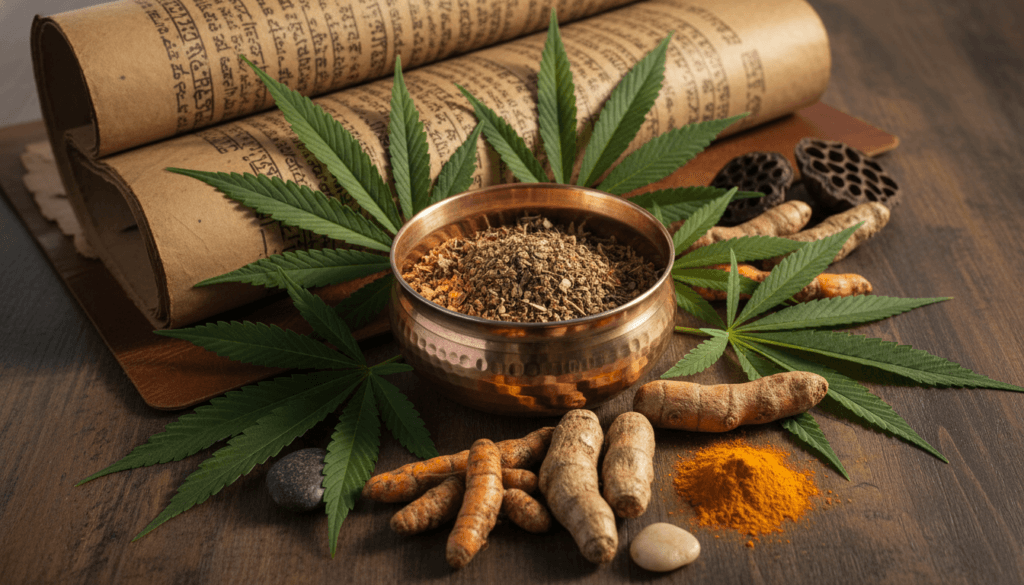
Long before hemp became a topic of modern wellness research, it was an integral part of Ayurveda, the traditional healing system of India that dates back over 5,000 years. The plant appears in ancient Sanskrit texts under multiple names, most notably Vijaya (meaning victory) and Bhang, and was regarded as one of the five sacred plants mentioned in the Atharva Veda, one of the oldest texts in human history.
Understanding what Ayurveda historically said about hemp, and how that intersects with contemporary science, reveals a coherent tradition of plant-based medicine that anticipated much of what modern research is now confirming.
Hemp in Ancient Ayurvedic Texts
The Atharva Veda, composed approximately between 1500 and 1200 BCE, lists hemp (referred to as cannabis or bhang) as one of five sacred plants and describes it as a source of happiness and liberation. The text recommends it as a guardian against anxiety and a protector from disease. The Sushruta Samhita, the foundational Ayurvedic surgical text, mentions cannabis preparations for use in anaesthesia during surgical procedures, as an aid in treating leprosy and phlegm conditions, and as a remedy for insomnia and digestive disorders. The Charaka Samhita, another core Ayurvedic text, describes cannabis as Vijaya and associates it with rejuvenation and as an herb that enhances intellect and helps overcome difficult disease states.
The Three Doshas and Hemp
Ayurveda organises constitutional types and disease states around three biological energies called doshas: Vata (air and space, governing movement and the nervous system), Pitta (fire and water, governing transformation and metabolism), and Kapha (water and earth, governing structure and fluid balance). In traditional Ayurvedic interpretation, hemp is considered primarily Tamasic (heavy, grounding, and sedating), with additional Rajasic qualities (stimulating and activating) at different doses. Traditional practitioners considered hemp most appropriate for pacifying excess Vata (calming an overactive nervous system, treating insomnia and anxiety) and for reducing Kapha conditions (removing excess mucus and fluid). It was considered more carefully in Pitta-dominant individuals due to its warming properties.
Bhang: The Traditional Preparation
Bhang is the most well-known traditional hemp preparation in Indian culture. It is made from the leaves and buds of the cannabis plant ground with milk, ghee, spices, and sometimes nuts. It has been consumed in India for thousands of years and is particularly associated with the festival of Holi and Shivaratri, where it is offered to Lord Shiva, who is associated with cannabis in Hindu mythology. Bhang occupies a unique legal status in India today, sitting outside the Narcotic Drugs and Psychotropic Substances Act which specifically prohibits resin and flower preparations but does not explicitly prohibit bhang in traditional form.
Hemp Seed Oil in the Ayurvedic Context
While much of the Ayurvedic literature focuses on the psychoactive and medicinal properties of cannabis preparations from the plant’s flowers and leaves, hemp seeds and their oil also have a place in Ayurvedic nutrition. Hemp seeds are considered Sattvic food (pure, balanced, harmonising) and are included in the category of seeds and nuts that support ojas, the vital essence associated with immunity, vitality, and reproductive health. Modern hemp seed oil’s documented benefits for skin, inflammation, and fatty acid balance align closely with traditional Ayurvedic descriptions of hemp seeds as strengthening, nourishing, and skin-supportive.
The Bridge Between Ancient Wisdom and Modern Research
One of the most striking aspects of reviewing Ayurvedic hemp texts is how accurately traditional practitioners identified what modern science has since confirmed. The use of cannabis for anxiety, sleep, and pain are the same indications for which contemporary CBD research shows the most promising results. The skin-nourishing properties of hemp seeds align with the fatty acid science behind modern hemp seed oil dermatology research. The ancient recognition of hemp as a plant with both risk and reward depending on preparation and dose mirrors the nuanced picture that modern pharmacology presents.
Frequently Asked Questions
Is hemp mentioned in ancient texts?
Yes. Hemp (cannabis) is mentioned in some of the oldest written texts in human history. The Atharva Veda, one of the four Vedas of ancient Indian religious literature, refers to cannabis as one of five sacred plants. The Sushruta Samhita and Charaka Samhita, foundational Ayurvedic medical texts dating back thousands of years, include cannabis preparations for various medicinal applications including surgery, insomnia, anxiety, and digestive conditions.
What is bhang and is it legal in India?
Bhang is a traditional Indian cannabis preparation made from the leaves and buds of the plant ground with milk, ghee, and spices. It has been consumed in India for thousands of years as part of religious and cultural practice. Bhang occupies a unique legal position in India: the Narcotic Drugs and Psychotropic Substances Act of 1985 prohibits cannabis resin and flowers but does not explicitly ban bhang preparations from leaves. Several states including Uttar Pradesh and Rajasthan permit licensed bhang shops. Its exact legal status varies by state and preparation method.
What did Ayurveda use cannabis for?
Ancient Ayurvedic texts describe cannabis preparations being used for anaesthesia in surgical procedures, treating insomnia and sleep disorders, managing anxiety and nervous system agitation, addressing digestive disorders, reducing excess mucus conditions, relieving pain, and as a rejuvenating tonic for vitality and immunity. These historical applications overlap significantly with the areas of contemporary CBD and medical cannabis research that show the most evidence.
Is hemp seed oil part of Ayurvedic practice?
Hemp seeds are recognised in Ayurvedic nutrition as a Sattvic food that supports ojas, the vital life essence associated with immunity, vigour, and reproductive health. Hemp seed oil’s modern applications for skin nourishment, inflammation support, and fatty acid balance are consistent with traditional descriptions of hemp seeds as nourishing, strengthening, and skin-supportive. Contemporary Ayurvedic practitioners increasingly incorporate hemp seed oil into nutritional and skin care recommendations.
How does Ayurveda view hemp for different doshas?
In Ayurvedic constitutional medicine, hemp is primarily considered Tamasic (heavy, grounding, sedating) with Rajasic qualities at certain doses. It is traditionally seen as most beneficial for pacifying excess Vata energy (calming an overactive nervous system, treating anxiety and insomnia) and reducing excess Kapha (clearing mucus, reducing stagnation). It requires more careful consideration in Pitta-dominant constitutions due to its warming properties. As with all Ayurvedic treatments, the appropriate preparation, dose, and timing depend on the individual’s constitutional type and specific imbalances.