When you pick up a bottle of hemp oil, it looks simple enough. But there is a fascinating process behind it, and knowing how hemp oil is made can actually help you choose better products, understand labels, and know what questions to ask.
The process is different depending on which type of hemp oil you are talking about. Hemp seed oil and CBD oil are both extracted from the hemp plant, but they use completely different methods. We will walk through both.
Step 1: Growing and Harvesting the Hemp Plant
Hemp is an annual crop that reaches maturity in 90 to 120 days. For hemp seed oil production, the goal is to grow healthy plants that produce an abundance of seeds. For CBD oil production, farmers focus on growing high-CBD strains with rich flowers and leaves.
The quality of the final oil depends heavily on:
- Soil quality and farming practices (organic vs conventional)
- Climate and growing conditions
- Genetics of the hemp strain
- Whether the plants were exposed to pesticides, heavy metals, or other contaminants
Step 2: How Hemp Seed Oil Is Made – Cold Pressing
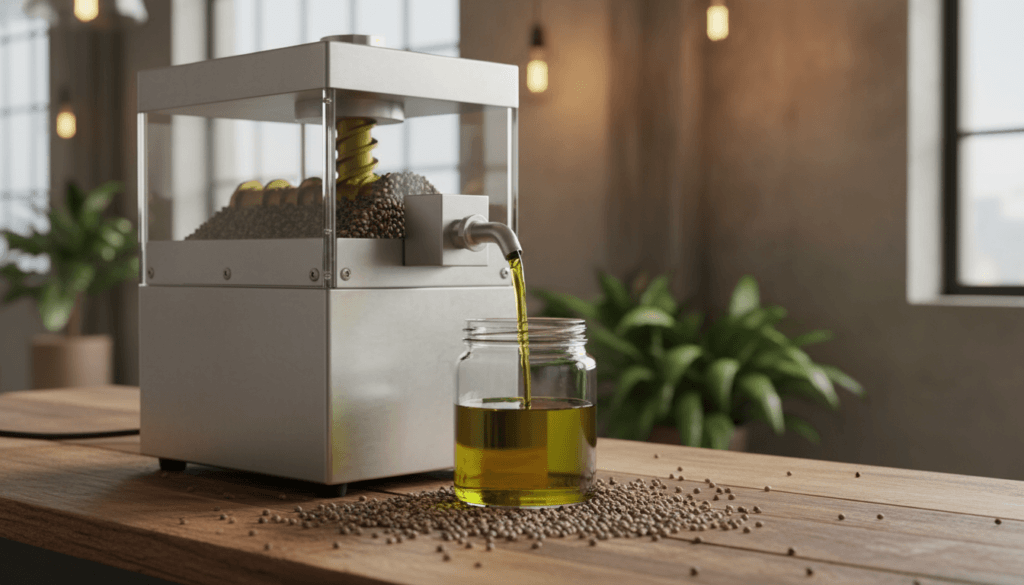
Hemp seed oil is made using a process called cold pressing. Here is how it works:
- Hemp seeds are fed into a large screw press, also called an expeller press.
- The press applies mechanical pressure to squeeze oil out of the seeds.
- The process is done at low temperatures, typically below 49 degrees Celsius (120 degrees Fahrenheit).
- The low temperature is critical because heat can destroy the delicate fatty acids, antioxidants, and nutrients that make hemp seed oil valuable.
- The raw oil is collected, filtered to remove seed particles, and bottled.
Step 3: How CBD Oil Is Made – CO2 Extraction
The gold standard method in the CBD industry is supercritical CO2 extraction:
- CO2 is pressurized and cooled until it enters a supercritical state, behaving simultaneously like a liquid and a gas.
- This supercritical CO2 is passed through the hemp plant material inside a chamber.
- The CO2 acts as a solvent, pulling cannabinoids, terpenes, and other plant compounds out of the plant material.
- The CO2 and extracted compounds then pass into a separator where the CO2 returns to gas and evaporates away.
- What remains is a concentrated hemp extract rich in CBD and other beneficial compounds.
Step 4: Post-Extraction Processing
After extraction, the raw hemp extract goes through additional steps including winterization (to remove plant waxes), decarboxylation (to activate CBD from CBDa), distillation (for high-purity products), and blending with a carrier oil like hemp seed oil or MCT oil.
Step 5: Testing and Quality Control
Any reputable hemp oil producer sends their products to an independent third-party laboratory. These tests check for cannabinoid content, pesticide residues, heavy metals, microbial contaminants, and solvent residues. The results are provided in a Certificate of Analysis (COA). Always look for the COA before buying any hemp oil product.
Frequently Asked Questions
What is the best method for extracting hemp oil?
For hemp seed oil, cold pressing is the best method because it preserves nutrients without using heat or chemicals. For CBD oil, supercritical CO2 extraction is considered the gold standard because it is clean, efficient, and leaves no solvent residue in the final product.
Is cold-pressed hemp seed oil better than regular hemp seed oil?
Yes. Cold-pressed hemp seed oil retains more of its natural nutrients, antioxidants, and fatty acids because the extraction process uses minimal heat. Heat-processed oils can lose significant nutritional value during processing.
What is a Certificate of Analysis and why does it matter?
A Certificate of Analysis (COA) is a document from an independent laboratory that confirms exactly what is in a hemp oil product. It verifies cannabinoid content, ensures the THC level is within legal limits, and screens for harmful substances like pesticides and heavy metals. You should always look for a COA before buying hemp oil.
What is the difference between full-spectrum, broad-spectrum, and isolate CBD oil?
Full-spectrum CBD oil contains CBD along with other cannabinoids, terpenes, and trace amounts of THC (under 0.3%). Broad-spectrum contains multiple cannabinoids and terpenes but has THC removed. CBD isolate contains only pure CBD with everything else removed. Full-spectrum is generally believed to provide the most complete effect due to what is called the entourage effect.
How long does it take to make hemp oil from seed to bottle?
For hemp seed oil, the process from harvest to bottling takes a matter of days or weeks. CBD oil production takes longer because the hemp plants take 90 to 120 days to grow, and the extraction, testing, and processing pipeline adds additional weeks. From seed to finished, tested product can take four to six months.