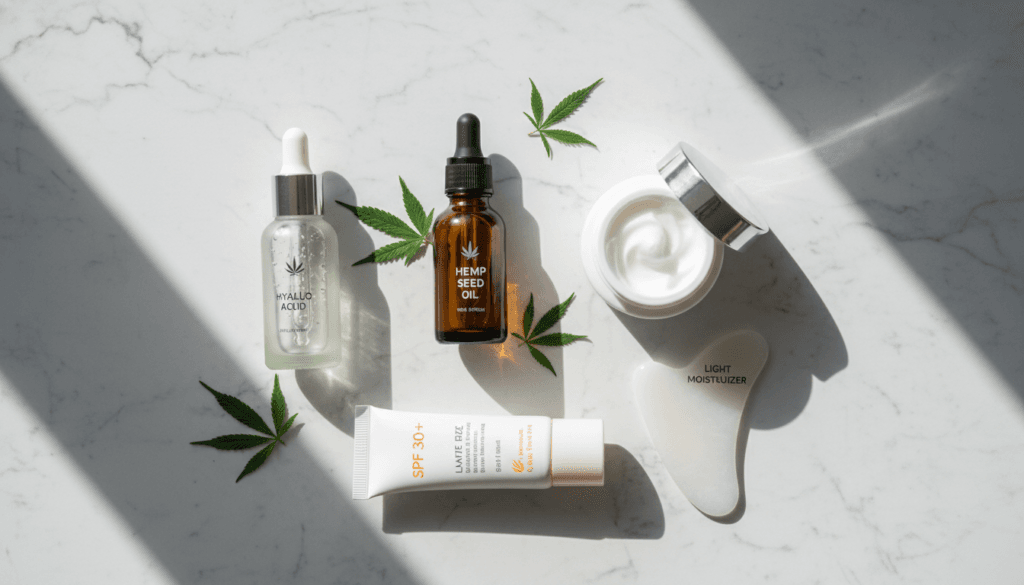
Hemp seed oil has earned a well-deserved place in modern skincare, but knowing exactly how to use it within a routine makes the difference between wasting it and genuinely seeing results. This guide walks through exactly where hemp seed oil fits in a morning and evening skincare routine, how much to use, and how to layer it with other products effectively.
The Fundamental Rule: Oils Go Last (or Near Last)
The golden rule of skincare layering is to apply products in order from thinnest to thickest consistency. Oils are applied after water-based products because oil creates a semi-occlusive layer that can prevent water-based products from absorbing properly if applied first. Hemp seed oil belongs after your serums and before SPF in the morning, and after serums as the final step in the evening.
Morning Routine: Where Hemp Seed Oil Fits
Step one is to cleanse with your regular cleanser. Step two is to apply toner or essence if you use one, while skin is still slightly damp. Step three is to apply any water-based serums such as hyaluronic acid, niacinamide, or vitamin C, and wait 30 to 60 seconds. Step four is to apply 2 to 3 drops of hemp seed oil, warming it between your palms and pressing it gently into the skin. Step five is to apply SPF, which is non-negotiable in a morning routine. Note that if your SPF is a chemical sunscreen, some experts recommend applying it directly to clean skin before oils to ensure optimal UV protection. Experiment to find what works best for your routine and SPF formulation.
Evening Routine: Where Hemp Seed Oil Fits
Step one is to double cleanse if you wore makeup or sunscreen, starting with an oil or balm cleanser followed by a water-based cleanser. Step two is to apply toner or essence if you use one. Step three is to apply any treatment serums such as retinol, peptides, or AHAs, following the specific instructions for those products. Step four is to apply 3 to 5 drops of hemp seed oil as the final step, pressing gently into skin. In the evening, you can be more generous with hemp seed oil than in the morning as there is no SPF step to consider. Hemp seed oil works particularly well as a night treatment due to the skin’s repair processes being most active overnight.
Can Hemp Seed Oil Replace Moisturiser?
For oily and combination skin types, hemp seed oil alone may provide sufficient moisturisation in certain climates and seasons. For dry and very dry skin types, hemp seed oil is best used in addition to rather than instead of a moisturiser, as its lighter texture may not provide the level of occlusion needed to prevent moisture loss in dry conditions. In humid climates, fewer people need a separate moisturiser when using hemp seed oil consistently.
Layering Hemp Seed Oil with Active Ingredients
Hemp seed oil is compatible with virtually all skincare actives. It pairs well with retinol, as applying hemp seed oil after retinol helps buffer irritation and dryness while still allowing the retinol to absorb. It works well with vitamin C serums applied before the oil. It complements niacinamide for oily and acne-prone skin. It can be layered with hyaluronic acid for added moisture. Avoid mixing hemp seed oil directly with water-based products in the same application, as oil and water do not blend; apply them in separate steps.
Frequently Asked Questions
How many drops of hemp seed oil should I use on my face?
For facial use, 2 to 4 drops is typically sufficient for the entire face and neck. In the morning, err toward the lower end to avoid any heaviness under makeup. In the evening, 4 to 5 drops is fine for a more nourishing treatment. Applying too much will not damage your skin, but it may leave excess oil on the surface that sits rather than absorbs. Start with 2 drops and adjust from there based on your skin type and how it responds.
Can I mix hemp seed oil into my moisturiser?
Yes, this is an effective approach, particularly for dry skin or if you prefer a simpler routine. Add 1 to 2 drops of hemp seed oil to your usual moisturiser in your palm, mix briefly, and apply as normal. This boosts the fatty acid content of your moisturiser without changing the texture too dramatically and works well for people who find plain oil application unfamiliar.
Should I use hemp seed oil in the morning or evening?
Hemp seed oil can be used in both morning and evening routines. In the morning, use 2 to 3 drops before SPF for lightweight moisture and barrier support. In the evening, it is particularly useful as a final nourishing step or as a light sleeping treatment. If you are new to facial oils, starting with evening use only is a low-risk way to assess how your skin responds before adding it to your morning routine.
Can I use hemp seed oil if I also use retinol?
Yes, and in fact the combination can work well. Apply your retinol product first, wait a few minutes, then apply hemp seed oil over it. The fatty acids in hemp seed oil help support the skin barrier that retinol can compromise over time, and the oil layer also helps reduce the dryness and flaking that some people experience when starting retinol. This approach, sometimes called the sandwich method, is commonly recommended for retinol beginners.
Does hemp seed oil leave a greasy residue on the skin?
Hemp seed oil is considered a relatively dry-feeling oil with moderate absorption speed. It absorbs within 5 to 10 minutes in most cases and does not leave a thick greasy layer if applied in the correct amount (2 to 4 drops for the face). If you notice excess on the surface after 10 minutes, you are likely using too much. In hot or humid conditions, some people find it helpful to use slightly less than in colder conditions.