You have heard about hemp. You have seen it in the health food store, on pharmacy shelves, and in skincare products. But with so many different hemp products available, each making different claims, it is genuinely difficult to know where to start or what any of it actually does.
This guide covers everything a first-time hemp consumer needs to know: what the main products are, what they do, what they do not do, and how to approach them sensibly.
The Hemp Plant: One Source, Many Products
All hemp wellness products come from the same plant, Cannabis sativa. What makes the products different is which part of the plant they come from and how they are processed. Hemp seeds produce hemp seed oil and hemp protein. The plant’s flowers, leaves, and stalks produce CBD oil and hemp extracts. The fiber from the stalks produces hemp textiles and building materials. Understanding which part of the plant a product comes from is the first step to understanding what it can and cannot do.
Hemp Seed Oil
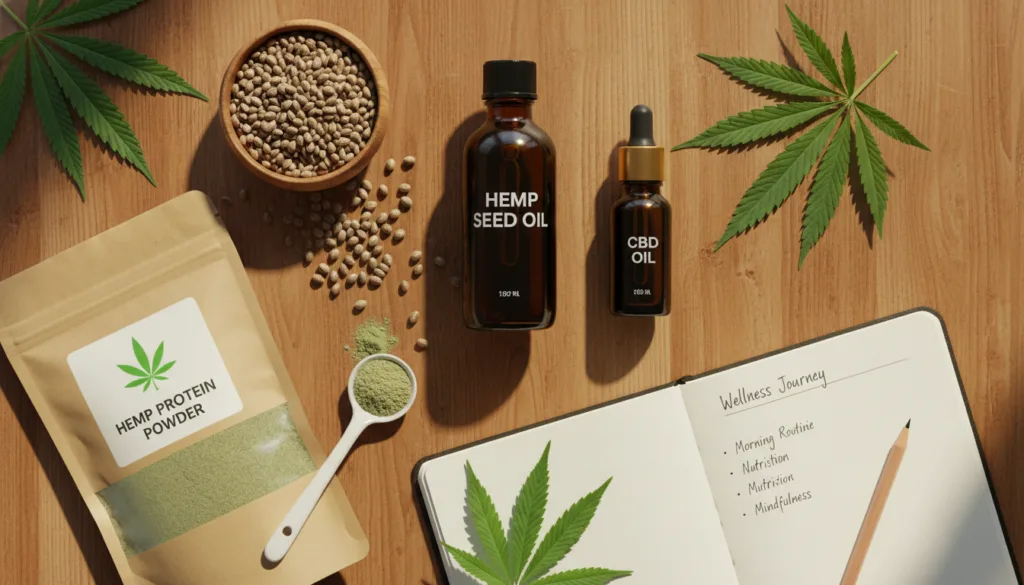
Hemp seed oil is cold-pressed from hemp seeds. It contains no CBD and no THC. What it does contain is an exceptional fatty acid profile: approximately 55 to 60% linoleic acid (Omega-6), 17 to 24% alpha-linolenic acid (Omega-3), and 2 to 4% Gamma-Linolenic Acid (GLA). This profile gives hemp seed oil genuine value for skin hydration and barrier support, dietary fatty acid balance, hair nourishment, and general nutritional use in cooking and smoothies. Hemp seed oil does not produce any psychoactive or medicinal effect. It is essentially a very well-balanced nutritional oil, similar in nature to flaxseed oil or evening primrose oil but with a uniquely balanced Omega ratio.
CBD Oil
CBD oil contains cannabidiol, extracted from the hemp plant’s flowers, leaves, and stalks. CBD is not psychoactive and will not make you feel high. It interacts with the body’s endocannabinoid system (ECS), a regulatory network involved in mood, sleep, pain perception, and immune function. CBD oil is used for stress and anxiety management, sleep support, pain and inflammation, and general wellness. Unlike hemp seed oil, CBD oil is regulated and its legal status varies by country. In the US, hemp-derived CBD with less than 0.3% THC is federally legal. In the UK, CBD products up to 70 mg per day are legal. Always verify the legal status in your country before purchasing.
Hemp Seeds and Hemp Hearts
Hemp seeds are one of the most complete plant-based protein sources available, containing all nine essential amino acids. They provide approximately 10 grams of protein per 30-gram serving. Hemp hearts are simply hulled hemp seeds with the outer shell removed, producing a softer texture. Both are excellent added to smoothies, yogurt, oatmeal, and salads. They are also a good source of magnesium, iron, zinc, and phosphorus. Hemp seeds and hearts are food products available in health food stores, supermarkets, and online without any age restriction or regulatory concern.
Hemp Protein Powder
Hemp protein is made by cold-pressing hemp seeds to remove the oil and then milling the remaining seed cake into a fine powder. It provides approximately 50% protein by weight with a complete amino acid profile, along with dietary fiber, iron, and magnesium. It has an earthy, nutty flavour that works well in smoothies but is not particularly palatable on its own. Compared to whey protein, hemp protein is lower in leucine (important for muscle protein synthesis) but is a better choice for plant-based diets, those with dairy sensitivities, and people who want protein with fibre included.
How to Choose Your First Hemp Product
For skin and hair care: start with cold-pressed hemp seed oil. It is affordable, widely available, and very low risk. For general nutrition: start with hemp seeds or hemp hearts. Add a tablespoon to your breakfast for a simple fatty acid and protein boost. For wellness and stress or sleep support: CBD oil is the relevant product. Start with a low-dose (10 to 15 mg CBD) tincture from a brand with a publicly available Certificate of Analysis. For plant-based protein: hemp protein powder is worth trying if you need a dairy-free protein source with a complete amino acid profile.
Frequently Asked Questions
Will any hemp product make me feel high?
No. Hemp products available in legal wellness markets contain no more than trace amounts of THC (below 0.3% in the US, below 0.2% in the EU and UK). Hemp seed oil contains zero THC and zero CBD. Hemp seeds are a food with no psychoactive compounds. CBD oil contains cannabidiol which is non-psychoactive and will not produce a high. None of these products will impair you or cause intoxication.
What is the difference between hemp oil and CBD oil?
Hemp oil, when used to mean hemp seed oil, is pressed from hemp seeds and contains no cannabinoids. It is a nutritional oil. CBD oil is extracted from the flowers and leaves of the hemp plant and contains cannabidiol as its active compound. The two products have completely different purposes and mechanisms. Confusingly, some brands use hemp oil to describe CBD oil. Always check whether a product lists a specific CBD milligram content. If it does not, it is likely hemp seed oil.
Are hemp products safe?
Hemp seed oil, hemp seeds, hemp hearts, and hemp protein are all food-grade products with excellent safety records and no known serious side effects at normal dietary intake levels. CBD oil has a good safety profile at typical supplement doses (10 to 100 mg per day) but can interact with certain medications metabolised by the liver. If you take prescription medications, check with your doctor before starting CBD. Always buy hemp products from brands that provide third-party lab testing results.
How long before hemp products start working?
For hemp seed oil applied to skin, softening and hydration improvements are typically noticeable within 1 to 2 weeks. For dietary hemp seed oil affecting the fatty acid balance, the benefit builds over 4 to 8 weeks of consistent use. For CBD oil affecting anxiety or sleep, many people notice an effect within the first week, with full benefit typically established over 2 to 4 weeks of consistent dosing. Hemp seeds and protein as food products deliver their nutritional benefit like any food: consistently and cumulatively over time.
Can I use multiple hemp products at the same time?
Yes. Hemp seed oil on your skin, hemp seeds in your breakfast, and CBD oil as an evening supplement are entirely compatible and many people use all three as part of their daily routine. They complement rather than interfere with each other because they work through different mechanisms.