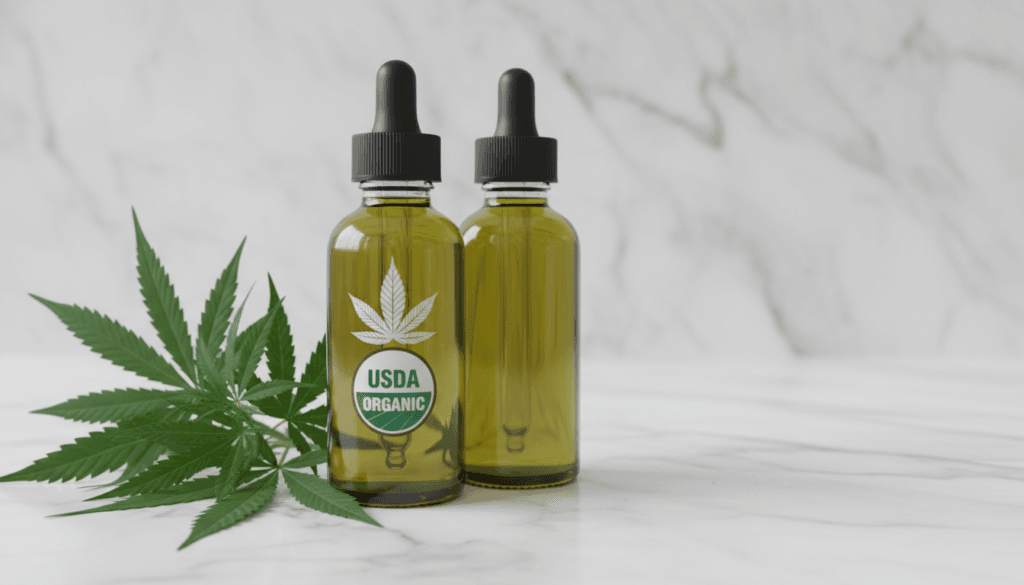
Organic hemp seed oil costs more. Sometimes significantly more. Whether that premium is justified depends on what you are using it for, how it was produced, and what the organic certification actually guarantees. Here is a clear breakdown of the real differences.
What Organic Certification Actually Means for Hemp
Organic certification for hemp (in the US, USDA Organic; in the UK and EU, Soil Association or EU Organic) guarantees that the hemp was grown without synthetic pesticides, chemical fertilisers, or genetically modified organisms. Third-party inspectors verify the growing conditions annually. The hemp must also be grown on land that has been free from prohibited substances for at least three years.
Hemp is a bioaccumulator. This means the plant absorbs substances from the soil through its roots as it grows, including heavy metals, pesticide residues, and other contaminants. This capacity is why hemp has been used in phytoremediation projects to clean contaminated land. It also means that hemp grown on contaminated or pesticide-treated soil will incorporate those substances into the plant, which then carry through into the pressed oil.
Does Organic Hemp Seed Oil Have More Nutrients?
The fatty acid composition (linoleic acid, alpha-linolenic acid, GLA) is determined primarily by genetics and the plant variety, not whether it was grown organically. An organic hemp seed oil does not contain meaningfully higher levels of Omega-3 or Omega-6 than a non-organic hemp seed oil from the same variety. The nutritional difference between the two is not significant on fatty acid content alone. Where organic certification adds value is not in what is present (the beneficial nutrients) but in what is absent (pesticide residues and contaminants).
When Organic Is Worth the Extra Cost
For daily dietary consumption, the case for organic hemp seed oil is strong. Consuming 1 to 2 tablespoons of hemp seed oil every day means regular exposure to any contaminants present in the oil. Over months and years, the cumulative difference between clean organic oil and oil with low-level pesticide residues becomes more relevant. For facial skincare use, the skin absorbs components of what is applied topically, making the absence of agricultural chemicals on organic oil a meaningful quality consideration. For products given to children, organic is worth the premium.
When Organic May Not Be Necessary
For occasional use, very infrequent skin use, or industrial applications, the premium may not be justified. For buyers who verify third-party COA results confirming absence of pesticides and heavy metals regardless of organic certification, a non-organic oil with a clean COA may offer equivalent safety assurance at a lower price.
How to Verify Quality Without Relying on the Label
Whether organic or not, a third-party Certificate of Analysis (COA) from an accredited laboratory that includes pesticide panel results and heavy metal screening is the most reliable quality indicator. A non-organic oil with a clean COA confirming no detectable pesticide residues may be as safe as an organic oil. The COA is the verification; the organic label is the assurance that the COA should be clean.
Frequently Asked Questions
Is organic hemp seed oil safer than regular?
Organic hemp seed oil is grown under conditions that prohibit synthetic pesticides and chemical fertilisers, reducing the risk of pesticide residue and soil contaminant transfer into the oil. Because hemp is a bioaccumulator, the source soil’s cleanliness directly affects the oil’s cleanliness. For daily dietary use or regular skin application, organic offers a meaningful safety advantage over non-organic oil from unverified sources. A non-organic oil with a clean third-party COA covering pesticides and heavy metals offers comparable safety assurance.
Does organic hemp seed oil taste different?
The taste is determined primarily by extraction method and freshness rather than organic status. A cold-pressed, fresh organic oil and a cold-pressed, fresh conventional oil from similar hemp varieties will taste very similar. The earthy, nutty flavour profile of hemp seed oil comes from its fatty acid composition and natural plant compounds rather than its growing method.
What is the price difference between organic and regular hemp seed oil?
Pricing varies by brand and market, but organic cold-pressed hemp seed oil typically costs 20 to 50% more than comparable non-organic versions. For a 250 ml bottle, the premium might be $5 to $15. For daily users, this works out to a modest additional cost per day that many consider worthwhile for the quality assurance. For skincare use where a bottle lasts several months, the premium is proportionally small.
How can I verify a non-organic hemp seed oil is safe?
Request or look up the product’s Certificate of Analysis (COA) from a named third-party laboratory. The COA should include pesticide residue panel results and heavy metal screening. If the COA shows non-detectable results for relevant pesticides and metals, the oil has been independently verified as clean regardless of organic certification. Always check that the COA is from an accredited laboratory and corresponds to the current product batch.
Is organic hemp seed oil better for skin?
For daily facial skin use, organic hemp seed oil offers greater assurance that no agricultural chemicals are present in what you are applying to your face. The fatty acid benefits to skin (moisturisation, barrier support, sebum regulation) come from the oil’s composition, which is similar between organic and non-organic versions from quality producers. The difference is the absence of unwanted substances rather than the presence of additional beneficial ones.