Edibles are the most misused cannabis product category precisely because their delayed onset and the 11-hydroxy-THC conversion process, discussed in detail in our Edibles 101 piece, make overconsumption extremely easy and the consequences significantly more intense and longer-lasting than most first-time users expect. Getting dosing right with edibles is genuinely important, and this guide provides a practical framework across experience levels and product types.
The Fundamental Principle: Dose Affects You Differently Than You Expect
Before any numbers, the most important principle: the same milligram amount of THC in an edible is not the same as the same amount smoked or vaped. As explained in our edibles piece, the liver converts a meaningful portion of ingested THC into 11-hydroxy-THC, a metabolite that is up to four times more potent than Delta-9 THC and crosses the blood-brain barrier more readily. This means 10 mg of THC in an edible typically produces a noticeably stronger and longer-lasting effect than 10 mg consumed through inhalation. Tolerance built through smoking or vaping does not fully transfer to edibles because of this different pharmacological pathway, which is why experienced cannabis users sometimes get unexpectedly strong effects from edibles they assumed would be moderate based on their inhalation tolerance.
The Standard Dosing Framework
| Experience Level | Starting Dose | Expected Effect | Wait Time Before More |
|---|---|---|---|
| First time, no cannabis experience | 2.5 mg THC | Very mild, subtle | Minimum 2 hours |
| Occasional user, some inhalation experience | 5 mg THC | Mild to moderate | Minimum 2 hours |
| Regular cannabis user, limited edible experience | 5-10 mg THC | Moderate | Minimum 2 hours |
| Regular edible user with established tolerance | 10-20 mg THC | Strong | Minimum 1.5-2 hours |
| High-tolerance regular users | 20-50+ mg THC | Strong to very strong | Minimum 1.5 hours |
These ranges reflect commonly used guidance from dispensary educators and harm reduction practitioners. They are not medical prescriptions and individual response varies significantly based on body composition, liver metabolism, and other factors.
The Two-Hour Rule: Why It Matters More Than Any Other Advice
The single most important rule for edible dosing is this: wait a minimum of two hours after your first dose before considering any additional amount, regardless of how you feel at 30 or 60 minutes. This is the rule that prevents the overwhelming majority of edible overconsumption incidents. The delay between consumption and peak effect for edibles is typically 2 to 4 hours, with some people not feeling significant effects until 90 minutes to 2 hours in. Taking a second dose at 45 minutes because nothing seems to be happening, then having both doses hit simultaneously an hour later, is the single most common cause of unexpectedly intense edible experiences. This applies even to experienced cannabis users trying a new edible product or format.
How Different Edible Types Affect Dosing
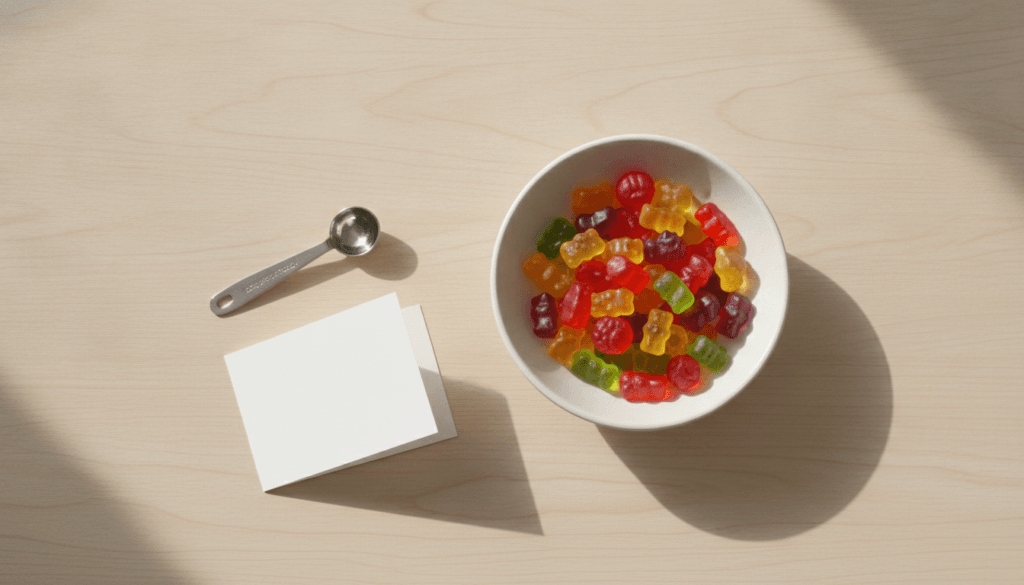
Gummies and capsules follow the standard digestion timeline, with onset typically 45 minutes to 2 hours and peak effects 2 to 4 hours after consumption. Chocolates and baked goods can have variable timelines depending on fat content and individual digestive response, sometimes with faster onset when consumed with other fatty foods. Hard candies and lozenges that dissolve slowly in the mouth have a partially sublingual absorption component, which can produce somewhat faster onset than swallowed gummies since some THC is absorbed directly through the mucous membranes before swallowing. THC beverages using nanoemulsion technology, discussed in our hemp beverages piece, can produce faster onset (15 to 30 minutes for some products) than standard edibles, which is one reason these products are marketed as more comparable to alcohol in terms of onset timing. If using a faster-onset edible format, the two-hour waiting rule should be replaced with the specific onset guidance for that product type, but a conservative minimum of 90 minutes to 2 hours remains prudent until you have experience with that specific product.
Food and Timing Interactions
Consuming an edible on a completely empty stomach typically produces faster but potentially more variable onset. Consuming it after a meal, particularly one with some fat content (which improves THC absorption), generally produces a more gradual, more consistent onset. For new users, taking edibles after a light meal rather than on an empty stomach or after a very large heavy meal (which can significantly delay onset) helps with predictability. The total dose does not change, but the absorption rate and therefore the timeline shifts with food intake, which is part of why the same edible can produce noticeably different timing on different occasions.
What to Do If You Take Too Much
If the effects are more intense than expected, the most important things to do are find a comfortable, familiar environment, stay hydrated with water, lie down if the room feels unstable, and remind yourself repeatedly that the effects are temporary and will pass. Cannabis edibles have not been associated with fatal overdose in any documented case, but the experience can be deeply uncomfortable. CBD may have some modest effect on moderating THC’s intensity as discussed in our CBD vs THC comparison. Black pepper (specifically chewing a few peppercorns) has anecdotally been reported to reduce THC-induced anxiety, with some pharmacological basis involving terpene-THC receptor interactions, though evidence for this as a reliable intervention is limited. Time is the most reliable solution; most edible effects resolve within 4 to 8 hours even at high doses.
Frequently Asked Questions
What is a standard dose of THC in an edible?
In most regulated cannabis markets (such as US state-licensed dispensaries), a standard serving size is defined as 10 mg of THC. California, Colorado, and most other legal adult-use states use 10 mg per serving with a maximum of 100 mg per package as their labelling standard. This does not mean 10 mg is appropriate for everyone; it is simply the regulatory unit for labelling purposes. For new users, 2.5 to 5 mg is a more appropriate starting point, representing a quarter to half of a standard serving.
How long do edible effects last?
Edible effects typically last 4 to 8 hours, significantly longer than smoked or vaped cannabis which lasts 1 to 4 hours. At high doses, effects can extend beyond 8 hours. This longer duration is both why edibles are useful for conditions where extended relief is beneficial (chronic pain, sleep) and why miscalculating the dose produces a much longer uncomfortable experience than an equivalent mistake with inhalation.
I ate an edible and feel nothing after an hour. Can I take more?
No. One hour is still well within the normal onset window for most edibles. The most dangerous assumption in edible use is that not feeling anything at 60 minutes means the edible is not working. Onset commonly occurs between 45 minutes and 2 hours for most edibles, with some people taking longer. Taking a second dose at the 60-minute mark risks both doses reaching their peak effect simultaneously, producing an effect 2 to 4 times stronger than either dose alone would have produced.
Do edibles affect people differently based on weight?
Body weight is one factor, but liver metabolism, individual endocannabinoid system variation, recent food intake, and general cannabis experience are equally or more significant. A dose appropriate for a 70 kg person may not be proportionally appropriate for a 100 kg person because the relevant variables are more complex than simple weight scaling. The start-low-go-slow approach accounts for this uncertainty by establishing your personal dose through experience rather than calculation.
Are homemade edibles stronger than commercial ones?
They can be, and unpredictably so. Commercial edibles from licensed producers are tested for precise cannabinoid content and distributed evenly through the product. Homemade edibles often have uneven distribution of cannabis extract or butter through the baked product (different brownies from the same batch can have very different THC content) and no independent testing to verify total potency. This is why homemade edibles, despite often being more affordable, are harder to dose reliably and have historically been associated with more overconsumption incidents than tested commercial products.
Can edibles be used for medical purposes?
Yes. Edibles are used by medical cannabis patients specifically for their extended duration and systemic effect, particularly for chronic pain management through the day, nausea from chemotherapy (where the antiemetic effect of cannabinoids is well-supported), and sleep. The same dosing principles apply in medical contexts, and medical cannabis patients often work with a prescribing physician to titrate their edible dose more systematically than a recreational approach would involve.