Cold-pressed. You see those two words on hemp oil bottles all the time. But what do they actually mean, and does it genuinely matter for the product you are putting on your skin or adding to your food?
The short answer is yes, it matters a great deal. The extraction method used to make hemp seed oil directly affects its nutritional value, its shelf life, its color, and its effectiveness for both culinary and skincare use. Here is a complete breakdown of what cold-pressed means and why it is worth looking for on your label.
What Does Cold-Pressed Mean?
Cold-pressed refers to a mechanical extraction process in which hemp seeds are fed into a screw press or expeller press and squeezed under high pressure to release their oil. The critical detail is that this process is carried out at low temperatures, typically below 49 degrees Celsius (120 degrees Fahrenheit), and without the use of heat or chemical solvents.
The name is slightly misleading in that the seeds are not chilled or refrigerated during pressing. Rather, cold-pressed means no external heat is applied. The pressure itself generates some heat naturally, which is why the temperature threshold matters: keeping the process below that threshold preserves the oil’s biological integrity.
How Is Cold-Pressed Hemp Oil Made?
The process follows these steps in order. First, hemp seeds are cleaned and sorted to remove debris and damaged seeds. Next, seeds are fed into a mechanical press where a rotating screw squeezes them under pressure. The oil is then released from the seeds and flows into a collection vessel. The raw oil passes through a filter to remove seed particles and sediment. Finally, it is bottled, typically in dark glass to protect against light degradation, and stored at cool temperatures.
No heat is applied externally at any point. No chemical solvents such as hexane are used. This is what makes the cold-pressed label meaningful.
Why Does the Extraction Method Matter?
Hemp seed oil is valuable because of what it contains: Omega-3 and Omega-6 fatty acids in an ideal 3:1 ratio, Gamma-Linolenic Acid (GLA), Vitamin E, and a range of antioxidants. These compounds are heat-sensitive. When hemp seeds are processed at high temperatures or with chemical solvents, these beneficial compounds degrade, oxidise, or are lost entirely.
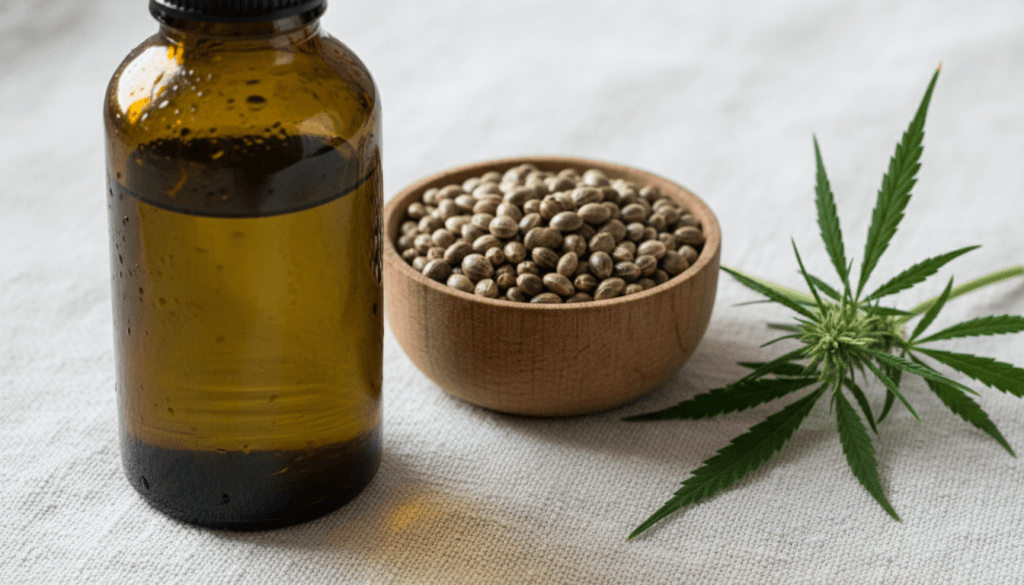
Cold-pressed hemp oil retains its full nutritional profile including the complete fatty acid spectrum, natural antioxidants including Vitamin E and chlorophyll, authentic flavor and aroma, and natural green color from retained chlorophyll. Heat-processed or solvent-extracted hemp oil typically produces a lighter-colored, more neutral product that has been stripped of many of the qualities that make hemp seed oil worth using in the first place.
Cold-Pressed vs Refined Hemp Seed Oil
Cold-pressed hemp oil is unrefined. It has a distinctly nutty, grassy flavor, a dark green to amber color, and a rich fatty acid profile. Refined hemp seed oil has been bleached, deodorised, and filtered to remove color, flavor, and aroma. It has a higher smoke point but significantly lower nutritional value. For skincare, cold-pressed and unrefined is the clear choice because the retained fatty acids, antioxidants, and phytonutrients are what deliver results. For high-heat cooking, refined oil performs better on paper, but hemp seed oil of either type is not well-suited to high-heat cooking anyway due to its low smoke point.
How to Identify Cold-Pressed Hemp Seed Oil
Look for these indicators on the label and product description. The label should explicitly state cold-pressed or expeller-pressed. The oil should be dark green to amber in color, not pale yellow or clear. The flavor profile should be described as nutty or grassy. Packaging should be dark glass, not clear plastic. Storage instructions should recommend keeping refrigerated after opening. A Certificate of Analysis (COA) from a third-party lab should be available on request or via a QR code, confirming fatty acid content.
Frequently Asked Questions
What is the difference between cold-pressed and expeller-pressed hemp oil?
Cold-pressed and expeller-pressed are often used interchangeably, but there is a technical distinction. Expeller-pressed refers to any mechanical pressing regardless of temperature. Cold-pressed specifically means the expeller process was carried out below 49 degrees Celsius (120 degrees Fahrenheit). All cold-pressed oils are expeller-pressed, but not all expeller-pressed oils are cold-pressed. For hemp seed oil, cold-pressed is the more precise and preferable specification.
Does cold-pressed hemp seed oil go rancid faster?
Cold-pressed hemp seed oil does have a shorter shelf life than refined versions because it retains polyunsaturated fatty acids that are prone to oxidation. Typical shelf life is 12 to 14 months unopened and 1 to 3 months after opening when refrigerated. Always store cold-pressed hemp seed oil in the refrigerator after opening and away from direct light to extend freshness.
Can I cook with cold-pressed hemp seed oil?
Cold-pressed hemp seed oil has a low smoke point of approximately 165 degrees Celsius (330 degrees Fahrenheit), making it unsuitable for frying or high-heat cooking. It is best used as a finishing oil drizzled over salads, blended into smoothies, or added to dishes after cooking. Heating cold-pressed hemp oil destroys the very nutrients that make it worth using.
Is cold-pressed hemp seed oil better for skin than regular hemp seed oil?
Yes, for skincare purposes cold-pressed unrefined hemp seed oil is significantly better. It retains its full complement of fatty acids (Omega-3, Omega-6, GLA) and natural antioxidants including Vitamin E, all of which are the active components that support skin barrier function, moisture retention, and anti-inflammatory effects. Refined hemp seed oil has had these compounds partially or fully removed during processing.
How can I tell if my hemp seed oil has gone bad?
Rancid hemp seed oil has a noticeably unpleasant, paint-like or fishy smell rather than its natural nutty, grassy aroma. The color may also change and it may taste bitter or harsh. If your hemp seed oil smells off, discard it. Using rancid oil on skin can irritate rather than nourish. Storing in the refrigerator in a dark glass bottle after opening significantly extends its freshness window.