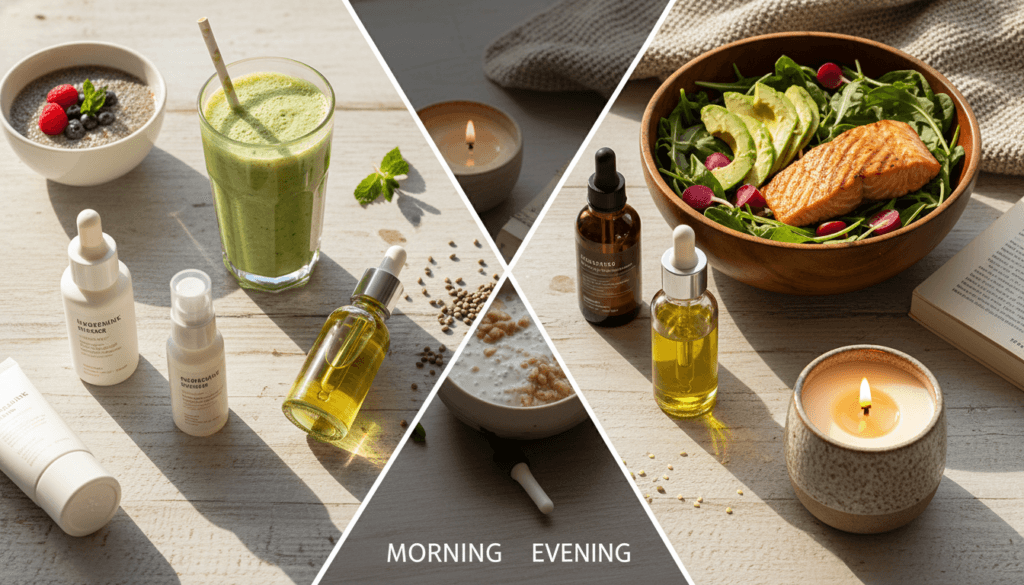
Hemp seed oil is versatile enough to earn a genuine place in both a morning skincare routine and an evening nutrition plan. The challenge for most people is not whether it works but knowing exactly how to fit it in without overcomplicating an already busy daily routine.
Here is a practical guide to building hemp seed oil into both morning and evening use.
Morning: Skincare and Nutrition
Hemp seed oil’s lightweight texture and fast absorption make it well-suited for morning skincare. In a morning routine, it is used after your cleansing, toning, and serum steps, applied as 2 to 3 drops pressed into slightly damp skin before SPF. Its zero comedogenic rating means it will not interfere with SPF or makeup application when used in the right amount. For morning nutrition, hemp seed oil works naturally added to a smoothie, blended into a protein shake, drizzled over yogurt or oatmeal, or added to a morning salad dressing. One to two tablespoons provides a meaningful dose of Omega-3, Omega-6, and GLA without any preparation beyond opening the bottle.
Evening: Recovery Skincare and Supplementation
In the evening, hemp seed oil can be used more generously as a facial treatment since there is no SPF or makeup to consider. After cleansing and applying any actives (retinol, AHAs, peptides), 3 to 5 drops applied as a final step works well. For the body, applying hemp seed oil to dry areas after showering and before skin fully dries is the most effective approach for moisture retention. Nutritionally, adding hemp seed oil to an evening meal provides fatty acid support while the body conducts its natural repair processes overnight. Hemp seed oil pairs well with the evening meal as a salad dressing base or drizzled over roasted vegetables.
Creative Ways to Use Hemp Seed Oil in Daily Life
In the kitchen, use hemp seed oil as the base for salad dressings with lemon juice, mustard, and garlic. Add a tablespoon to hummus for a nutritional boost without changing the flavour significantly. Blend into smoothies with banana, berries, and leafy greens. Use as a finishing drizzle over soups, pasta, and grain bowls after cooking. Mix into pesto as a partial replacement for olive oil. For hair care, once or twice a week apply to the scalp and hair ends as a pre-shampoo treatment and leave for 30 to 60 minutes before washing. As a body oil, mix a few drops into your regular body lotion to add fatty acid content to your moisturiser.
Building a Consistent Habit
The key to getting value from hemp seed oil, whether for skin or nutritional benefit, is consistent daily use over weeks and months. The most effective approach is pairing it with an existing habit. For dietary use, keeping the bottle next to the blender or salad bowl creates a visual cue. For skincare, keeping it next to your other serums and oils in the order you use them removes the decision step entirely.
Frequently Asked Questions
Is it better to take hemp seed oil in the morning or evening?
Both have advantages and neither is definitively superior. Morning nutritional use can support your skin’s fatty acid balance throughout the day. Evening use aligns with the skin’s natural repair cycle and the overnight period when cellular regeneration is most active. For skincare, evening use allows more generous application without concern about makeup or SPF interaction. For most people, consistent daily use matters more than the specific time of day.
How should I store hemp seed oil to keep it fresh?
Cold-pressed hemp seed oil is sensitive to light, heat, and oxygen. Store it in the refrigerator after opening in its original dark glass bottle. Avoid storing near the hob or in a warm pantry. Use within 1 to 3 months of opening. A bottle that smells rancid (paint-like, fishy, or harsh rather than nutty and fresh) should be discarded regardless of the expiry date.
Can I cook with hemp seed oil every day?
Hemp seed oil has a low smoke point (approximately 165 degrees Celsius or 330 degrees Fahrenheit) and is not suitable for frying or high-heat cooking. For daily use in cooking, it works well as a finishing oil drizzled over completed dishes, a base for cold dressings and marinades, or blended directly into smoothies and drinks. Heating it above its smoke point destroys the fatty acids that make it nutritionally valuable.
How much hemp seed oil should I use daily for health benefits?
A common recommendation for nutritional benefit is 1 to 2 tablespoons of cold-pressed hemp seed oil per day. This provides approximately 2 to 4 grams of Omega-3 ALA and meaningful GLA content. For skin benefits, applying 2 to 5 drops topically once or twice daily provides sufficient fatty acid contact with the skin. There is no established medical recommended daily intake, but these ranges align with common practice in hemp nutritional research and usage.
Can children use hemp seed oil?
Hemp seed oil (not CBD oil) is a food-grade product and is generally considered safe for children as part of a balanced diet. It is found in various children’s food products in health food markets. Its Omega fatty acid profile is beneficial for skin, brain development, and general nutrition in children. For topical skin use on children, particularly those with sensitive or eczema-prone skin, the non-comedogenic, fragrance-free, and anti-inflammatory properties make it a gentle option. Always introduce any new supplement gradually and consult a paediatrician if you have specific concerns.