last updated: 10 October 2026. Informational only, not medical advice.
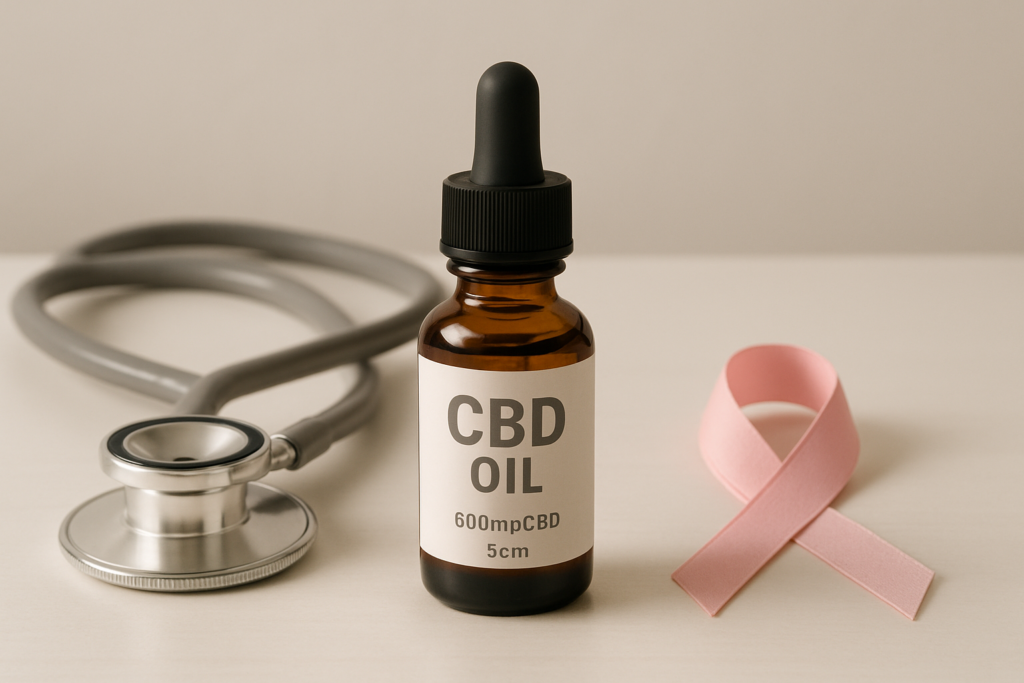
CBD and tamoxifen, a medication commonly used in breast cancer treatment and prevention, carry a documented interaction concern through the CYP3A4 and CYP2D6 pathways. Tamoxifen requires conversion by liver enzymes into its active form, and CBD’s inhibition of these enzymes could plausibly reduce this conversion, potentially reducing the medication’s effectiveness, a meaningfully different concern than the “elevated levels” pattern common elsewhere on this site.
Why tamoxifen’s interaction concern points a different direction
| Factor | Detail |
|---|---|
| Mechanism | Tamoxifen is a prodrug, requiring CYP2D6 and CYP3A4 conversion to its active metabolites |
| CBD’s effect | Enzyme inhibition could reduce this conversion, potentially lowering active drug levels |
| Consequence | Reduced treatment effectiveness, rather than the elevated-levels concern common with most other interactions on this site |
| Stakes | High, given tamoxifen’s role in breast cancer treatment and recurrence prevention |
Why this is worth understanding as its own distinct pattern
Most interactions discussed on this site involve CBD raising medication levels by slowing their clearance. Tamoxifen is different because it needs to be converted by these same enzymes into its active form, so inhibiting the enzymes could mean less active medication is produced in the first place, rather than more of it building up. This is a meaningfully different risk profile, one where the concern is under-treatment rather than over-treatment or toxicity, but the seriousness given tamoxifen’s role in cancer care is just as significant.
Why this needs oncology involvement specifically
Tamoxifen dosing and effectiveness monitoring are managed by oncology specialists who understand the specific stakes of maintaining adequate active drug levels for cancer treatment and recurrence prevention. Any supplement with a plausible mechanism for reducing this conversion, including CBD, deserves direct disclosure to your oncology team before use, not a self-directed decision based on CBD’s general reputation for safety in other contexts.
Practical guidance
- Disclose any CBD use to your oncologist before starting, given the plausible mechanism for reduced tamoxifen effectiveness
- Don’t assume CBD is automatically fine simply because it’s marketed as a general wellness product; this interaction concern is specific and worth taking seriously
- If your oncology team is monitoring for treatment effectiveness through other means, mention CBD use as relevant context
- Never substitute CBD-related symptom management (sleep, anxiety, nausea) for disclosure about the CBD itself
Who this applies to
- Anyone on tamoxifen for breast cancer treatment or prevention. This interaction concern applies regardless of the specific reason for tamoxifen use.
- Considering CBD for cancer-treatment-related symptoms. As covered in our broader chemotherapy interaction guide, any cannabinoid use during cancer treatment needs oncology team involvement, and tamoxifen’s specific mechanism adds another layer to that conversation.
Frequently asked questions
Can I take CBD while on tamoxifen?
This should be discussed directly with your oncologist, given the plausible mechanism for CBD reducing tamoxifen’s conversion to its active form.
Is this the same kind of interaction as CBD and other medications?
The underlying enzyme pathway is similar, but the direction of concern differs, this is about potentially reduced medication effectiveness rather than elevated levels, given tamoxifen’s need for enzyme-based activation.
Should I stop CBD if I’m starting tamoxifen?
Discuss this with your oncologist rather than making this decision independently, given the stakes involved in maintaining effective cancer treatment.