Last updated: 9 October 2026. Informational only, not medical advice.
CBD’s evidence for temporomandibular joint (TMJ) disorder symptoms is limited but plausible, given TMJ discomfort often involves both muscular tension and inflammation, two areas where CBD has some, if general rather than TMJ-specific, relevance. Topical application directly to the jaw area is a commonly considered approach, given the localized nature of TMJ discomfort.
Why TMJ disorder is a reasonable, if unconfirmed, area for CBD consideration
| Factor | Relevance to TMJ |
|---|---|
| Muscular tension component | TMJ often involves jaw muscle tension; CBD’s muscle-relaxation-adjacent effects may be relevant |
| Inflammatory component | Some TMJ presentations involve joint inflammation; CBD’s anti-inflammatory mechanism is plausible here |
| Stress and clenching overlap | Stress-related jaw clenching (bruxism) often worsens TMJ symptoms; CBD’s anxiety-reducing effects could have indirect relevance |
| Dedicated TMJ research | Minimal; no substantial body of TMJ-specific CBD trials exists |
What the overlapping mechanisms suggest, with appropriate caution
TMJ disorder frequently involves a combination of muscular tension, joint inflammation, and stress-related exacerbation (particularly nighttime jaw clenching or grinding). CBD has some relevance to each of these individual components separately, muscle relaxation, inflammation, and anxiety, which makes it a reasonable area of interest even without dedicated TMJ-specific clinical trials confirming benefit for the condition as a whole.
Topical versus oral approaches for TMJ specifically
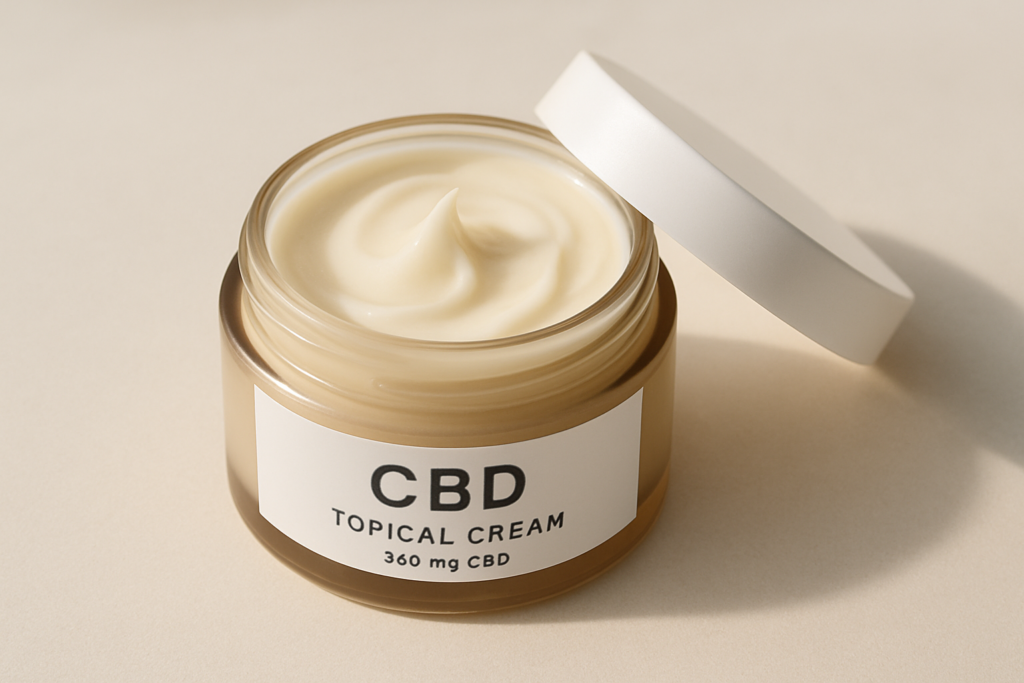
Given TMJ discomfort’s localized nature, topical CBD applied directly to the jaw and surrounding muscles is a commonly considered approach, similar to how topical CBD is used for other localized muscle and joint discomfort discussed elsewhere on this site. Oral CBD might be more relevant if stress-related clenching is a significant contributing factor, addressing the anxiety component that may be driving nighttime teeth grinding.
What CBD should not replace
TMJ disorder management often involves dental or oral health specialist guidance, potentially including night guards for clenching, physical therapy for jaw muscle tension, and in some cases other specific interventions. CBD, if used, should be considered a potential complementary approach for symptom comfort, not a substitute for proper TMJ evaluation and treatment from a dentist or TMJ specialist.
Practical guidance
- Get a proper TMJ evaluation from a dentist or specialist if symptoms are persistent or significant, rather than self-managing with supplements alone
- If trying topical CBD, apply directly to the jaw and surrounding muscle area, similar to how other localized topical use is approached
- If stress-related clenching is a factor, consider whether CBD’s anxiety-relevant effects might help indirectly, alongside addressing the clenching itself with appropriate dental guidance
- Continue any prescribed night guard or other dental appliance use; CBD isn’t a substitute for these interventions
Frequently asked questions
Does CBD help TMJ disorder?
Not established through dedicated research, but the overlapping muscular, inflammatory, and stress-related components of TMJ make it a plausible area of general relevance, extrapolating from CBD’s broader research base.
Should I use topical or oral CBD for TMJ?
Topical, applied directly to the jaw area, is commonly considered given TMJ’s localized nature. Oral CBD might be more relevant if stress-related clenching is a significant factor.
Can CBD replace my night guard for teeth grinding?
No, continue using any dentist-prescribed night guard or other TMJ treatment. Consider CBD as a potential complementary approach for comfort, not a replacement.