Last updated: 3 September 2026. Informational only, not medical advice.
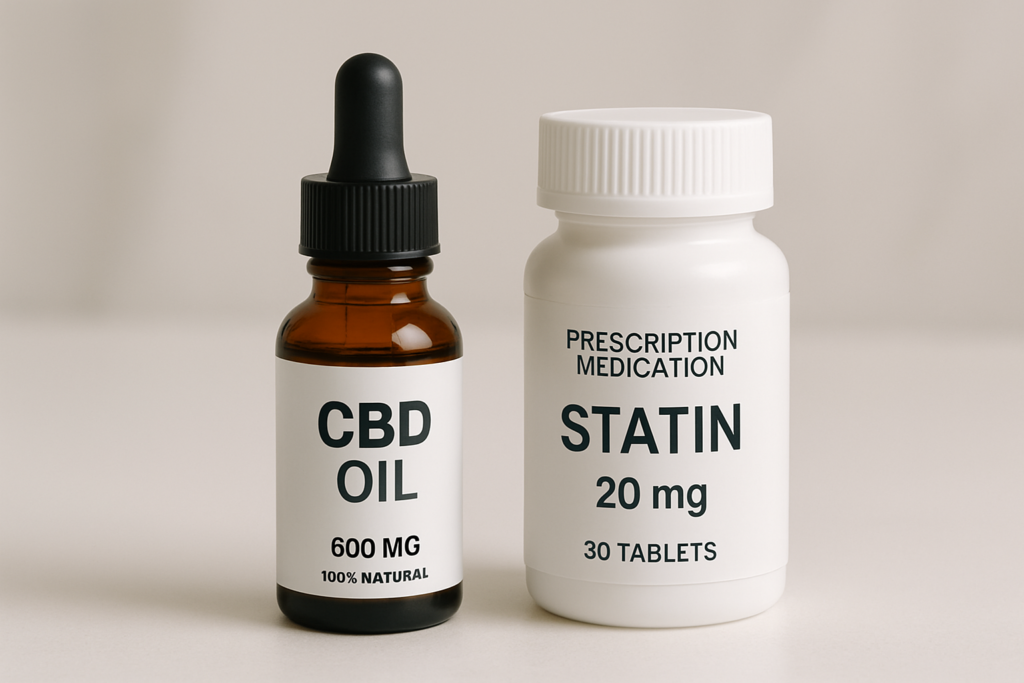
CBD and statins (like atorvastatin or simvastatin) share a liver enzyme pathway, CYP3A4, that’s relevant enough to be a documented concern rather than a theoretical one. CBD’s inhibition of this enzyme can raise statin blood levels, potentially increasing the risk of statin-related side effects, including muscle pain and, in rare cases, more serious muscle breakdown. This interaction varies significantly by which statin you’re on.
CBD and statins at a glance
| Statin | CYP3A4 dependence | Interaction relevance |
|---|---|---|
| Simvastatin | High | Higher concern |
| Atorvastatin | High | Higher concern |
| Lovastatin | High | Higher concern |
| Rosuvastatin | Low | Lower concern |
| Pravastatin | Minimal | Lower concern |
Why some statins matter more than others
Not all statins are metabolized the same way. Simvastatin, atorvastatin, and lovastatin rely heavily on CYP3A4, the same enzyme pathway CBD inhibits, which is the same reason these particular statins already carry well-known interaction warnings with grapefruit juice. Rosuvastatin and pravastatin use different, less CYP3A4-dependent pathways, making them lower concern for this specific interaction, though not entirely risk-free.
What elevated statin levels could mean
The main statin side effect of concern is muscle-related: myalgia (muscle pain) is relatively common, and in rare cases, elevated statin levels can contribute to rhabdomyolysis, a serious muscle breakdown condition. This is uncommon but serious enough that any factor raising statin blood levels warrants attention.
Practical guidance
- If you’re on simvastatin, atorvastatin, or lovastatin, talk to your doctor or pharmacist before starting CBD
- If you’re on rosuvastatin or pravastatin, the interaction concern is lower, but mentioning CBD use to your doctor is still good practice
- Watch for new or worsening muscle pain, weakness, or dark urine (a possible sign of muscle breakdown) if combining CBD with any statin
- Don’t stop statin medication due to CBD use without medical guidance, cardiovascular risk management matters
- If your doctor approves combined use, starting with a lower CBD dose is a reasonable precaution
Same mechanism as the grapefruit warning
If you’ve seen “avoid grapefruit juice” warnings on statin labels, this is the same underlying mechanism, grapefruit inhibits CYP3A4 similarly to CBD. This existing, well-established warning is a useful reference point: if your specific statin carries a grapefruit warning, treat CBD with comparable caution and involve your doctor.
Who should be most cautious
- On simvastatin, atorvastatin, or lovastatin. Highest relevance category for this interaction.
- Already experiencing statin-related muscle symptoms. Adding a variable that may increase statin levels warrants medical discussion first.
- On other CYP3A4-affecting medications simultaneously. Combined inhibition from multiple sources compounds the effect.
- Older adults. Statin-related muscle side effects are somewhat more common with age.
Frequently asked questions
Can I take CBD with statins?
Possibly, but the answer depends heavily on which statin. Simvastatin, atorvastatin, and lovastatin carry higher interaction concern than rosuvastatin or pravastatin. Check with your doctor or pharmacist.
Is this the same interaction as grapefruit juice?
The mechanism is similar, both involve CYP3A4 inhibition, which is why existing grapefruit warnings on your statin are a useful reference point.
What symptoms should I watch for?
New or worsening muscle pain, weakness, or unusually dark urine. Report these to your doctor promptly.
Should I switch statins to use CBD?
Statin choice should be a medical decision based on your cardiovascular needs, not adjusted primarily to accommodate CBD use. Discuss options with your doctor if this is a concern.
Does topical CBD carry the same risk?
Topical CBD with minimal systemic absorption carries substantially lower interaction risk than oral or sublingual CBD.