
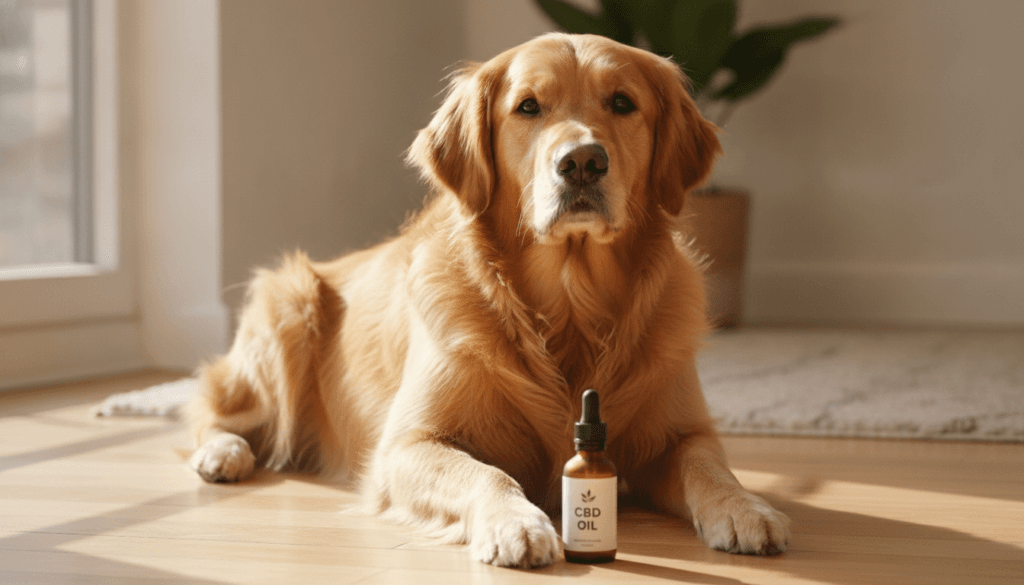
CBD for pets has gone from a fringe idea to a mainstream pet care category in a remarkably short time. Survey data suggests roughly 29% of pet owners have given their pet CBD or a cannabis product, and over half would consider it. The research behind this trend has also grown considerably, including what is now the largest study of CBD use in dogs ever conducted.
The Largest Study to Date: 47,000 Dogs
Researchers analysed data from the Dog Aging Project, a long-term community science initiative tracking tens of thousands of dogs through annual owner surveys, examining 47,355 dogs with data collected between 2019 and 2023. The study, published in Frontiers in Veterinary Science, found that CBD and hemp supplement use was particularly common among older, ailing dogs, especially those with conditions like dementia, arthritis, or cancer, reflecting how owners are using these products: often as a complementary measure for age-related quality of life issues rather than for young, healthy pets.
One of the more notable findings concerned behaviour over time. Dogs given CBD products for multiple years were initially more aggressive compared to dogs not receiving CBD, but this aggression became less intense over time with continued use. The researchers suggested this long-term behavioural change highlights CBD’s potential as a therapy for canine behavioural issues, though they were also careful to note this was an observational study based on owner-reported data, not a controlled trial, and that further research is needed to understand the direction and mechanism of this relationship.
What Veterinary Pharmacokinetic Research Shows
Beyond the large observational study, more controlled pharmacokinetic and safety research has been conducted in dogs specifically. A 2025 study compared CBD isolate, CBDA isolate, and full-spectrum formulations in healthy beagles, finding differences in absorption kinetics between isolate and full-spectrum products, an area the researchers noted was important for developing evidence-based dosing guidelines, which currently do not exist in any standardised form for veterinary use. A separate 90-day repeat-dose safety study in healthy beagle dogs, examining different cannabinoids including CBD, found that CBD was generally well-tolerated, though one study examining CBD/CBDA for post-operative pain management found increased liver enzyme levels (ALP) and decreased eosinophils in some dogs, with researchers noting this warrants caution and monitoring, a finding that echoes some of the liver-related considerations discussed in our piece on CBD safety in humans.
The Regulatory Reality: No Approved Products Exist
Despite the volume of products marketed for pets, a 2025 review published in the Journal of Cannabis Research found that there are currently no licensed veterinary CBD products available on the market due to a lack of appropriate testing and data meeting regulatory standards. The FDA has explicitly stated it has not approved cannabis for any use in animals and cannot ensure the safety or effectiveness of CBD products marketed for pets, and recommends pet owners discuss appropriate treatment options with a veterinarian rather than relying on these unapproved products. This does not mean these products are necessarily unsafe or ineffective; it means they have not gone through the formal approval process that would allow manufacturers to make specific therapeutic claims, and quality, dosing accuracy, and safety testing varies significantly between products and brands in the absence of regulatory standardisation.
A Concerning Trend: Rising Poisoning Reports
One specific safety signal worth being aware of comes from research conducted by the University of Guelph, which found that reports to the US Animal Poison Control Center regarding dogs with cannabis poisoning have been rising. This is distinct from the question of whether appropriately-dosed CBD products are safe for pets; it more likely reflects pets accessing products (including THC-containing products, edibles, or excessive amounts of any cannabis product) that were not intended for them or were not dosed appropriately for their size. This underscores the importance of keeping any cannabis products, whether intended for the pet or for human use in the household, stored securely and out of reach.
What Pet Owners Are Actually Using
Survey data on pet owners who give their pets CBD or cannabis products found that CBD isolate (100% CBD, no other cannabinoids) was the most commonly identified product type, used by approximately 26% of respondents who gave their pets these products. Broad spectrum (described as containing no THC) and full spectrum (containing trace THC) products were also commonly used, at roughly 17% and 15% respectively. This distribution suggests many pet owners are gravitating toward the lower-THC-risk product categories, similar to the considerations discussed in our piece on CBD types for human use, likely reflecting heightened caution about THC exposure in pets specifically, given that pets are smaller and THC’s effects in animals can be more pronounced relative to body size than in humans.
Practical Considerations If You’re Considering CBD for Your Pet
Given the absence of approved products or standardised dosing guidelines, several practical points are worth keeping in mind. Discussing CBD use with your veterinarian before starting is valuable, particularly if your pet has existing health conditions or takes other medications, since CBD’s potential to affect liver enzymes (as seen in some of the research discussed above) and its interactions via the same metabolic pathways relevant in humans could apply to pets as well. Products specifically formulated and dosed for pets, rather than human products used off-label at guessed doses, are preferable given the significant difference in body size and metabolism between pets and humans. THC content matters significantly more for pets than it might for an adult human, given pets’ smaller body size; broad spectrum or isolate products that minimise THC exposure are generally the more cautious choice based on the survey data showing this is what most pet owners already gravitate toward. A Certificate of Analysis confirming both CBD content and the absence of contaminants is just as relevant for pet products as for human products, arguably more so given the complete absence of regulatory oversight specific to this category.
Frequently Asked Questions
Is CBD safe for dogs?
Research, including a large 90-day safety study in beagles, has generally found CBD to be well-tolerated in dogs, though some studies have noted effects on liver enzymes (similar to findings in human research) that warrant monitoring, particularly with longer-term use. There are currently no FDA-approved CBD products for veterinary use, and the FDA explicitly cautions against relying on unapproved products without veterinary guidance. The largest study to date, involving over 47,000 dogs, found CBD use was common among older dogs with chronic conditions and observed some behavioural changes over time, though this was observational rather than a controlled safety trial.
Can CBD help with my dog’s anxiety or aggression?
The large-scale Dog Aging Project analysis found that dogs given CBD for multiple years showed reduced aggression over time compared to dogs not given CBD, which researchers suggested highlights potential for CBD as a therapy for behavioural issues. However, this finding comes from observational data, not a controlled clinical trial, so it should be considered suggestive rather than definitive. Other research has specifically examined CBD for anxiety and stress-related behaviours in dogs with some positive findings, but the overall evidence base, while growing, is still considered preliminary compared to established veterinary behavioural treatments.
How much CBD should I give my dog?
There is currently no standardised, regulator-approved dosing guideline for CBD in dogs or other pets. Pharmacokinetic research is ongoing specifically to help establish evidence-based dosing, but as of now, dosing relies on product-specific manufacturer guidance (often based on body weight) combined with veterinary input, rather than an established medical standard comparable to how human CBD dosing research has progressed, as discussed in our human CBD dosage guide.
Can cats have CBD too, or is it just for dogs?
Most veterinary CBD research has focused on dogs, with comparatively less published research specifically on cats. Cats have some physiological differences in how they metabolise certain compounds compared to dogs, which means dosing and safety information for dogs should not be assumed to directly translate to cats. If considering CBD for a cat, veterinary guidance is particularly important given the more limited cat-specific research base compared to dogs.
What’s the difference between CBD products marketed for pets and regular human CBD products?
Products specifically marketed for pets are typically formulated with pet-appropriate dosing (accounting for smaller body sizes) and often avoid added ingredients that could be harmful to animals, such as certain artificial sweeteners (xylitol, for example, is toxic to dogs and is sometimes found in human CBD edibles). Using human CBD products for pets without adjustment carries risks both from incorrect dosing for the pet’s size and from potentially harmful non-CBD ingredients formulated for human consumption.
Why is cannabis poisoning in pets becoming more common?
Research from the University of Guelph found rising reports of cannabis poisoning in dogs to poison control centres. This trend likely reflects the broader increase in cannabis product availability and variety (including edibles, which can be particularly appealing and accessible to curious pets) rather than appropriately-dosed pet CBD products themselves being the issue. It underscores a household safety point: any cannabis products, whether THC or CBD, whether intended for pets or humans, should be stored where pets cannot access them, given that a dose appropriate for a human adult could represent a significant overdose for a much smaller animal.