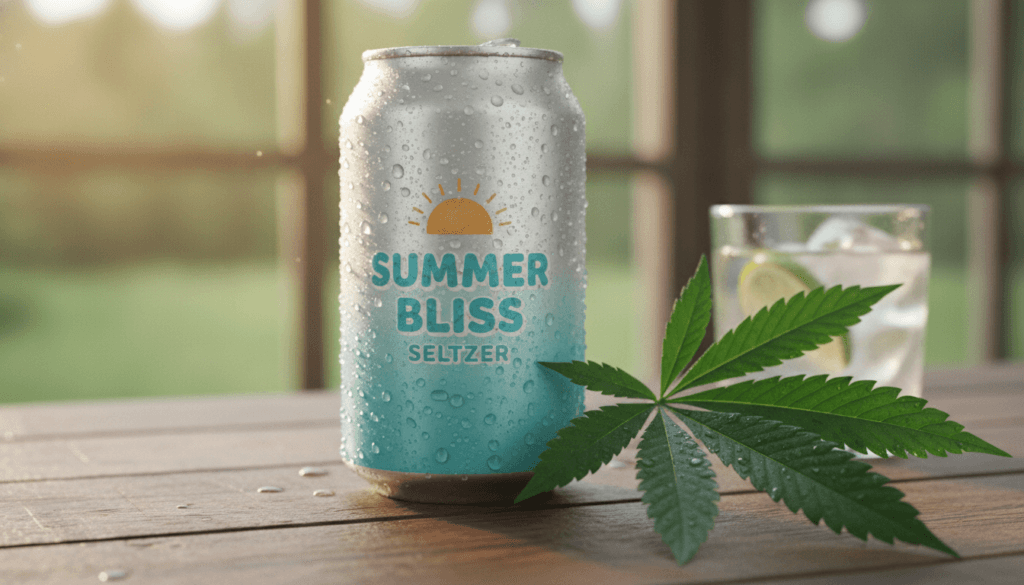
Walk into a growing number of bars, bottle shops, and even some mainstream grocery stores in the US, and alongside the beer and wine you may now find a seltzer can that looks almost identical, except it contains THC instead of alcohol. This category, broadly called hemp-derived THC beverages, has gone from a novelty to a genuine commercial force in just a few years.
How These Beverages Are Legally Possible
Hemp-derived THC beverages exist because of the same 2018 Farm Bill framework discussed throughout our coverage of hemp regulation: cannabis containing no more than 0.3% Delta-9 THC by dry weight is legally classified as hemp, not marijuana, at the federal level. Beverage manufacturers use this framework to create drinks infused with hemp-derived THC (and often other cannabinoids like CBD) at doses low enough that the total THC content remains compliant, while still being high enough to produce a noticeable effect. This is fundamentally different from cannabis beverages sold through state-licensed marijuana dispensaries, which are regulated under each state’s separate cannabis program; hemp-derived beverages have historically been sellable through general retail channels, including liquor stores, some grocery stores, and direct-to-consumer online sales, in states that do not specifically restrict them.
The Market Size: This Is Not a Niche Anymore
The numbers reflect genuinely rapid growth. Total US cannabis beverage sales reached approximately $1.1 billion in 2023, with THC seltzers as a category valued at over $500 million globally that same year, representing around 42% share of the cannabis beverage category. Growth projections vary by source but consistently point toward continued rapid expansion, with some projections estimating the US THC beverage market could reach $2.5 billion by 2028, and longer-term industry projections (cited by sources including Whitney Economics) suggesting a potential $10 to 15 billion market if even a modest share of alcohol consumers shift toward THC beverages as an alternative. The category has attracted attention well beyond cannabis-specific companies; major beverage industry players and distributors, including companies traditionally associated with alcohol, have shown interest in or entered this space, reflecting a view of THC beverages as a genuine adjacent category to alcohol rather than a separate niche.
Why People Are Choosing These Over Alcohol
Several factors appear to be driving adoption, based on industry analysis and consumer survey data. Younger generations are drinking less alcohol overall, and THC beverages offer a discreet, socially familiar alternative format (a can that looks like any other seltzer) without alcohol’s calories, sugar, or hangover effects. Precise, low dosing is a significant draw; most THC beverages are formulated in the 2 to 10 mg THC range per serving, allowing for a controllable, sessionable experience that consumer survey data suggests is genuinely preferred, with research from BDSA finding that 42% of edible consumers in adult-use states prefer 10 mg or less of THC per occasion, and the 2.5 to 5 mg range being particularly popular. Demographic data suggests broad appeal beyond younger consumers specifically; some analysis indicates baby boomers (55+) represent a growing share of the market, often drawn to functional, wellness-positioned drinks rather than purely recreational framing.
How THC Beverages Work Differently from Edibles
THC beverages share some characteristics with edibles discussed in our piece on edibles, including the first-pass liver metabolism that converts a portion of THC into the more potent 11-hydroxy-THC metabolite. However, beverage formulations often use specific technologies, such as nanoemulsion, to break THC into much smaller particles than found in traditional oil-based edibles. This is intended to allow faster absorption, with some products marketed as having an onset of 15 to 30 minutes rather than the 30 minutes to 2 hours typical of traditional edibles, more closely approximating the onset experience of drinking alcohol. Whether this translates to a meaningfully different overall experience compared to other low-dose edibles is something individual users may notice differently, but the faster-onset positioning is a significant part of how these products are marketed as alcohol alternatives specifically, where the immediate social drinking experience matters.
The Regulatory Cloud Over This Category
This is the part of the hemp beverage story that cannot be separated from the broader regulatory discussion covered in our piece on the 2026 hemp law change. The amended federal hemp definition, set to take effect November 12, 2026 unless delayed, includes a proposed limit of no more than 0.4 milligrams of total THC per container for consumable hemp products. Most current THC beverages, even at the low 2 to 10 mg per serving doses discussed above, would significantly exceed this 0.4 mg per container limit, since even 2 mg is five times higher than 0.4 mg. If this provision takes effect as currently written, it would represent an existential challenge to the hemp-derived THC beverage category specifically, even though these products are often positioned as among the more responsible, clearly-dosed segments of the broader hemp cannabinoid market. As discussed in our regulatory piece, delay legislation has been introduced but not yet enacted as of mid-2026, meaning this category’s future remains genuinely uncertain pending the outcome of that legislative process.
What to Look for If You’re Trying These Products
Given the regulatory uncertainty and the relative newness of this category, the same quality indicators that apply to other hemp cannabinoid products apply here: look for clearly stated THC content per serving and per container in milligrams, a Certificate of Analysis from a named third-party laboratory confirming cannabinoid content, and start with the lowest available dose (often 2 to 2.5 mg) particularly if you have not used THC products before, given that even low-dose beverages still involve the first-pass metabolism and 11-hydroxy-THC conversion discussed in our edibles piece, meaning effects can be stronger and longer-lasting than the modest milligram amount might suggest to someone expecting an alcohol-like, quickly-fading effect.
Frequently Asked Questions
Are THC seltzers legal everywhere in the US?
Legality varies significantly by state, similar to the patchwork discussed for Delta-8 products. While hemp-derived products meeting the 0.3% Delta-9 THC threshold have generally been federally compliant under the 2018 Farm Bill framework, individual states have taken different approaches, with some restricting or banning intoxicating hemp beverages, some requiring sales only through licensed cannabis retailers, and others allowing general retail sales with minimal additional restriction. The federal regulatory change discussed in our hemp law piece, if it takes effect, would add an additional federal-level constraint on top of this existing state-level variation.
How do THC seltzers compare to a beer or glass of wine in effect?
This is genuinely difficult to compare directly because the mechanisms are different. A typical THC seltzer might contain 2 to 10 mg of THC, processed through the digestive system with the 11-hydroxy-THC conversion discussed in our edibles piece, producing effects that, while often described by manufacturers as similar in social context to a drink, operate through an entirely different pharmacological pathway than alcohol, with different onset, duration, and subjective character. Some products use nanoemulsion technology aiming for faster onset (15 to 30 minutes) to feel more comparable to alcohol’s relatively quick effects, but the overall experience, including duration, which can extend several hours, differs from a single alcoholic drink’s effects.
Can I drink a THC seltzer and then drive?
No. Regardless of how the product is marketed or how mild the dose seems compared to traditional edibles, THC beverages still contain THC and produce the same category of impairment discussed in our piece on THC and the brain. The driving considerations discussed in our piece on THC and driving laws apply fully to these products; the social, alcohol-like packaging and marketing does not change the underlying pharmacology or legal considerations around driving after consumption.
What does nanoemulsion mean in THC beverages?
Nanoemulsion is a processing technique that breaks down THC (which is naturally fat-soluble and does not dissolve in water) into extremely small particles, allowing it to be evenly suspended in a water-based beverage and potentially absorbed more quickly than THC in traditional oil-based edibles. This technology is part of why some THC beverages are marketed with faster onset times (15 to 30 minutes) compared to the 30 minutes to 2 hours typical of traditional edibles like gummies, though individual absorption can still vary based on factors discussed in our edibles piece, including whether the beverage is consumed with food.
Why are alcohol companies getting into THC beverages?
Industry analysis points to several factors: declining alcohol consumption among younger demographics creating a need for adjacent growth categories, the format similarity (cans, bottles, retail placement) making THC beverages a relatively natural extension for companies with existing beverage distribution and retail relationships, and the sheer growth rate projections for the category (CAGR estimates in the 28 to 35% range across various market research sources) representing a growth opportunity that established beverage companies are positioned to capture given their existing infrastructure, even as the category’s regulatory future remains uncertain.
What happens to THC beverages if the 2026 hemp law takes effect as written?
As discussed in our piece on the 2026 hemp law change, the proposed 0.4 mg total THC per container limit would be far below the THC content of virtually all current THC beverages, even low-dose ones in the 2 to 10 mg range. If this provision takes effect without modification, it would likely require the category to either reformulate to drastically lower THC content (potentially below the threshold of producing any noticeable effect), pivot toward state-licensed cannabis dispensary channels instead of general retail, or cease operating in its current form, pending the outcome of the delay legislation and broader regulatory framework discussions covered in that piece.