Last updated: 9 September 2026. Informational only, not medical advice.
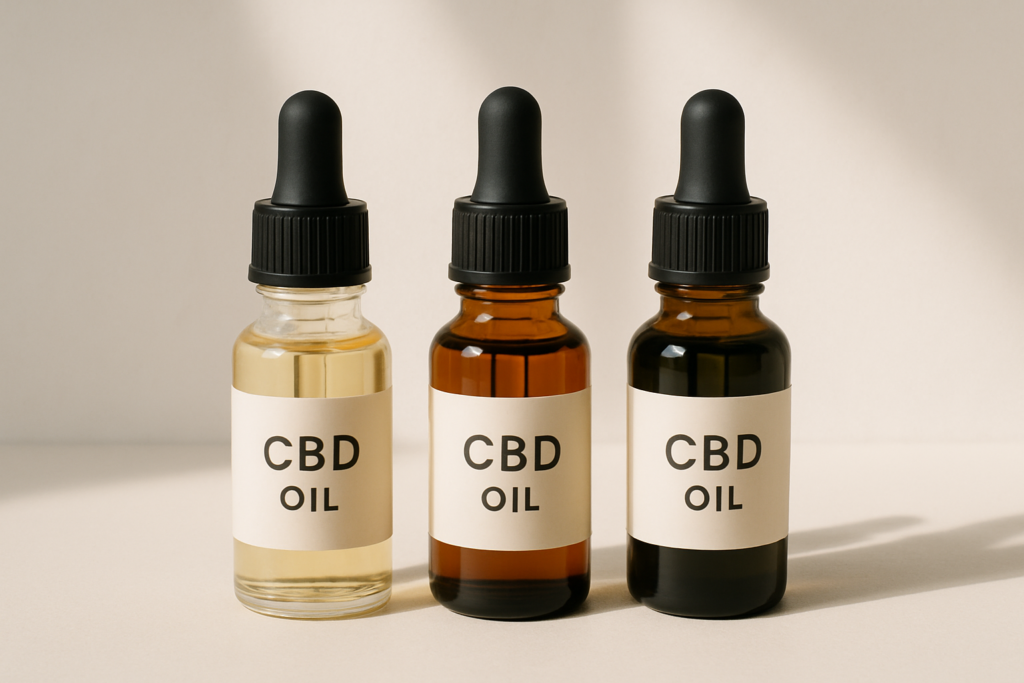
CBD oil color, ranging from pale gold to deep amber to dark green-brown, mostly reflects extraction method and processing rather than potency or quality on its own. Lighter oils typically indicate more refined processing (like CO2 extraction followed by filtration), while darker oils often retain more plant material and compounds. Neither color is inherently better; they suit different preferences and products.
What each color generally indicates
| Color | Likely cause | Typical product type |
|---|---|---|
| Pale gold to light amber | Refined, filtered extract, often CO2-extracted and winterized | Isolate or lightly processed broad-spectrum |
| Medium amber to honey | Standard full-spectrum extract with moderate filtration | Common full-spectrum oils |
| Dark amber to brown | Less filtered, retains more plant compounds and chlorophyll | Raw or minimally filtered full-spectrum |
| Dark green to green-brown | High chlorophyll content, minimal filtering, sometimes decarboxylated raw extract | Full-spectrum, unrefined, or “whole plant” marketed products |
Why color alone doesn’t tell you potency
It’s a common assumption that darker equals stronger, but color reflects what compounds and plant material remain in the oil, not how much CBD is present. A pale, heavily filtered oil can have high CBD potency with fewer accompanying plant compounds. A dark, less-filtered oil might have similar or different potency but more chlorophyll, waxes, and other plant material carried through. The only reliable way to know potency is the labeled mg content confirmed by a Certificate of Analysis, not the color in the bottle.
What color changes over time can mean
Unlike the color differences between products, a single product’s color darkening over its shelf life is a different signal worth paying attention to:
- Gradual darkening with age. Often normal oxidation, similar to how olive oil darkens slightly over time, this doesn’t necessarily mean the product is unsafe, but potency may be declining
- Sudden color change or cloudiness. Worth more scrutiny, could indicate degradation, temperature exposure, or contamination
- Separation with a change in color at the surface. Can be normal settling, shake gently and observe whether it re-integrates
Does color affect taste?
Generally yes, darker, less-filtered oils tend to have a stronger, more distinctly earthy or “grassy” taste due to retained plant compounds and chlorophyll. Lighter, more refined oils tend to taste milder. This is a preference factor more than a quality one, some people specifically seek out the fuller flavor as a sign of a less-processed, full-spectrum product.
What actually matters more than color
- Third-party lab testing confirming actual cannabinoid content matches the label
- Contaminant screening for pesticides, heavy metals, and microbial content
- Clear extraction method disclosure
- Appropriate storage (dark glass bottle, away from heat and light) regardless of the oil’s own color
Frequently asked questions
Does a darker CBD oil mean it’s stronger?
Not necessarily. Color reflects filtration and plant material content, not potency. Check the labeled mg amount and lab results instead.
Why did my CBD oil turn darker after a few months?
Likely normal oxidation over time, similar to other plant oils. Potency may decline gradually; check the expiration date and consider replacing if significantly past it.
Is green CBD oil safe?
Generally yes, green coloring usually reflects chlorophyll content from less-filtered processing, not a safety issue on its own. Verify with lab testing as with any product.
Which color should I buy: light or dark?
Neither is objectively better. Light, refined oils suit those wanting milder taste; darker, less-filtered oils suit those preferring a fuller, more “whole plant” product. Choose based on preference and verified lab results.
Should I be concerned if my CBD oil looks cloudy?
Mild cloudiness can occur from natural compounds settling at cooler temperatures and often resolves at room temperature. Persistent cloudiness alongside an off smell warrants more caution.