Last updated: 9 September 2026. Informational only, not medical advice.
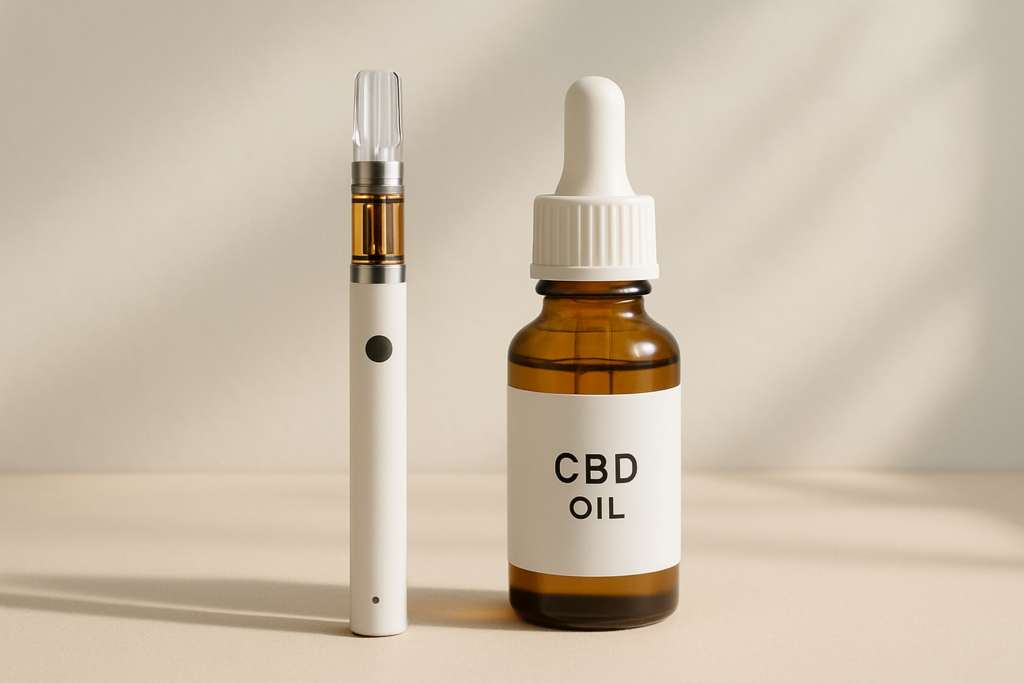
CBD vape and CBD oil differ most significantly in onset speed and inhalation-specific safety considerations. Vaping delivers CBD to the bloodstream within minutes, the fastest of any common delivery method, but inhalation carries its own respiratory considerations distinct from oral or sublingual use, particularly around vape product quality and additives.
Vape vs oil at a glance
| CBD Vape | CBD Oil (sublingual) | |
|---|---|---|
| Onset | 1 to 5 minutes | 15 to 30 minutes |
| Bioavailability | 34 to 56%, highest of common methods | 12 to 35% |
| Duration | Shorter, 2 to 4 hours typical | 4 to 6 hours typical |
| Respiratory consideration | Relevant, inhalation-specific | Not applicable |
| Product quality variability | Higher concern, additive and cutting agent risk | Lower relative concern |
Why vaping is fastest, and why that’s a trade-off, not just a benefit
Inhalation delivers compounds directly through lung tissue into the bloodstream, bypassing digestion entirely, which is why onset is dramatically faster than any oral method. This makes vaping appealing for acute, situational needs. But faster onset and higher bioavailability also mean a given dose produces a stronger, faster peak effect, which can be harder to titrate precisely for someone new to CBD.
The respiratory consideration that oil doesn’t share
This is the most important practical difference beyond speed. Vaping, regardless of what’s being vaped, involves inhaling heated, aerosolized substances into the lungs, and this carries considerations that oral or sublingual CBD simply doesn’t:
- Product quality varies significantly. Some vape products have been found to contain concerning additives, cutting agents, or contaminants not present in the CBD itself; the vaping device and cartridge/pod matter as much as the CBD source.
- Thinning agents. Some vape liquids use thinning agents like propylene glycol or vegetable glycerin; while generally recognized as safe for ingestion, their safety profile when heated and inhaled repeatedly over time is less thoroughly established.
- Existing respiratory conditions. Anyone with asthma, COPD, or other respiratory conditions should be more cautious with any inhaled product, including CBD vape.
- Long-term inhalation data is limited. CBD vaping is relatively new; long-term respiratory safety data doesn’t have the decades of research that, for example, cigarette smoking risk research does.
Which fits which situation
| Situation | Better starting point |
|---|---|
| Want the fastest possible onset | Vape |
| Any respiratory condition | Oil, avoid inhalation methods |
| New to CBD, want to establish baseline dose | Oil, easier to titrate given slower, more moderate effect |
| Want longer-lasting effect | Oil |
| Prioritizing product safety certainty | Oil, generally simpler formulation with less additive variability |
If choosing to vape, quality checks matter more than usual
- Third-party lab testing specifically for the vape product, not just general company testing
- Testing for heavy metals (vape hardware itself can be a metal contamination source)
- Clear ingredient disclosure, avoid products that don’t list all ingredients
- Reputable, established manufacturer with transparent sourcing
- Avoid unregulated or unlabeled vape products entirely
Who should avoid CBD vaping specifically
- Asthma, COPD, or other respiratory conditions. Choose oral or sublingual methods instead.
- Pregnant or breastfeeding. Avoid inhalation methods; oral CBD is not established as safe in pregnancy either, but inhalation adds respiratory considerations on top.
- New to CBD entirely. The fast, strong onset can be harder to gauge for a first-time user; oil offers a gentler introduction.
- Concerned about long-term lung health. The research base for CBD vaping’s long-term safety is thinner than for oral methods.
Frequently asked questions
Is CBD vape safer than smoking cigarettes?
Vaping and smoking are different processes with different risk profiles, but “safer than cigarettes” isn’t the same as “safe,” and CBD vaping still carries inhalation-specific considerations worth weighing.
Why does CBD vape work faster than oil?
Inhalation delivers compounds directly through lung tissue into the bloodstream, bypassing digestion and the slower sublingual absorption process entirely.
Is CBD vaping safe for people with asthma?
Generally not recommended; oral or sublingual CBD avoids the respiratory considerations that come with any inhaled product.
What should I check before buying a CBD vape product?
Third-party lab testing specific to that product, full ingredient disclosure, heavy metal testing, and a reputable, transparent manufacturer.
Does CBD vape last as long as oil?
No, vaping’s effects are typically shorter-lived (2 to 4 hours) compared to oil’s longer duration (4 to 6 hours), consistent with its faster onset and peak.