
Last updated: 10 September 2026. Informational only, not medical advice.
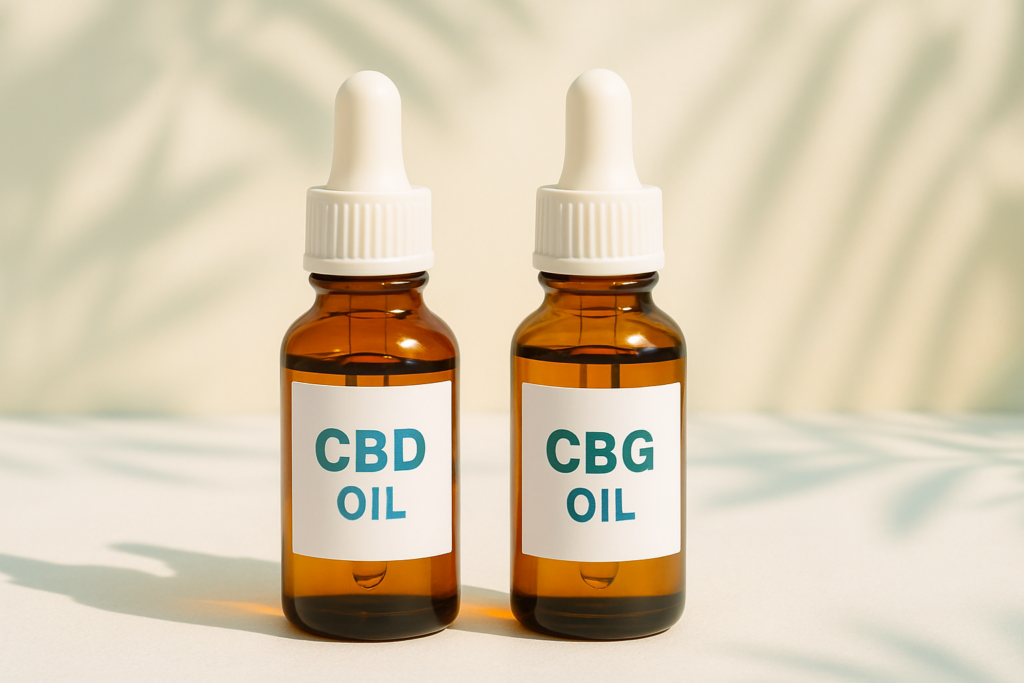
CBD and CBG (cannabigerol) are both non-intoxicating cannabinoids, but CBG is often marketed specifically for focus and energy rather than calm, despite having a much thinner research base than CBD. CBG is sometimes called the “mother cannabinoid” since other cannabinoids derive from it biosynthetically, but this is a chemistry fact, not evidence of superior effects. Most CBG evidence is preclinical.
CBD vs CBG at a glance
| CBD | CBG | |
|---|---|---|
| Marketing positioning | Calm, anxiety, sleep | Focus, energy, non-sedating alertness |
| Human trial evidence | Moderate to strong, several conditions studied | Minimal, mostly preclinical and animal studies |
| Availability | Widespread, most common cannabinoid product | Growing but less common, often pricier |
| Typical dose | 15 to 40mg | 10 to 25mg, less standardized |
| Cost | Lower, established supply chains | Higher, more resource-intensive to extract |
Why CBG is pricier and less researched
CBG is present in much smaller concentrations in most hemp plants compared to CBD, making extraction less efficient and more costly. This lower natural abundance is also part of why CBG research lags behind CBD, there’s simply been less material and less time to study it at scale, and the supplement industry’s interest in CBG is comparatively recent.
What the “non-sedating” claim is actually based on
CBG’s reputation for focus and alertness comes primarily from user reports and limited preclinical data suggesting different receptor activity than CBD, rather than robust human trials specifically comparing CBG’s alertness effects against CBD or placebo. This doesn’t mean the claim is false, but it means it’s considerably less established than, for example, CBD’s anxiety evidence.
What the evidence actually supports
CBD
The larger, more mature evidence base, spanning anxiety, sleep-adjacent effects, and (in prescription form) certain seizure disorders.
CBG
Preclinical research suggests potential anti-inflammatory and antibacterial properties, and some interest in eye pressure and digestive applications, but human trial data is sparse. Treat current CBG marketing claims as promising hypotheses rather than established effects.
Which fits which situation
| Situation | Better starting point |
|---|---|
| Want the better-evidenced option | CBD |
| Curious about newer cannabinoids, willing to experiment | CBG, with tempered expectations |
| Already tried CBD, didn’t notice much | CBG is a reasonable next experiment, though evidence for it is thinner |
| Budget-conscious | CBD, generally cheaper and more established |
Can you combine them?
Yes, “CBD plus CBG” products are common, and no dangerous interaction between the two is established. Since they’re both hemp-derived cannabinoids with generally favorable safety profiles at typical doses, combining them is lower-concern than combining CBD with many external supplements or medications, though CBG’s own interaction profile is less studied than CBD’s.
Who should be cautious
- On medications with known CBD interactions. CBG’s own interaction profile is less studied, so don’t assume it’s automatically safer just because it’s less researched, that cuts both ways.
- Pregnant or breastfeeding. Neither cannabinoid is established as safe in pregnancy.
- Skeptical of unproven marketing claims. If you want decisions grounded in stronger evidence, CBD remains the better-supported choice for most applications.
Frequently asked questions
Is CBG better than CBD for energy?
This claim is based mostly on user reports and preclinical data rather than robust human trials. It’s a plausible but unproven claim compared to CBD’s more established evidence base.
Why is CBG more expensive than CBD?
It occurs in much smaller concentrations in most hemp plants, making extraction less efficient and costlier.
Can I take CBD and CBG together?
Yes, combination products are common and no dangerous interaction is established between the two.
Is CBG psychoactive?
No, like CBD, it’s non-intoxicating and doesn’t produce a “high.”
Should I choose CBG over CBD?
If evidence strength matters to your decision, CBD has the more mature research base. CBG may be worth trying as an experiment, but with tempered expectations.