Cannabis products are not shelf-stable indefinitely, and poor storage is one of the most common and least discussed reasons a product that seemed potent when purchased becomes noticeably weaker, harsher, or less enjoyable weeks or months later. Understanding what actually degrades cannabinoids and terpenes, and what prevents it, is straightforward once you know what you’re protecting against.
The Four Enemies: Heat, Light, Oxygen, and Moisture
Every form of cannabis product degradation comes back to one or more of four factors. Heat accelerates the degradation of both cannabinoids and terpenes. THC degrades over time into CBN (cannabinol), a mildly intoxicating compound only approximately 25% as potent as THC, at a rate that increases significantly with temperature. At room temperature (around 70°F or 21°C), THC degrades approximately 6% per year according to study data. Higher temperatures accelerate this substantially. UV light from sunlight is a particularly aggressive degrader of THC. Research has estimated UV exposure reduces THC potency at a rate of approximately 0.5% per 60 minutes of direct UV exposure. Even indirect light contributes to degradation over time, which is why dark storage matters. Oxygen causes oxidation of cannabinoids and terpenes, changing their chemical structure and degrading both potency and flavour. Every time you open a container, oxygen enters. The less headspace (air space) in a container, the less oxidation occurs. Moisture, in excess, creates the conditions for mould and bacterial growth, making the product unsafe to consume. Too little moisture (excessive dryness), however, dries out terpenes and makes flower harsh and less flavourful.
Ideal Storage Conditions for Flower
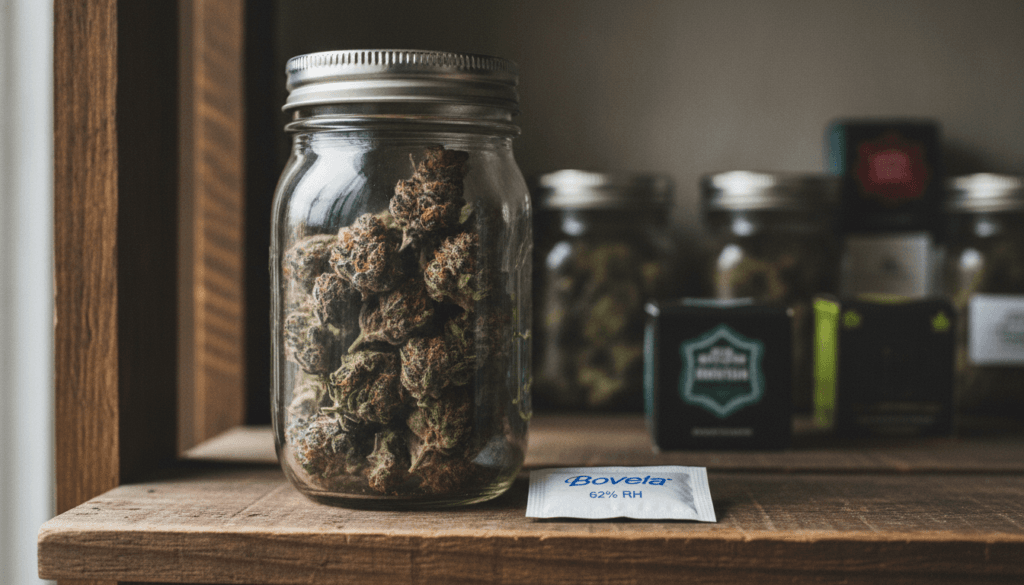
Temperature should be between 60 and 70°F (15 to 21°C). Avoid temperatures above 77°F (25°C), where degradation and mould risk both accelerate meaningfully. Relative humidity should be between 58 and 62%. This specific range maintains moisture without enabling mould growth. Humidity control packs (products like Boveda or Integra Boost calibrated to 58% or 62% RH) placed inside your storage container are the most practical way to maintain this range passively. Storage container should be airtight glass, such as a mason jar. Glass is non-reactive and does not transfer odours or chemicals to the flower. Mylar bags with airtight seals are also effective and block light. Avoid plastic bags (which generate static that strips trichomes and can allow off-gassing), clear containers in direct light, and paper or cardboard packaging for anything more than short-term use. Location should be cool, dark, and away from heat sources. A kitchen cabinet away from the stove, a drawer, or a dedicated storage box in a cool room all work well. Avoid the refrigerator for flower, as the temperature cycling when you open and close a fridge introduces moisture fluctuations that can promote mould and cause condensation on cold surfaces. The freezer is sometimes used for very long-term storage but risks making trichomes brittle and snapping off when handled.
Storage by Product Type
Edibles
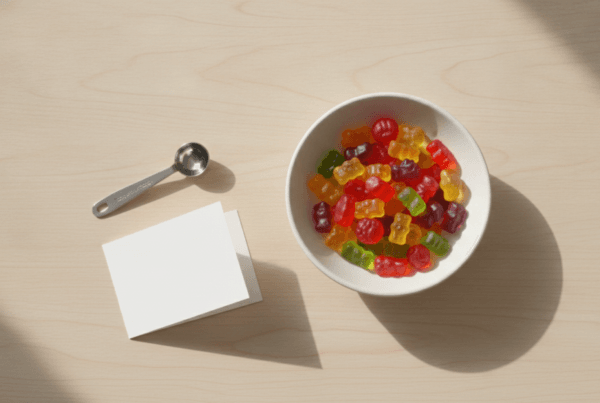
Commercially produced edibles come in sealed packaging with stated shelf lives. Once opened, most behave like the food they are, with gummies and chocolates lasting weeks at room temperature in a cool, dark location. Keep them in their original packaging if possible, or transfer to an airtight container. Temperature matters more for texture than for potency degradation in edibles. Avoid leaving them in a hot car, which melts and can degrade the product. Refrigeration can extend shelf life for some edibles but check whether this affects texture in ways that make them unpalatable.
Vape Cartridges
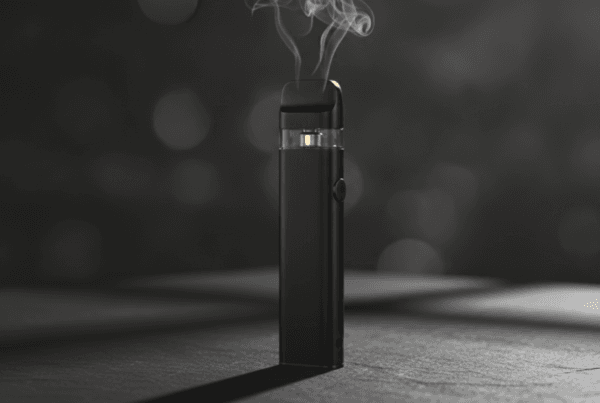
Store upright in a cool, room-temperature location away from direct light. Avoid extreme cold, which can thicken the oil and clog the cartridge wick, and avoid heat, which thins the oil and can cause leaking. Most cartridges have a shelf life of 6 to 12 months when stored properly. For long-term storage between uses, keeping cartridges in their original child-resistant packaging in a drawer is sufficient.
Concentrates (Live Resin, Distillate, Wax)
Concentrates are best stored in silicone or glass concentrate containers, sealed airtight, in the refrigerator or freezer for anything beyond a few weeks of regular use. Silicone is preferable to plastic for concentrates as it does not react with the product and makes it easier to scrape every last bit out. For short-term use (daily or near-daily), room temperature in an airtight glass jar away from light is sufficient. Terpene-rich products like live resin particularly benefit from cold storage since terpenes are volatile and escape more quickly at higher temperatures.
CBD Oil Tinctures
Store in the original dark glass bottle, sealed, at room temperature away from heat and light, or in the refrigerator. CBD oil tinctures have a shelf life of approximately 12 to 24 months unopened and typically 6 to 12 months after opening. Signs of degradation include a noticeably more bitter or rancid smell, significant cloudiness (some cloudiness when refrigerated is normal and reverses at room temperature), or a much darker colour than when purchased. Avoid leaving tinctures on a sunny windowsill or near any heat source.
How Long Can You Store Cannabis Products?
Properly stored flower retains meaningful potency for up to 6 to 12 months, with gradual degradation beginning after that. At room temperature and protected from light, THC degrades at approximately 6% per year; poor storage can make this much faster. Edibles last according to their underlying food shelf life, generally weeks to months. Concentrates can last 6 to 12 months properly sealed and refrigerated. CBD tinctures typically maintain potency for 12 to 24 months depending on storage conditions and base carrier oil.
Frequently Asked Questions
Does cannabis go bad?
Cannabis degrades rather than going bad in the way food does (unless mould develops, which does make it unsafe). With time and poor storage, THC converts to CBN, terpenes evaporate, and the product becomes less potent, harsher, and less flavorful. Well-stored flower can remain usable for a year or more. Mould-affected cannabis (visible white fuzz, musty smell) should never be consumed as it can cause respiratory illness, particularly in immunocompromised individuals.
Does putting cannabis in the freezer make it stronger?
No. Freezing does not increase potency or cannabinoid content. It can slow degradation for very long-term storage, but it also makes trichomes (the resin glands containing cannabinoids) brittle and prone to breaking off when the product is handled cold. If you freeze cannabis, allow it to return fully to room temperature before handling or grinding to avoid mechanical loss of the trichomes. For regular use, a cool, dark room-temperature storage location is more practical and less disruptive to the product than freezing.
What is the best container for storing cannabis flower?
An airtight glass jar is the gold standard. Mason jars are widely used and effective. The glass should ideally be opaque or kept in a dark location since clear glass offers no UV protection. Mylar bags with airtight seals are an excellent alternative, particularly for longer-term or bulk storage, since they are both airtight and light-blocking. Plastic bags and containers are the least suitable option; they allow some air exchange, generate static that strips trichomes, and some plastics can impart subtle off-flavours over time.
Why does old cannabis taste harsh?
Harshness in older or poorly stored cannabis typically results from terpene degradation and loss. Terpenes contribute to the smooth, flavourful smoke or vapour experience; when they evaporate or degrade (which happens faster with heat, light, and time), what remains is primarily cannabinoids and plant material without the aromatic compounds that round out the experience. Excessive dryness amplifies this, as dry flower combusts more harshly than flower at the correct 58 to 62% relative humidity.
Can I store different cannabis strains together?
It is best to store strains separately. Different strains have distinct terpene profiles, and storing them together risks terpene cross-contamination as aromatic compounds migrate between products. More practically, keeping strains separate makes it easier to track what you have, ensures you know what you are using, and allows you to use individual humidity packs appropriately sized to each container rather than one pack trying to regulate a larger mixed container.
Do humidity packs really make a difference?
Yes. Passive humidity control packs (such as Boveda or Integra Boost, calibrated to 58% or 62% relative humidity) work by releasing or absorbing moisture as needed to maintain the target humidity within a sealed container, regardless of ambient humidity fluctuations. In a properly sealed airtight glass container with a correctly sized humidity pack, cannabis flower can maintain its ideal moisture range for months without any active management. This is significantly more reliable than relying on ambient storage conditions alone, particularly in environments with seasonal humidity swings.