Last updated: 16 September 2026. Informational only, not medical advice.
How you frame the conversation with your doctor about CBD matters as much as whether you have it at all. Many patients avoid mentioning CBD use out of embarrassment or assumption it’s irrelevant, which removes your doctor’s ability to properly manage medication interactions or interpret symptoms. A direct, factual approach, treating it like any other supplement disclosure, gets better results than either avoiding the topic or over-explaining.
Why this conversation gets skipped, and why that’s a problem
| Common reason for not disclosing | Why it backfires |
|---|---|
| Assuming it’s “just a supplement,” not relevant | CBD has real, documented drug interactions your doctor needs to know about |
| Worry about judgment given cannabis associations | Doctors are focused on your health information, not moral judgment about legal hemp products |
| Not realizing the doctor would want to know | Interaction risks, especially with certain medications, can be serious |
| Forgetting in the moment | Preparing what to say beforehand solves this |
What to actually say
A simple, direct disclosure works better than an extended explanation or justification. Something like: “I’m using CBD oil, about 20mg daily, mainly for sleep. I wanted to check if that’s fine with my current medications.” This gives your doctor the three things they actually need: that you’re using it, roughly how much, and why, without requiring you to justify the decision or predict what they’ll say.
Information worth having ready
- Product type. Oil, capsule, gummy, or other format
- Approximate daily dose. In milligrams if you know it, or the serving size and frequency if not
- How long you’ve been using it. Recently started versus long-term use is relevant context
- Why you’re using it. Sleep, anxiety, pain, or another reason, this helps your doctor assess relevance to your specific health picture
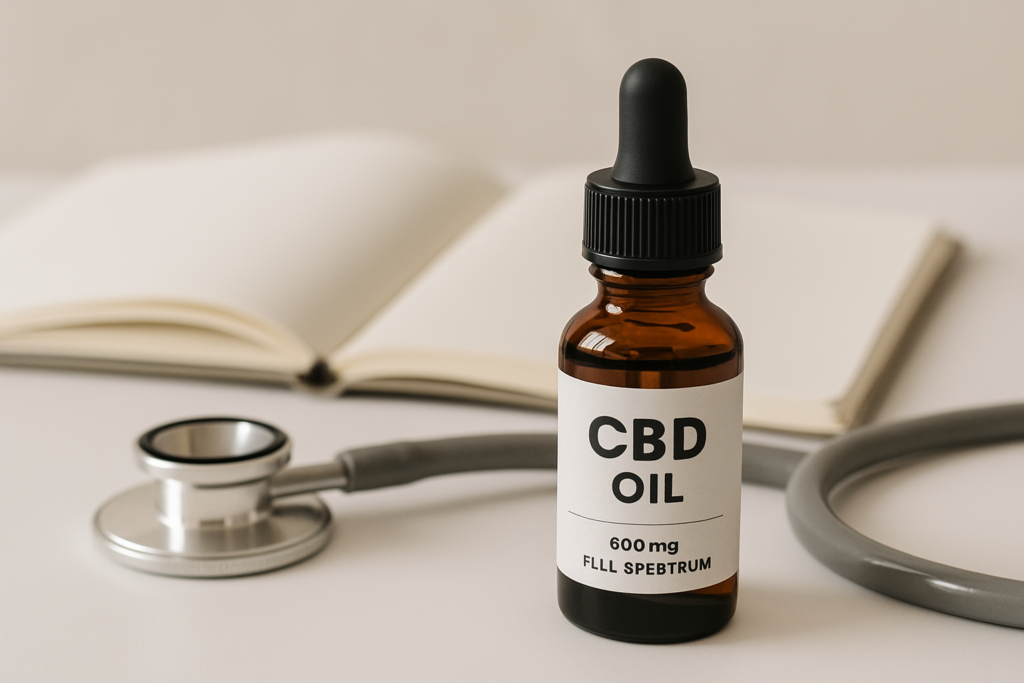
- Full spectrum, broad spectrum, or isolate, if you know. This affects whether trace THC is a relevant factor
What if your doctor doesn’t know much about CBD?
This happens, and it’s not a dead end. Pharmacists are often better positioned to run a specific interaction check for your exact medications and are generally very accessible for this kind of question without needing an appointment. You can also ask your doctor to refer you to relevant resources or to specifically check your medication list against known CBD interactions using a drug interaction database, which most clinical systems have access to even if the physician’s personal familiarity with CBD is limited.
When this conversation is especially important
- Before starting CBD if you’re on any prescription medication, particularly blood thinners, seizure medications, immunosuppressants, or antidepressants
- Before any scheduled surgery or procedure involving anesthesia
- If you’re pregnant, breastfeeding, or trying to conceive
- If you’re managing a chronic condition where medication levels are closely monitored (diabetes, heart conditions, psychiatric conditions)
- Before giving CBD to a child or elderly family member under your care
What not to do
Don’t wait until you’re already experiencing a possible interaction symptom to mention CBD use for the first time, retrospective disclosure makes it harder for your doctor to distinguish what’s causing what. Don’t assume a doctor’s silence on the topic during a general visit means they’ve already factored it in, if you haven’t explicitly mentioned it, assume they don’t know. And don’t stop a prescribed medication on your own to “make room” for CBD without this conversation happening first.
Frequently asked questions
Will my doctor judge me for using CBD?
Most doctors treat this as routine medical information, not a moral question, especially given CBD’s widespread legal availability. Focus on the factual disclosure rather than anticipating judgment.
What if I’m not sure of my exact CBD dose?
Bring the product packaging or a photo of the label if possible; this gives your doctor or pharmacist the specific information needed even if you don’t have the exact number memorized.
Should I mention CBD even if I only use it occasionally?
Yes, occasional use is still relevant information, particularly around scheduled procedures or if you’re about to start a new medication.
What if my doctor says to stop CBD but I don’t want to?
Ask specifically why, understanding the reasoning (a specific interaction concern versus general caution) helps you make an informed decision, and this is a conversation worth having rather than simply disregarding the guidance or stopping without understanding why.
Can my pharmacist help even without talking to my doctor first?
Yes, pharmacists can check specific interactions between CBD and your medication list and are a good, accessible first stop, particularly for quick interaction questions.