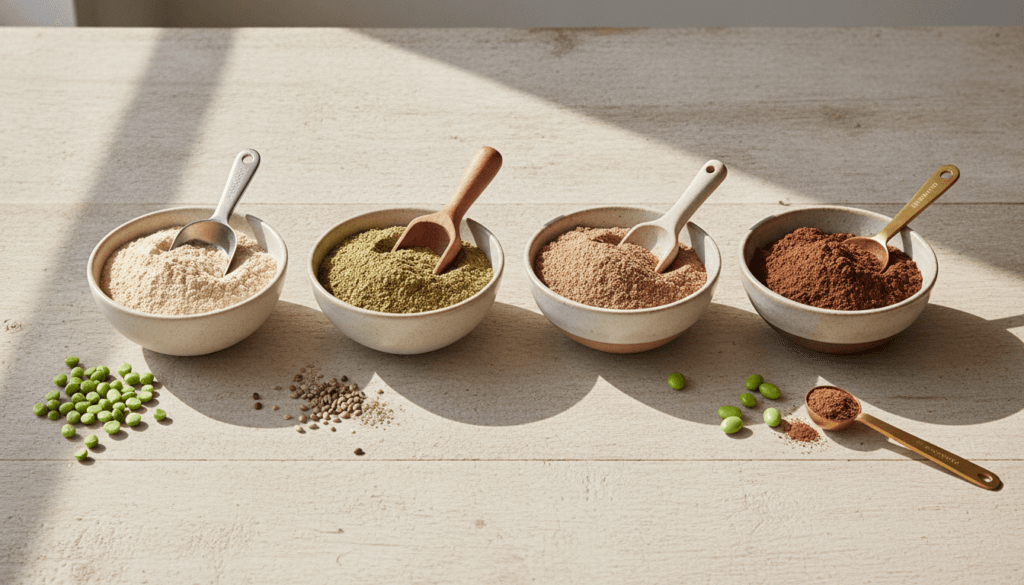
Plant protein powders are no longer a niche. Hemp, pea, soy and rice dominate the shelf, and each has real strengths. We already compared hemp with whey in our hemp vs whey guide. This piece puts the four main plant options side by side.
At a Glance
| Factor | Hemp | Pea | Soy | Rice |
|---|---|---|---|---|
| Typical protein by weight | 50 to 70% | 80 to 85% (isolate) | 85 to 90% (isolate) | 70 to 80% |
| Digestibility score (PDCAAS, approx.) | 0.63 to 0.66 | 0.82 to 0.93 | About 0.9 to 1.0 | Lower, limited by lysine |
| Fibre | High (10 to 15%) | Low | Low | Low |
| Extra nutrition | Omega fats, iron, magnesium | Iron | Isoflavones | Few |
| Taste and texture | Earthy, slightly gritty | Mild, can be chalky | Neutral, smooth | Plain, slightly gritty |
| Common allergen | Rare | Rare | Yes (soy) | Rare |
Figures for hemp and pea come from supplier technical data and vary by brand. Treat them as typical ranges, not guarantees.
Hemp
Hemp trades protein density for whole food nutrition. You get fibre, omega fats and minerals, which suits smoothies and everyday nutrition more than strict muscle building. See the omega ratio in hemp for why that matters.
Pea
Pea isolate is the strongest all rounder for protein per scoop and digestibility, and it is naturally dairy and soy free. It is often low in methionine, so many blends pair it with rice.
Soy
Soy is a complete protein with high digestibility and a smooth texture. People with soy allergy must avoid it, and some prefer to limit it for personal reasons.
Rice
Rice protein is hypoallergenic and low in lysine, which is why it works best combined with pea in a blend that covers both gaps.
Which One Should You Choose?
- Max protein per scoop: pea or soy isolate.
- Whole food nutrition and fibre: hemp.
- Allergy concerns: hemp, pea or rice, depending on your triggers.
- Best amino acid coverage: a pea and rice blend, or rotate sources.
For recipes, try our hemp seed recipes and hemp based foods.
Frequently Asked Questions
Is hemp protein a complete protein?
Yes, it contains all nine essential amino acids, though lysine is comparatively low.
Which plant protein is best for building muscle?
Pea and soy isolates are generally strongest per serving. Total daily protein and training matter more than the exact source.
Can I mix different plant proteins?
Yes. Blends such as pea with rice or hemp improve amino acid balance and taste.
Does hemp protein contain THC or CBD?
Hemp protein comes from seeds, which contain negligible cannabinoids. Choose tested brands if drug testing matters to you.
Why does plant protein taste chalky?
Fibre and processing affect texture. Blending with fruit, nut butter or cacao usually helps.
How much protein powder do I need?
Most people use one to two scoops a day, around 20 to 40 grams of protein, within their overall daily needs.
This article is educational and not medical or dietary advice.