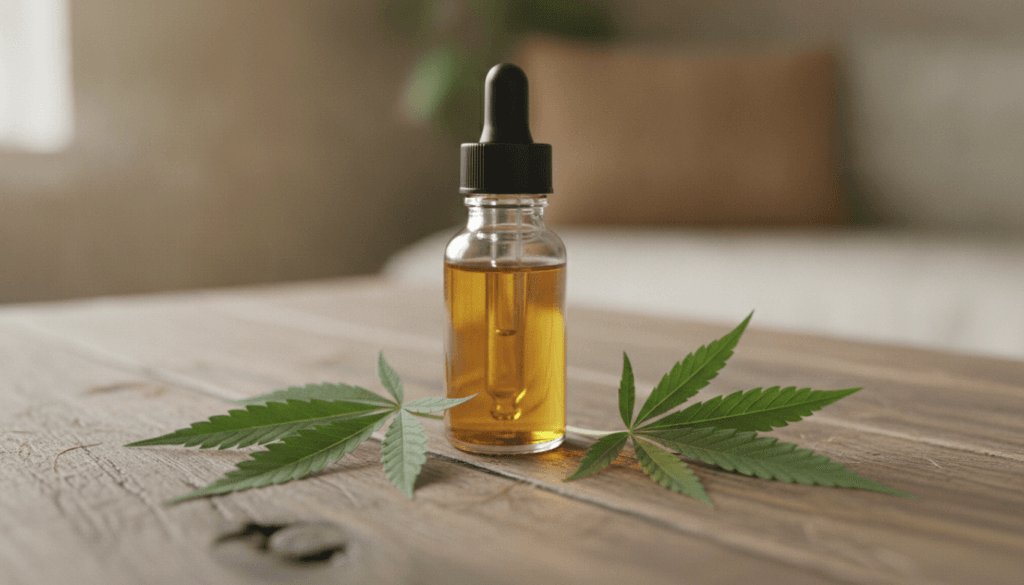
CBD has gone from a niche term known mostly to cannabis researchers to a word printed on coffee shop menus, pharmacy shelves, and pet treats. With that growth has come a flood of marketing claims, many of which oversimplify or exaggerate what CBD actually is and does. This guide starts from zero and explains CBD in plain terms.
What Does CBD Stand For?
CBD stands for cannabidiol. It is one of more than 100 naturally occurring compounds called cannabinoids found in the Cannabis sativa plant. Unlike THC (tetrahydrocannabinol), CBD is non-psychoactive. It does not produce a high, does not impair coordination or cognition, and does not carry the intoxication risks associated with THC.
CBD sold in wellness markets is almost always derived from hemp, a variety of Cannabis sativa that is legally defined by its low THC content (0.3% or less in the US, 0.2% or less in the UK and EU).
How Does CBD Work?
CBD interacts with the endocannabinoid system (ECS), a regulatory network present in every human body. The ECS consists of receptors (primarily CB1 and CB2), enzymes, and naturally occurring endocannabinoids that the body produces itself. This system plays a role in regulating mood, sleep, pain perception, appetite, and immune response.
Unlike THC, which binds directly to CB1 receptors, CBD works more indirectly. Research suggests CBD acts as a partial agonist at the serotonin 5-HT1A receptor and as a negative allosteric modulator of CB1 receptors, meaning it can influence how other cannabinoids (including the body’s own) interact with the system, without producing intoxication itself.
The Three Types of CBD Products
Understanding these three categories is essential before buying any CBD product. Full spectrum CBD contains CBD along with other cannabinoids (CBG, CBN, CBC), terpenes, and trace THC (up to 0.3% in the US). Many researchers believe this combination produces an enhanced entourage effect. Broad spectrum CBD contains CBD plus other cannabinoids and terpenes, but with THC removed during processing. CBD isolate contains pure CBD only, with everything else removed during refinement, typically reaching 99% purity.
What Does the Research Actually Support?
The clearest evidence for CBD comes from epilepsy. Epidiolex, a purified CBD medication, has been FDA-approved since 2018 for treating seizures associated with Dravet syndrome, Lennox-Gastaut syndrome, and tuberous sclerosis complex. This remains the strongest clinical evidence base for any CBD application.
Beyond epilepsy, research is more preliminary but growing. Studies suggest CBD may help with anxiety symptoms, with several 2025 clinical trials reporting reduced anxiety scores after consistent use. Sleep quality improvements have been reported in people with co-occurring anxiety. Chronic pain and inflammation research shows promise but remains in earlier stages. CBD is also being studied for its role in substance use disorders and addiction recovery.
What CBD Cannot Do
CBD is not a cure-all. It will not get you high. It is not a replacement for prescribed medications without medical guidance. It does not work instantly for most applications; benefits for anxiety and sleep typically build over days to weeks of consistent use. And the quality of evidence varies significantly by condition: epilepsy has strong clinical backing, while many other claimed uses are supported mainly by preliminary or animal research.
Common CBD Product Formats
CBD oil tinctures are taken sublingually (under the tongue) for faster absorption, typically with onset in 15 to 45 minutes. CBD capsules and softgels offer precise, tasteless dosing with slower onset (30 to 90 minutes) via digestion. CBD gummies and edibles are popular for taste and convenience but have the same digestive onset delay as capsules. CBD topicals (creams, balms) are applied to skin for localised relief and do not produce systemic effects. CBD vapes offer the fastest onset (minutes) but carry the general considerations associated with any inhaled product.
How to Choose Your First CBD Product
Start with a CBD isolate or broad spectrum oil if you are concerned about THC exposure (for drug testing or sensitivity reasons). Choose a product with a clearly stated CBD content in milligrams. Always check for a third-party Certificate of Analysis (COA) confirming cannabinoid content and the absence of contaminants. Start with a low dose, typically 10 to 20 mg, and adjust gradually based on your response over one to two weeks.
Frequently Asked Questions
Will CBD make me feel high?
No. CBD is non-psychoactive and does not bind to CB1 receptors in the way THC does. It will not impair your thinking, coordination, or perception. Full spectrum products contain trace THC (up to 0.3%), but at this level it does not produce intoxicating effects for most people.
Is CBD legal?
In the US, hemp-derived CBD with less than 0.3% THC is federally legal under the 2018 Farm Bill, though state laws vary. In the UK, CBD products are legal provided THC content is below 0.2% and the product is registered with the FSA as a novel food. In the EU, regulations vary by country. Always check your local regulations, particularly if travelling internationally with CBD products.
How long does it take for CBD to work?
This depends on the product format and what you are using it for. Sublingual tinctures produce effects within 15 to 45 minutes. Capsules and edibles take 30 to 90 minutes due to digestion. For ongoing concerns like anxiety or sleep, most research suggests benefits build over one to four weeks of consistent daily use rather than appearing after a single dose.
What is the difference between hemp oil and CBD oil?
Hemp oil, when this means hemp seed oil, is pressed from hemp seeds and contains no CBD or other cannabinoids. CBD oil is extracted from the flowers and leaves of the hemp plant and contains cannabidiol as its active compound. If a product does not list a specific CBD milligram content, it is very likely hemp seed oil rather than a genuine CBD product, regardless of how it is marketed.
Can CBD interact with medications?
Yes. CBD is metabolised by the cytochrome P450 enzyme system in the liver, the same system that processes many prescription medications including blood thinners, certain antidepressants, and anti-seizure medications. CBD can affect how quickly these medications are processed. If you take any prescription medication, speak with your doctor or pharmacist before starting CBD.
Is CBD safe to take every day?
For most healthy adults, CBD has a good safety profile at typical wellness doses (10 to 30 mg per day). A 2025 review proposed an acceptable daily intake of approximately 0.43 mg per kilogram of body weight (around 30 mg for a 70 kg adult) for the general population, with a higher upper limit of up to 160 mg per day for healthy adults. People who are pregnant, breastfeeding, or trying to conceive should limit intake to no more than 70 mg per day according to the same review, and should discuss any CBD use with a healthcare provider.