Last updated: 7 September 2026. Informational only, not medical advice.
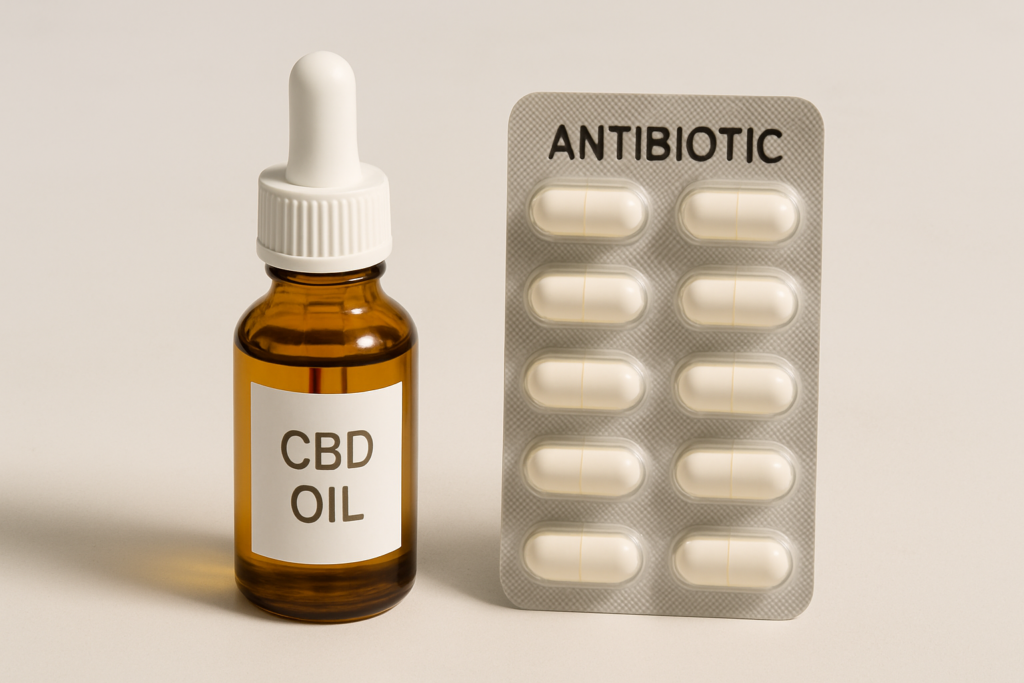
CBD and antibiotics have a variable interaction risk depending heavily on the specific antibiotic class. Some, like certain macrolides and fluoroquinolones, share liver enzyme pathways with CBD, potentially affecting drug levels of one or both. Others have minimal overlap. There’s no single blanket answer, checking the specific antibiotic prescribed is more useful than assuming a uniform risk across the whole drug class.
CBD and antibiotic classes at a glance
| Antibiotic class | Examples | CBD interaction relevance |
|---|---|---|
| Macrolides | Erythromycin, clarithromycin | Higher, CYP3A4-dependent |
| Fluoroquinolones | Ciprofloxacin, levofloxacin | Moderate, some CYP involvement |
| Penicillins | Amoxicillin, penicillin | Lower, minimal CYP metabolism |
| Cephalosporins | Cephalexin, ceftriaxone | Lower, minimal CYP metabolism |
| Tetracyclines | Doxycycline | Lower to moderate |
Why this varies so much by antibiotic
Antibiotics as a category don’t share a single metabolic pathway, some, like many penicillins and cephalosporins, are excreted largely unchanged by the kidneys with minimal liver enzyme involvement, making CBD interaction less relevant. Others, particularly macrolides like erythromycin and clarithromycin, rely heavily on CYP3A4, the same enzyme CBD inhibits, creating more plausible interaction concern.
What an interaction could mean practically
If CBD slows clearance of an antibiotic that shares its liver pathway, blood levels could run higher than intended, potentially increasing side effects associated with that specific antibiotic. This is generally a less commonly discussed concern than CBD’s interactions with long-term medications, since antibiotic courses are typically short (days to a couple weeks), but it’s still worth being aware of, particularly for antibiotics already known to have narrow safety margins or significant side effect profiles.
Practical guidance
- If prescribed a macrolide or fluoroquinolone antibiotic, mention your CBD use to the prescribing doctor or pharmacist
- For penicillins, cephalosporins, and most other lower-interaction classes, the practical concern is generally lower
- Given antibiotic courses are usually short-term, some people choose to pause CBD for the duration of treatment as a simple precaution, this isn’t strictly necessary for every antibiotic, but it’s a reasonable, low-effort option
- Complete your full antibiotic course as prescribed regardless of CBD use, incomplete courses carry their own significant risks (resistance, treatment failure)
- Watch for unusual side effects if combining, and mention them to your doctor or pharmacist
Does CBD affect antibiotic effectiveness?
There’s no established evidence that CBD reduces antibiotic effectiveness against the infection being treated. The interaction concern is about altered blood levels of the antibiotic itself (potentially higher, given CBD’s enzyme-inhibiting effect), not about the antibiotic failing to work.
Who should check with a pharmacist first
- Prescribed a macrolide or fluoroquinolone. Higher relevance category for this interaction.
- On other medications simultaneously. Antibiotic plus CBD plus another CYP3A4-relevant medication compounds complexity.
- Known sensitivity to antibiotic side effects. Extra caution warranted if you’ve had strong reactions to antibiotics before.
- Liver or kidney conditions. Both affect how antibiotics and CBD are processed; discuss with your doctor.
Frequently asked questions
Can I take CBD with antibiotics?
Often yes, but it depends on the specific antibiotic. Macrolides and fluoroquinolones carry more interaction relevance than penicillins or cephalosporins. Check with your pharmacist.
Should I stop CBD while taking antibiotics?
Not strictly necessary for every antibiotic, but pausing for the typically short duration of an antibiotic course is a reasonable, low-effort precaution if you want one.
Does CBD make antibiotics less effective?
No established evidence supports this. The concern is about altered antibiotic blood levels, not reduced effectiveness against infection.
Which antibiotics have the most CBD interaction concern?
Macrolides (erythromycin, clarithromycin) and to a lesser extent fluoroquinolones, due to shared liver enzyme pathways with CBD.
Is it safe to ask my pharmacist about this?
Yes, pharmacists are a good, accessible resource for checking specific drug interactions and are used to these kinds of questions.