Last updated: 3 October 2026. Informational only, not medical advice.
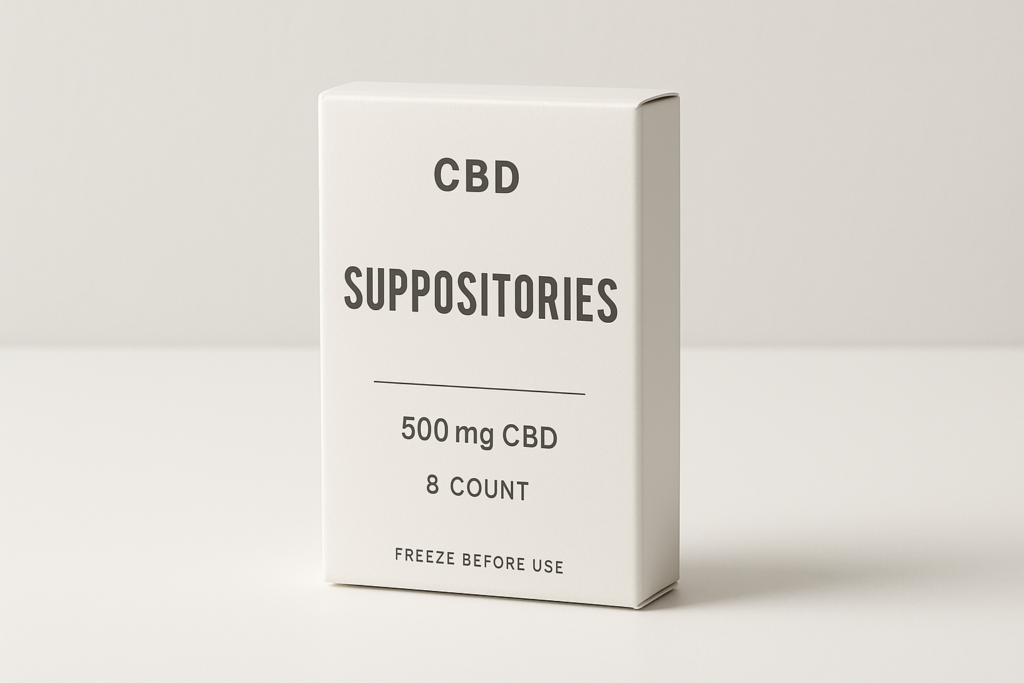
CBD suppositories are a less common but real product format, primarily marketed for pelvic or lower abdominal discomfort, and they carry a distinct absorption profile compared to oral or sublingual products. Absorbed through rectal or vaginal tissue, they may offer higher bioavailability than swallowed capsules while bypassing some digestive breakdown, though this format’s research base is thinner than more common product types.
CBD suppositories vs other formats at a glance
| Suppositories | Oral capsules | Sublingual oil | |
|---|---|---|---|
| Bioavailability | Potentially higher, bypasses some first-pass metabolism | 6 to 15% | 12 to 35% |
| Onset | Variable, some report faster than oral | 1 to 2 hours | 15 to 30 minutes |
| Typical use case | Pelvic or lower abdominal discomfort, localized use | General daily use | General daily use, faster acute needs |
| Research base | Limited | Broader | Broader |
| Discretion | High, no taste or visible product use | High | Moderate |
Why this format exists and who considers it
Suppositories are typically considered by people seeking more targeted delivery for pelvic-area discomfort, sometimes related to menstrual cramps, endometriosis-related pain, or general pelvic floor tension, or by people who have difficulty with oral formats due to digestive sensitivity or nausea. The rectal or vaginal route allows absorption through tissue with a rich blood supply, which is part of the theoretical basis for potentially improved bioavailability compared to swallowed products, though this hasn’t been extensively confirmed through dedicated human trials specific to CBD suppositories.
What the limited evidence suggests
Much of what’s understood about suppository absorption comes from pharmacology principles applied to other rectally or vaginally administered medications, rather than CBD-specific trials. This is a reasonable basis for the bioavailability claims commonly made about this format, but it’s still an extrapolation rather than direct confirmation specific to CBD suppositories.
Practical considerations
- Storage matters more with this format, suppositories are often formulated with a base (like coconut oil) that can melt at room temperature, requiring refrigeration
- Product quality verification through lab testing applies here as much as with any other format, look for a Certificate of Analysis
- This format is less commonly available than oils, capsules, or gummies, so product selection may be more limited
- Some formulations are specifically designed for vaginal versus rectal use; check the product’s intended application before use
Who might consider this format
- Pelvic or lower abdominal discomfort. The targeted delivery route may offer more localized relevance than systemic oral use for some people.
- Digestive sensitivity to oral CBD. Bypassing the stomach may be preferable for those who experience digestive discomfort with oral formats.
- Seeking maximum discretion. No taste, no visible product use during the day.
Who should be cautious
- New to CBD entirely. Starting with a more common, better-studied format like oil or capsules may make it easier to establish your baseline response first.
- Any existing rectal or vaginal irritation or condition. Discuss with a doctor before introducing a new product to sensitive tissue.
- Pregnant individuals. As with all CBD formats, this isn’t established as safe in pregnancy.
Frequently asked questions
Do CBD suppositories absorb better than oral CBD?
Potentially, based on pharmacology principles applied to this delivery route, though CBD-specific research confirming this is limited.
Are CBD suppositories safe?
Generally considered reasonably safe for most people, similar to other CBD formats, but choose lab-tested products and discuss with a doctor if you have any existing pelvic or rectal health conditions.
How should I store CBD suppositories?
Check the product label, many require refrigeration given their oil-based formulation, which can melt at room temperature.
Why would someone choose this format over oil or capsules?
Common reasons include targeted pelvic-area relevance, digestive sensitivity to oral formats, or preference for maximum discretion.